

Amazon vouchers to fill school places
Plus: How engineers installed a phone network on the London Underground, how many freemasons can you fit in a police force, and the house with a swimming pool in the middle of the living room.

Today is the deadline for the capital’s parents to submit their applications for a primary school place. Ten years ago the media was full of headlines about London families being unable to get their children into schools due to a chronic shortage of places. Councils were rushing to build new classrooms to meet the demand caused by an early 2010s baby boom, high immigration, and an expanding city.
Today, the situation could not be more different. The number of children living in London is declining and schools are closing. I’ve been looking into a new, less well-known impact of that demographic change, as headteachers copy marketing tactics from private schools in a bid to persuade London’s parents to send them their kids – in many cases using limited school budgets to do it.
Scroll down to read that story.
London Underground on track to have 4G phone coverage in all tunnels by end of year
On Monday I was in a concrete room underneath active London Underground platforms, being shown the vast amount of telecoms equipment that has had to be installed to enable you to use your phone on a moving tube train.
This week Transport for London confidently declared that the entire Underground phone network will be live by the end of 2026, meaning there shouldn’t be a single location where you can’t stream video or check your emails. (Alternatively, if you’re a glass-half-empty person, there won’t be a single place that’s free from someone playing TikTok videos without headphones.)
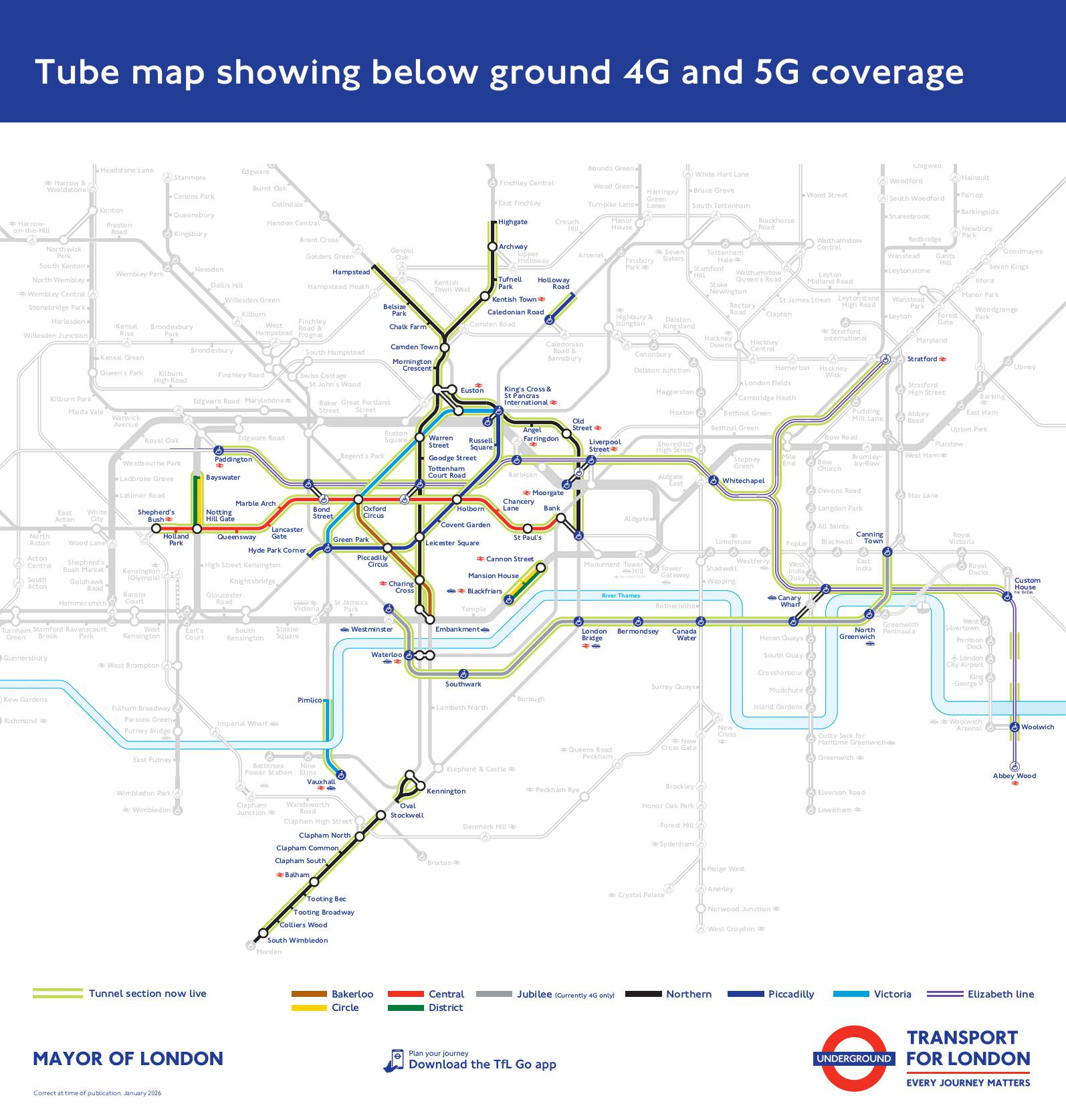
Previous attempts to introduce phone signal to the Underground have failed because the rival mobile networks couldn't agree how to do it. There isn’t the physical space to build multiple competing phone networks side-by-side and it didn’t make financial sense for EE or O2 to try to go it alone. In the end TfL struck a £1bn agreement with a company called Boldyn Networks, who have spent four years installing all the kit, running cables through tunnels and squeezing telecoms equipment into often-tiny gaps on almost every station on the underground.
Their solution involved building a network that serves all the phone networks equally. It then pops up above ground at various points across London, known as ‘hotels’, at which point the three major phone operators (EE, O2, and the newly-merged VodafoneThree) then plug in their own kit. Boldyn then charges the mobile operators to access the shared network.
A substantial chunk of the bill has been met by the government, who want a reliable communications network for any future underground disasters — meaning the equipment has also been installed in the non-public areas of tube stations, which has often been a bigger job than the passenger-facing work.
Talking to the staff who installed the kit, they said:
Because people are now able to ring 999 while travelling through a tube tunnel, it didn’t make sense to send the emergency services to a location that might be under a street. As a result the new network has been designed to set your location as the nearest tube station, which is why your phone’s built-in map won’t show your live progress underneath the capital.
The parts of the network that are visible to passengers are these little antennas on platforms.

Sometimes they’re white and sometimes they’re painted to fit in with heritage features, along station platforms across the network. Try to spot them next time you’re waiting for a train.
The biggest limitation to designing the London Underground phone network has been the speed of light as data travels along fibre optic cables. When you refresh Instagram while travelling on a tube train, your phone makes contact with an antenna cable running beside the tracks known as a “leaky feeder”. The request is then taken back to a nearby station where it is sent down a shared fibre optic cable to a ‘hotel’, at which point it is handed over to your own phone network. They send your request to Instagram’s servers, before sending everything back along the same route in a fraction of a second. There has to be a connection to a hotel within 12km (7.5 miles) of the tube station — or else the speed of light means your experience of using your phone on a moving tube train will have a noticeable delay.

One of the strangest outcomes of all this investment is you’re likely to have a fast, reliable mobile data connection while travelling through a tunnel on the London Underground or Elizabeth line, only to completely lose data when you head out of a station into central London.
That’s largely due to endless objections to new above-ground phone masts in London, which has been covered previously on London Centric. It also means rail commuters on certain routes with patchy signal, such as the notoriously bad south west London to Waterloo lines, will be stuck in the dark ages — despite this being technically much easier to solve, if there was the will to install extra capacity.
Boldyn’s contract will also now include tunnelled sections of the London Overground’s Windrush Line and the DLR. The company’s plan is that they can now start to poke their newly-built underground phone network above ground — potentially providing extra data capacity outside major stations such as Euston and King’s Cross. It’s up to phone networks if they want to pay for that aspect.
Preposterous property of the week
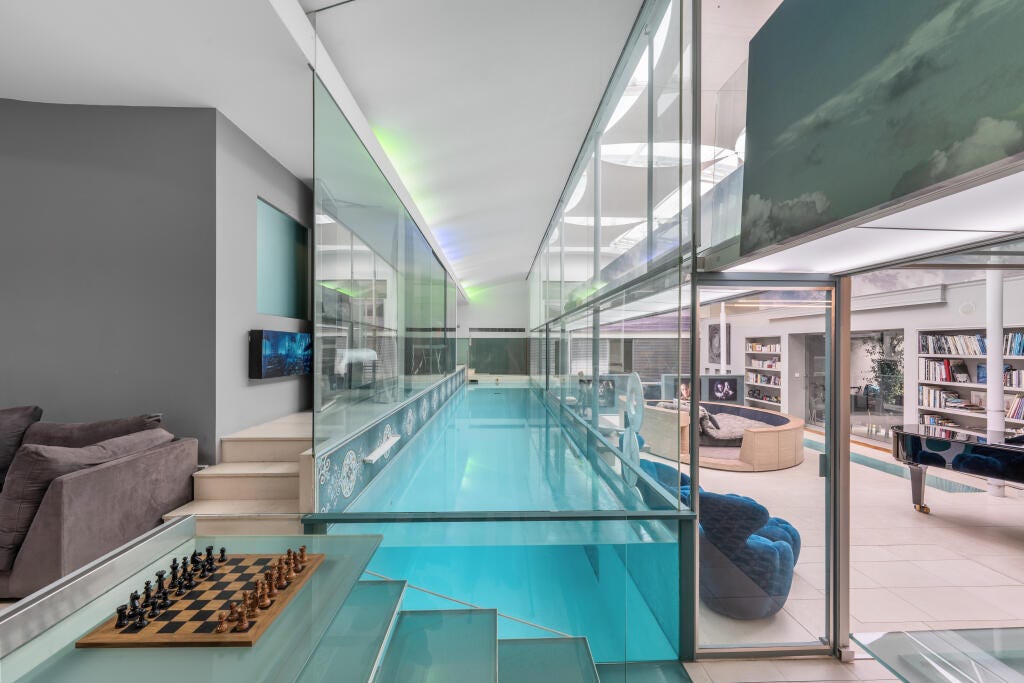
It’s Hampstead. It’s £10m. It’s got five bedrooms. It’s got a retractable roof. It’s got… a swimming pool-sized fish tank in the middle of the house so everyone can watch you do your morning lengths.
Exactly what is going on with this house, squeezed into a gap behind Victorian terraces near Hampstead tube station, is unclear. You can stare at the pictures for hours and still not work out the layout. It’s impressive and unnerving, a bit like someone solving a Rubik’s cube at speed. It’s interesting that the architect could do that. But why did they choose to? And does the whole house smell of chlorine?
Lodge, a complaint
The ongoing battle between the leadership of the Metropolitan Police and British freemasonry is hitting the courts. At the end of last year the police force introduced a first-of-its-kind requirement for staff to declare any membership of “hierarchical organisations”, following a review of Daniel Morgan’s 1987 murder, meant to combat decades of suspicion that cliques of freemasons control parts of the force.
Perhaps not surprisingly the freemasons were not happy with this and are suing the police. Which makes it interesting what’s come out in court this week.
According to a legal order made this week, some 300 officers and staff have already declared their involvement in Masonic and other hierarchical associations. Mr Justice Chamberlain rejected attempts to suspend the policy immediately, partly as the police have also made clear they have no plans to take disciplinary action against anyone who has yet to declare their membership.
The Metropolitan police has around 46,000 serving officers and staff. If all have been honest on their declaration, that would mean only 0.66% are freemasons. Which makes us wonder: Is it actually more embarrassing if it is revealed that your influential secret society doesn’t actually control the police?
Asif Aziz watch
Asif Aziz’s Criterion Capital has bought the giant St Giles’ Hotel by Tottenham Court Road tube station for around £220m. This completes a steady and controversial takeover of the prominent concrete building in which it sits. First Aziz turned the old NCP car park in the basement into one of his windowless hotels. Then, in a highly controversial move, he bought the middle floors housing the world’s oldest YMCA — removing a publicly-accessible sports and community facility from central London. Now, he’s bought the hotel that sits on the upper levels.
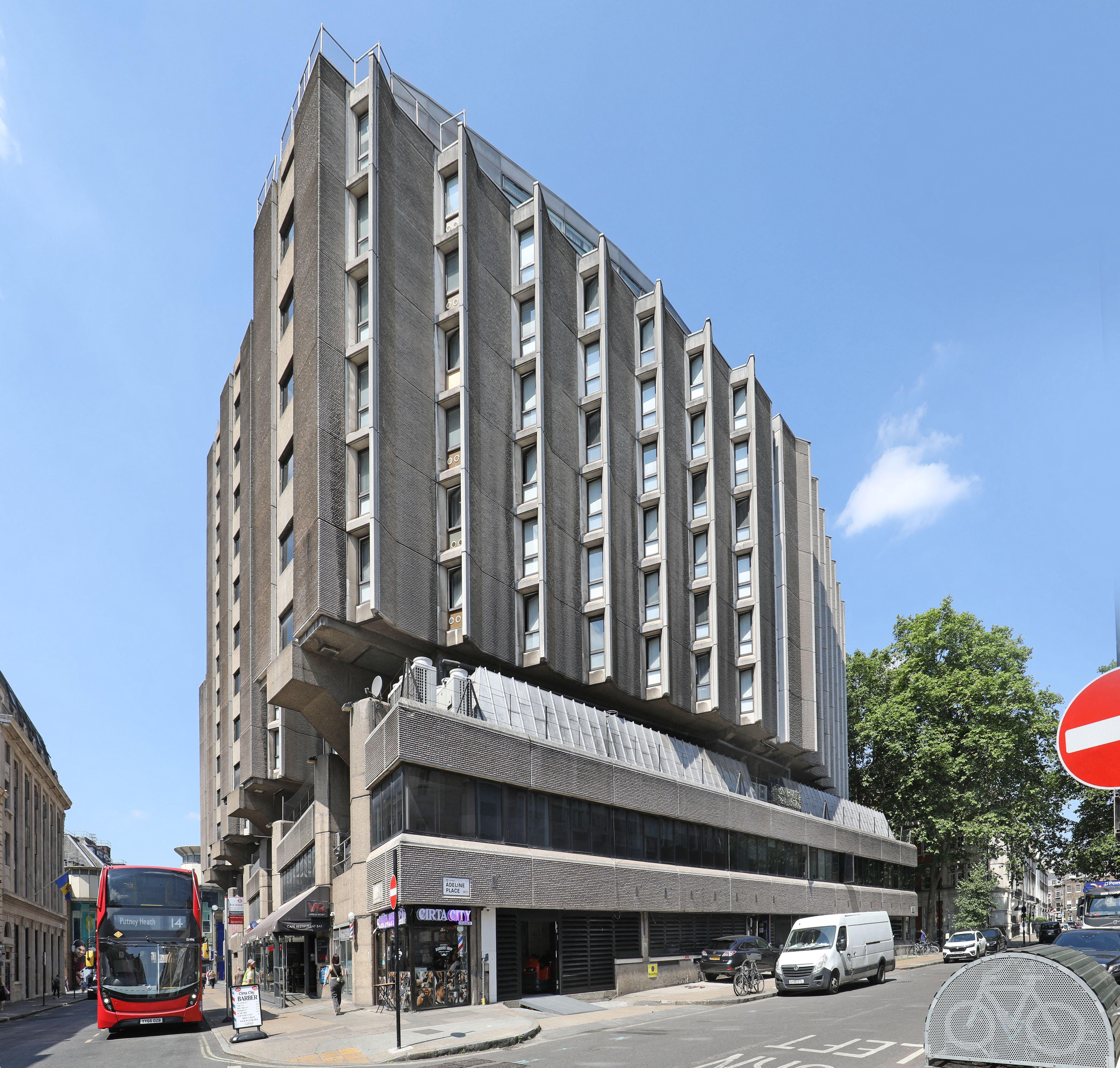
The old YMCA is now mothballed, sandwiched between two Aziz-run hotels. While Aziz himself has relocated to the Gulf and increasingly deputises day-to-day operations to his son Omar, our sources at Criterion say the top man was back in London at the end of the year to do deals. His substantial and growing influence on London — from threats to the Prince Charles Cinema to repeatedly leasing properties to tax-evading sweet shops — remains of substantial interest to us and we do welcome anyone with any information.
Amazon vouchers and Instagram ads: How London state schools are competing against each other for pupils
When Jack Taylor took over as headmaster of Wandsworth’s Griffin Primary School last year, his task was daunting but simple. Pupil numbers had fallen at the 1950s-built school, located in the shadow of Battersea Power Station. School funding is allocated according to the number of pupils. Yet most of a school’s running costs are fixed. Unless he could get the number of pupils up, the school would struggle to stay open.

Taylor’s response was to spend a modest sum professionally filming a series of Instagram reels that were then pushed into the social feeds of local residents through paid-for promotions. The videos highlight how the inner-London site has its own Forest School: “I’m doing the same as any other marketing team – building a community that people want to be part of. I’m just having to do that for a school.”
The headteacher has a straightforward financial analysis of the risk/reward of this approach for schools: “Each student is worth £5,500 a year [in central government funding],” he said. “Any marketing budget that’s less than that — but brings in one extra pupil — can be justified.”
This week, as London’s parents finish submitting their application forms for state primary schools, headteachers like Taylor are doing all they can to fight a wave of demographic change and persuade parents to put their school as first choice. Declining birthrates and families moving out of London due to housing costs mean there are not enough children to fill every primary school place. This has created an environment where London headteachers have to compete against each other for the remaining kids.
“Personalised tour”
All of this has prompted some state schools to experiment with the sort of competitive PR tactics that used to be the preserve of private schools, where the parent is treated as a potential customer who needs to be won over. The sums involved in the marketing campaigns are rarely more than a few thousand pounds but it indicates a substantial change in attitude.
Sacred Heart Primary in Islington is paying for Instagram adverts offering parents a “personalised tour” at a time that suits them of a school that welcomes “families of all faiths & none”.

Primary schools run by the Haberdashers Academies Trust in Bromley and Erith are paying for Facebook and Instagram ads which promise to “open up your child’s future with a creative and innovative curriculum, with specialist teaching in art and PE”. It’s a similar story at Our Lady and Saint George’s primary in Walthamstow, which is running paid-for promotions right up until the deadline.
Paying for leaflet drops in local areas is becoming normalised. Sending Christmas cards to everyone who visited on an open day, or giving staff a script aligning with the school’s values, is also increasingly common practice.
“The unseemly scramble to hoover up the kids”
One London primary school, which asked not to be named, told London Centric it is trialling a referral scheme, where existing parents can win a £50 Amazon voucher for helping to boost pupil numbers. All an existing parent has to do is bring along a friend to an open day. If the friend subsequently decides to send their child to the school, the existing parent receives a voucher. If it convinces just a few more parents to send their children to the school, all pupils will benefit from substantial extra government funding.
Not everyone is delighted by this turn of events, as the finite pool of pupils means the success of one school potentially pushes another school closer to closure. Dozens of primary schools have shut their doors across the capital this year, with more expected to follow after the latest admissions round. Secondary schools are expected to start facing a similar demographic crunch in a few years’ time.
One local authority school governor described how school closures are creating an “unseemly scramble to hoover up the kids by nearby schools — all of which are anxious to prop up their enrolment and avoid being the next one to shut”. There’s also some resentment towards schools run by academy chains, rather than local authorities. They have more flexibility in terms of how they market themselves across borough boundaries in a way council-run schools cannot.
“In an environment of scarcity of pupils, they just serve to further weaken and undermine the position of struggling local authority schools,” complained the governor.
Islington and Lambeth face 30% decline in primary school pupils
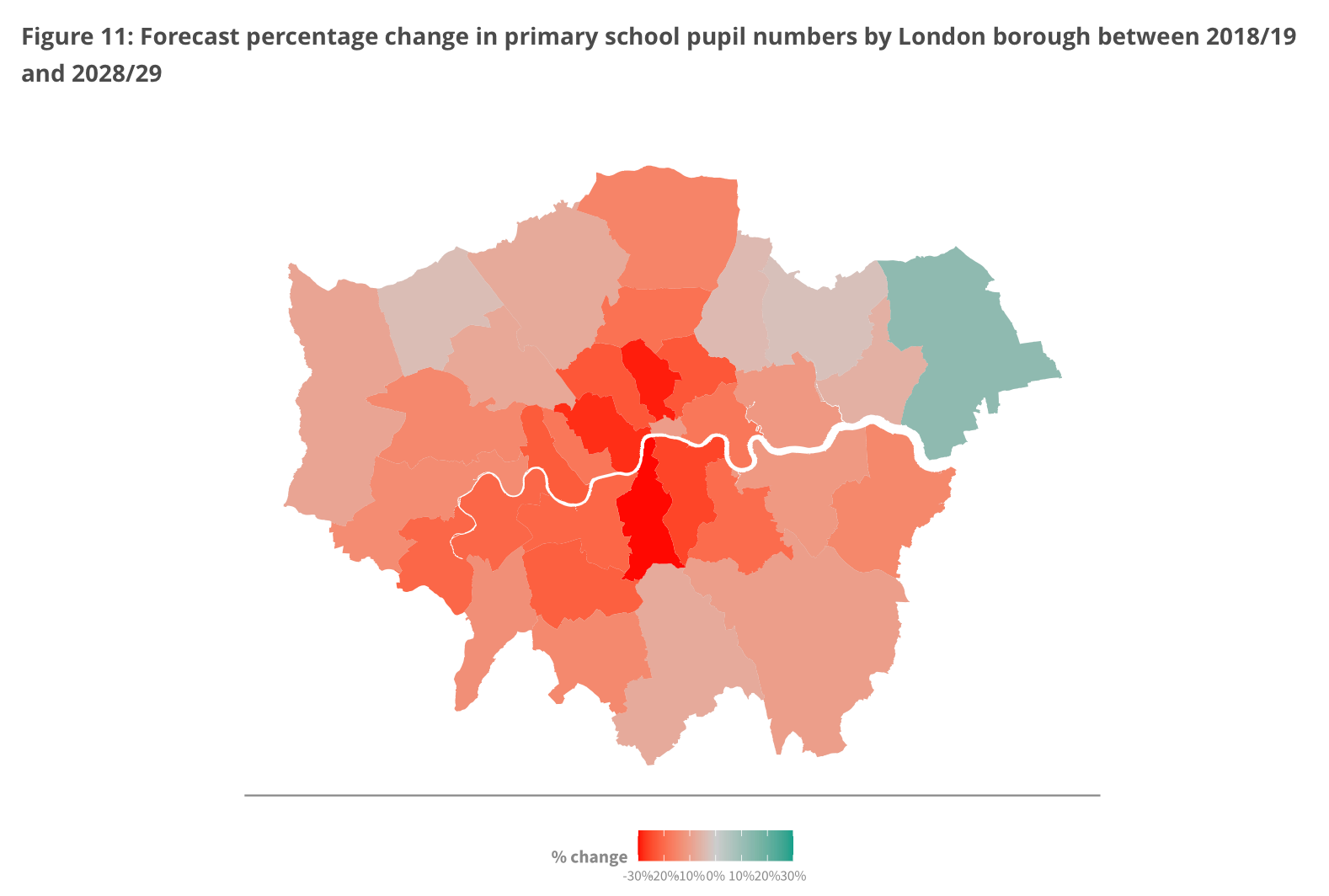
Some of the demographic changes driving school closures are happening nationwide but they are particularly pronounced in London, with analysis from the Education Policy Institute suggesting that by 2028/29, the number of primary school pupils in Islington and Lambeth is expected to be down 30% on a decade earlier: “Most of the other London local authorities are expected to follow suit, with Westminster, Southwark, Hackney, Camden, Merton, Richmond, Wandsworth, and Hammersmith and Fulham all forecast to decline by over 20 per cent.”
And it’s an increasingly difficult market, which is likely to hit secondary schools in the coming years.
James Bowen, assistant general secretary at school leaders’ union NAHT, warned that the entire idea of linking funding to the number of pupils is flawed: “Successive governments have pursued policies that encourage competition between schools when it comes to pupil admissions. What we need now is an approach to school funding that protects and supports those schools experiencing falling rolls, particularly as such demographic changes can often be temporary.”
“You need to get a certain number through the door to keep the school open”.
Taylor, the headteacher, doesn’t think that marketing alone is what will convince people to send their children to his Wandsworth school — but it can get local residents to reconsider, understand it’s under new leadership, and consider a visit. Reinstating traditional primary school events, such as Christmas concerts, can also help shift the dial by bringing in members of the wider community, as does a weekly food bank. Quality of education, Ofsted ratings, the appearance of the school, and word-of-mouth are just as likely to shift the dial.
Plus, in a buyers’ market, it’s a careful balance between appealing for help publicly, and avoiding any signs of desperation.
“The sense of competition is interesting,” said Taylor. “You want to collaborate with your local neighbours. We know that sharing resources and good practice and research and staff works well. But you find yourself in competition for numbers because you need to get a certain number through the door to keep the school open.”
Want to get in touch with London Centric? Click here to send an email or WhatsApp.
Not a comment on the individual stories, as such, but rather to express how much I love this newsletter! I did not expect to be so invested in the school's drama this morning.
Schools: bluesky is fuming nowadays as this is understood to be a side effect on the war against immigration by successive governments, where no politicians seem to care, at all, about the future, or about the population of their country. This was a disaster waiting to happen, this is already a disaster opening to other disasters, and yet the narrative of "foreigners bad" is pushed over us, over me, to remind me that I am never going to be considered as a British human as the rest. Absolutely inhuman.