

London's newest open space
Plus: Will no one rid London of these troublesome trees, London Standard to merge with the Independent, Lime bikes face minimum maintenance standards.

It’s rare for London to get physically bigger. But that’s what happened last week, when the Bazalgette Embankment quietly opened — giving Londoners access to three acres of land that has been reclaimed from the River Thames.
On Tuesday afternoon I walked along it with Clare Donnelly, the architect who helped design the capital’s newest public space. She explained how it took 17 years of work to get to this stage, how her team managed to turn the lid of a giant sewer into a place people will want to visit on a summer’s day, and the little details to look out for when you visit.
Scroll down to read that story
We’ve got an investigation coming this weekend that has taken us months of work and cost thousands of pounds. If you’re able to become a paying member, it’s really appreciated — your money goes straight into helping us conduct ambitious reporting into what’s really going on in the capital.
Christmas in late January
Parts of London are still suffering from a festive hangover, as Christmas trees are left to litter the streets. One of the problems is that councils have cut back on free tree collections in recent years as local authority budgets have tightened — but it seems residents haven’t noticed. And as one reader pointed out, it’s easy to get a netted Christmas tree home without a car — but quite hard to get it to a recycling centre at the end of the festive period.
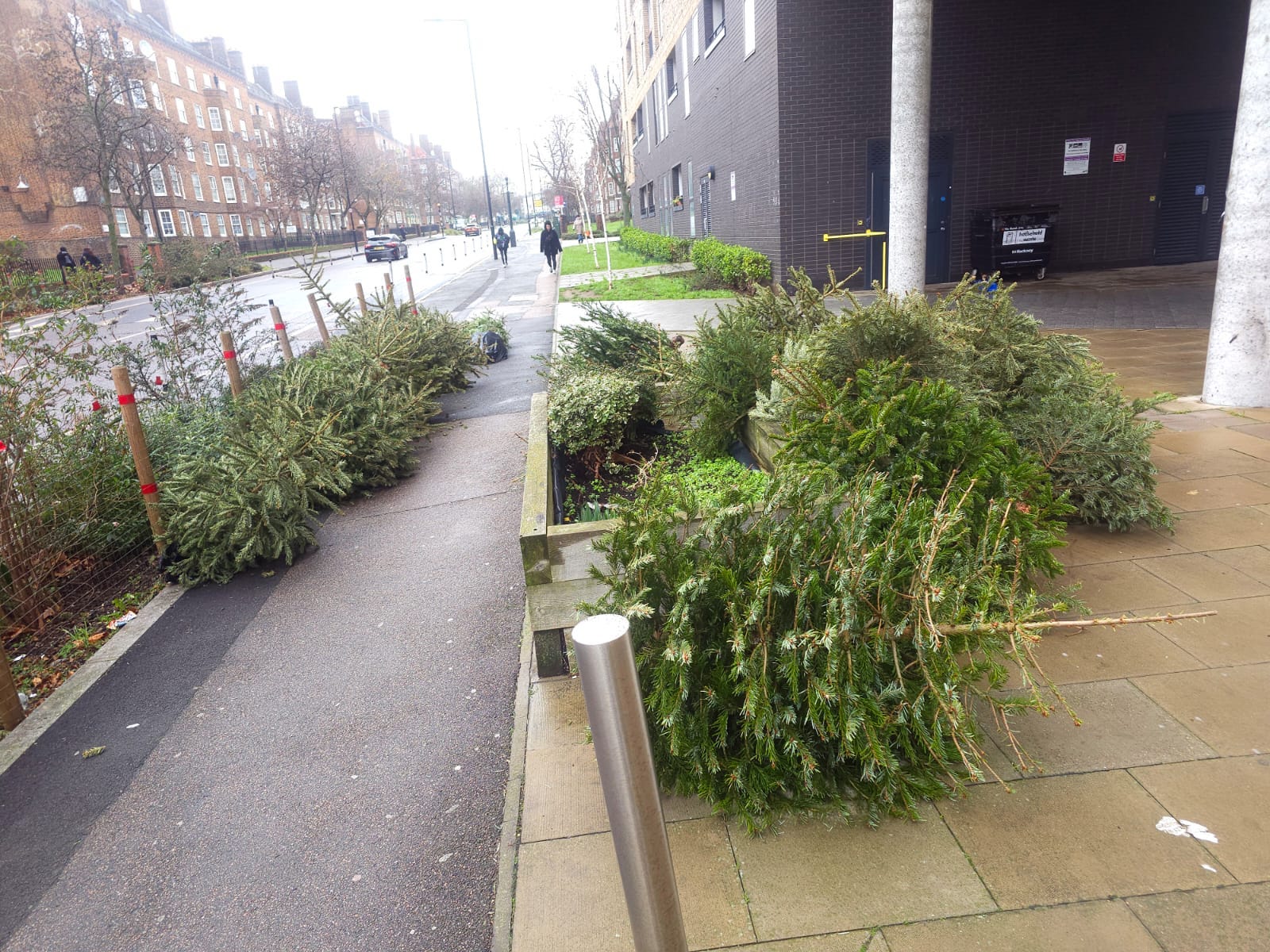
One of those councils that no longer collects trees for free is Hackney, turning some east London streets into a decaying forest. Sarah Young, Hackney’s cabinet member for climate change, environment and transport, told London Centric that the “vast majority” of the residents are recycling their Christmas trees responsibly, “with over 6,938 households subscribing to the garden waste service, which is more than the previous year”.
She said the council had communicated with residents before Christmas about the range of options available for ”responsible disposal,” and that residents were encouraged to “borrow a potted tree” or “invest in their own so that they can bring it indoors year after year”.
London Standard to merge with Independent
The London Standard is to merge its online operations with The Independent, with all existing staff offered voluntary redundancy. The news was first revealed by Dan Thomas at the Financial Times, whose report implies the Standard is still losing around £10 million a year. That’s despite the departure of almost all the senior executives who were involved in last autumn’s Evening Standard’s relaunch as a weekly newspaper.
Lord Lebedev, the Standard’s owner, has been happy to publicly criticise me in the past — and I’ve not held back by publishing leaked documents showing how a curious influx of Saudi Arabian money propped up the Standard and Independent during the pandemic. But there are few winners from a situation like this. The Standard will continue to appear on the streets as a weekly print product produced by a core team but the end result is likely to mean fewer people reporting on the capital. Solidarity with the journalists affected.
Lime squeezed over maintenance standards
Munira Wilson, the Liberal Democrat MP for Twickenham, has been asking questions in parliament about London Centric’s investigations into Lime bikes.
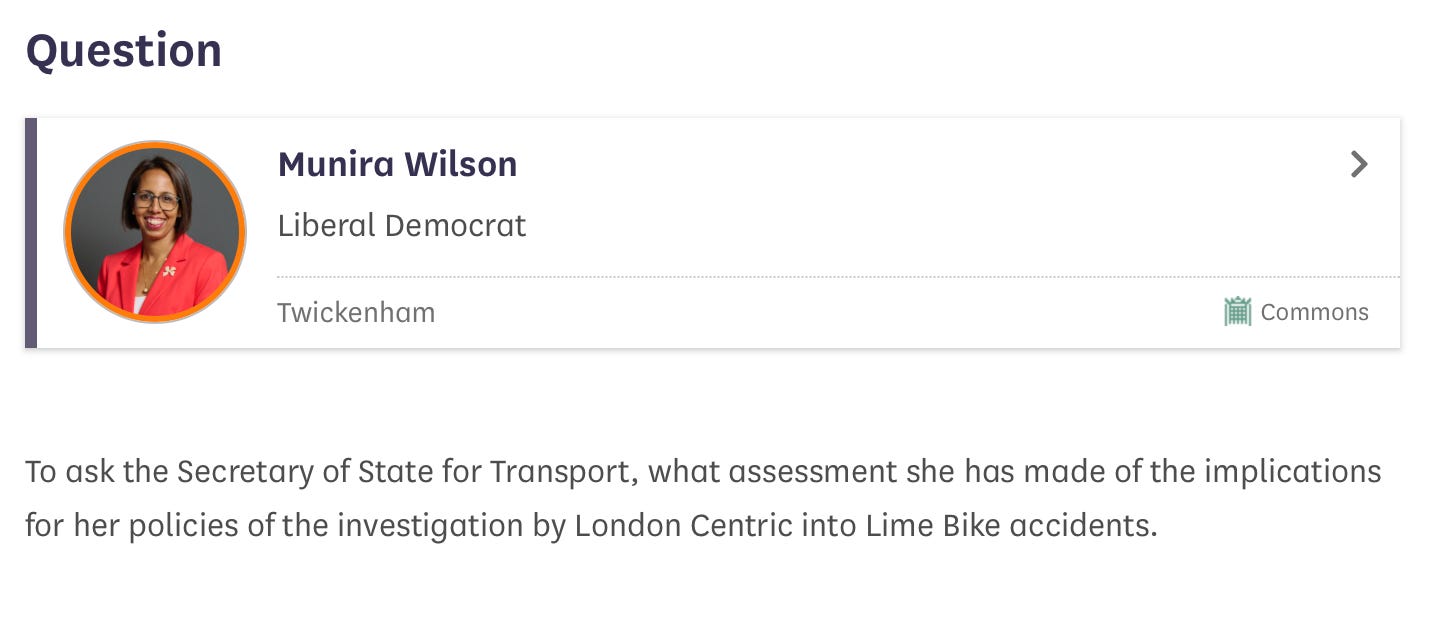
In response, the government told her they are taking our reporting into account while drawing up the forthcoming laws to regulate rental e-bikes across the UK. This could include requiring e-bike hire companies to have “minimum standard conditions… to ensure a national baseline of safety”. Ministers said licence conditions could also include “reporting and maintenance requirements”, to deal with the sheer number of damaged bikes left available for hire even after faults are reported. (That said, if anyone knows what is behind the trend of people slashing Lime bike tyres we’re still trying to work that one out.)
The story of the Bazalgette Embankment by the woman who designed it
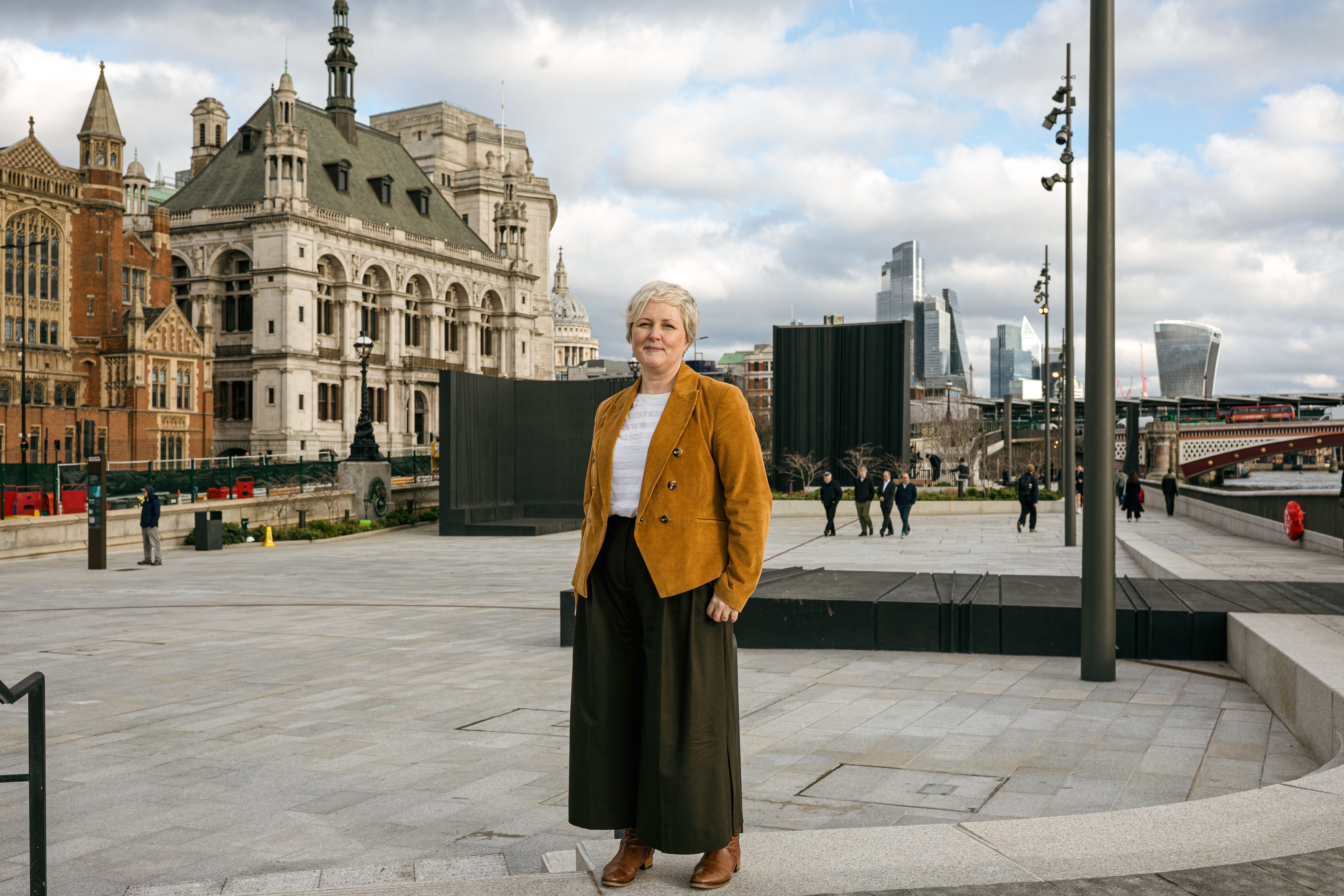
Photos: Laura Gallant for London Centric
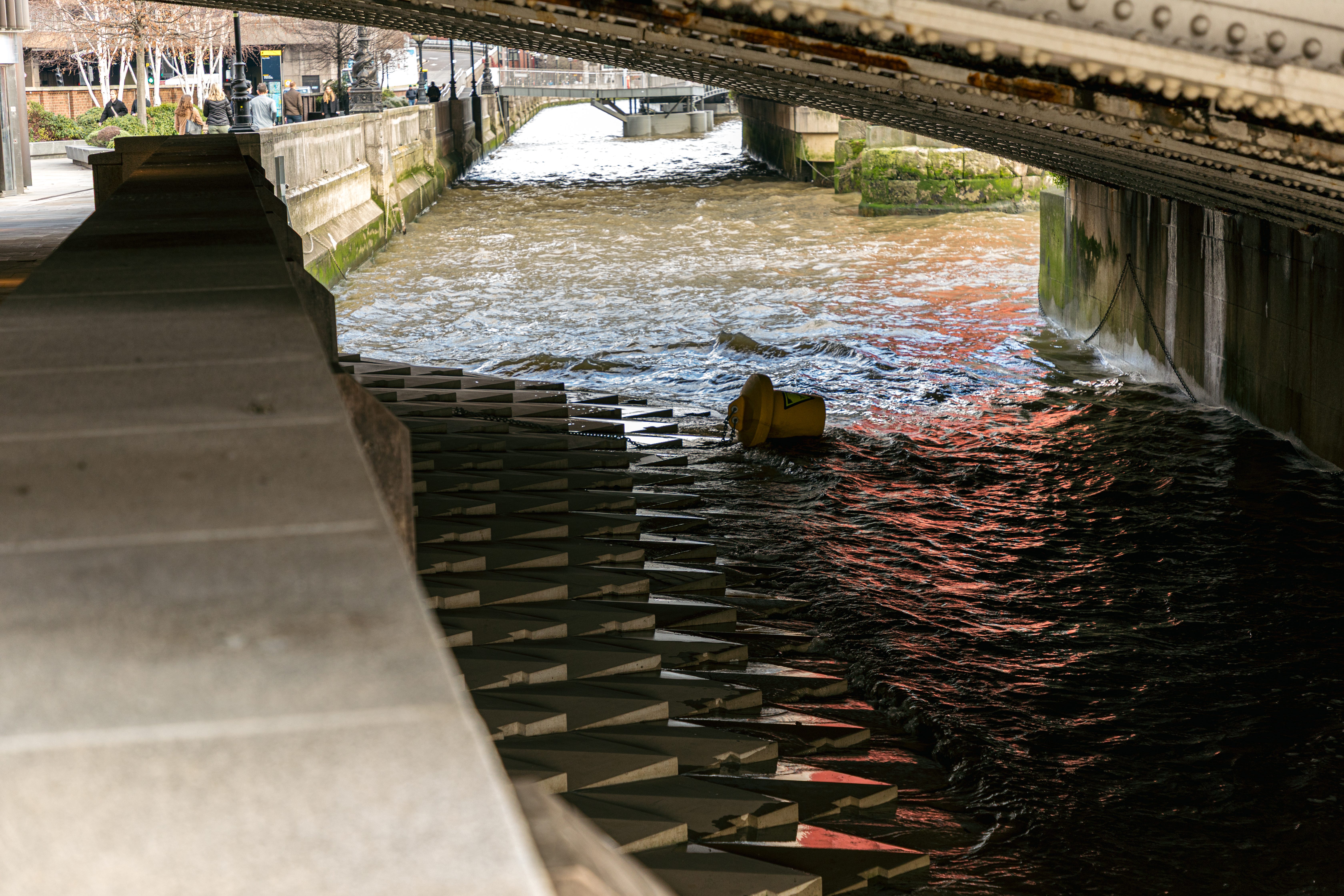
If you’ve passed Blackfriars Bridge at any point in the last decade, you’ll have seen a giant construction site jutting out into the River Thames for ‘super sewer’ project. What’s received less attention is what would happen to the site after construction finished. Then last week, with no formal announcement, the barriers came down and a new bit of London was opened to the public for the first time.
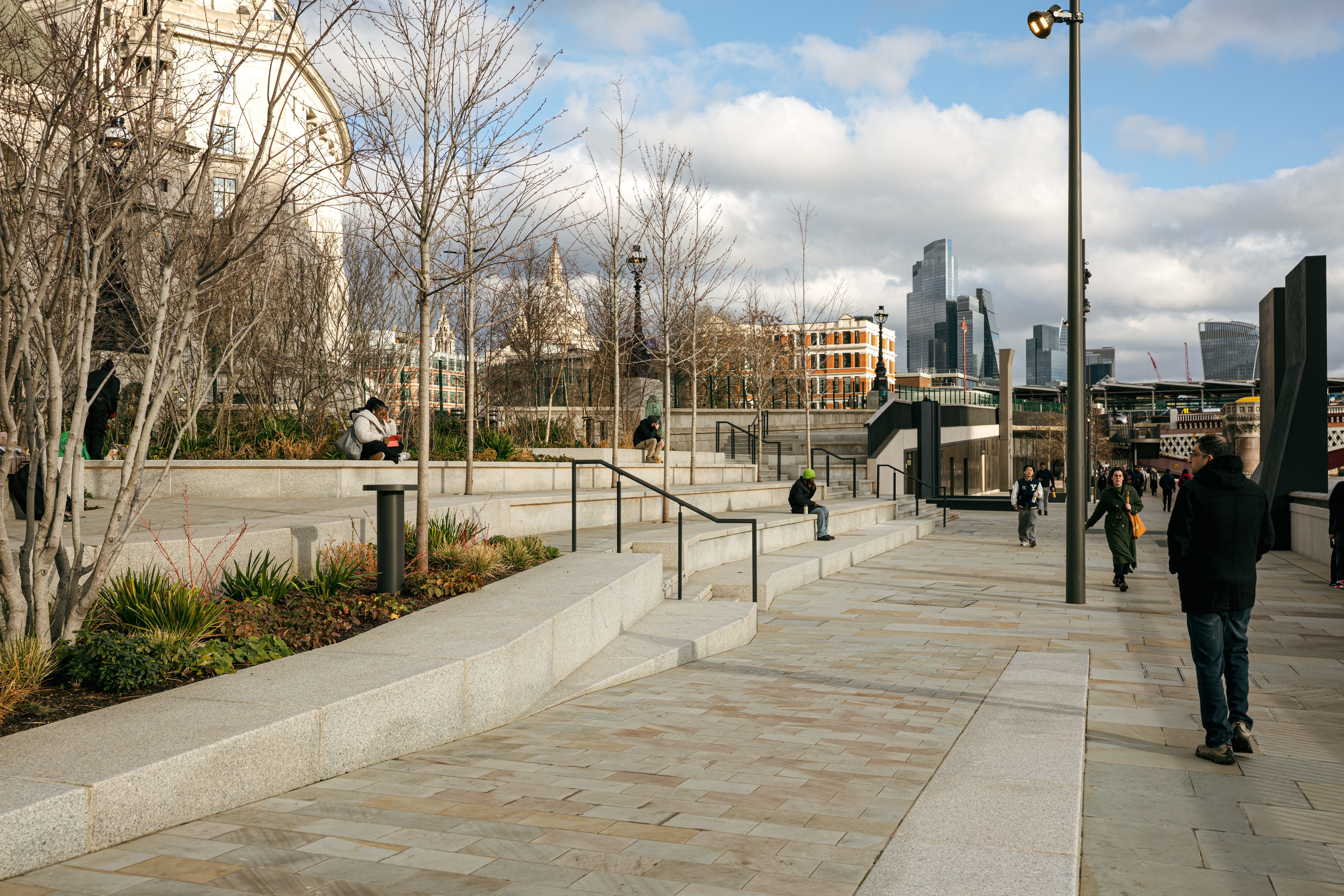
What’s been revealed is a substantial south-facing open space, called the Bazalgette Embankment, which could soon be filled with cafes and shops. It extends a walkway along the Thames between Westminster and the City of London, while offering new views of the capital.
I asked Clare Donnelly, the lead architect responsible for the area, if she’d be willing to pop along to the site and give London Centric readers a tour. This is what she said.
1. It’s all about an ancient subterranean river
The new Bazalgette Embankment was built because of the River Fleet — and the historic river’s mistreatment by past generations of Londoners.
The Fleet, which gave its name to Fleet Street, is fed by the ponds on Hampstead Heath before flowing through Camden and then down the route of the modern Farringdon Road. As medieval London expanded this waterway became an open sewer for the capital’s residents to dump their waste in.
This transformation was formalised in the Victorian era, when the Fleet was culverted — or covered up — and formally became part of the sewage network.
Until very recently, when it rained heavily, vast amounts of untreated sewage would cascade down the ancient River Fleet and into the Thames through an opening at Blackfriars Bridge.
The Bazalgette Embankment’s primary purpose is to stop that happening. It intercepts the old sewer exit, diverts it slightly upriver, then drops it down a newly-constructed 50 metre-deep shaft. At this point the enormous volume of human waste and rainwater is slowly released into the new giant underground super sewer that runs beneath the River Thames — which then takes it away for treatment in east London.
All the open space you see on the Bazalgette Embankment is a result of architects working around the engineering requirements of the sewer system, explains Donnelly.
The deep shaft couldn’t be built right next to the bridge because there wasn’t enough space to build it, explains Donnelly. Then there’s the Waterloo & City line running underneath the site, which required the shaft to be moved even further along.
“That’s why it’s long and thin,” she said. “One, because of the massive amount of [sewage] flow coming through it. And two, because of all of the different below-ground obstructions.”
2. There’s going to be a giant water feature for kids to play in
Glasgow-based artist Nathan Coley has installed giant tombstone-like sculptures along the new public space. His brief was to try and reflect the engineering scale of the structures below ground.
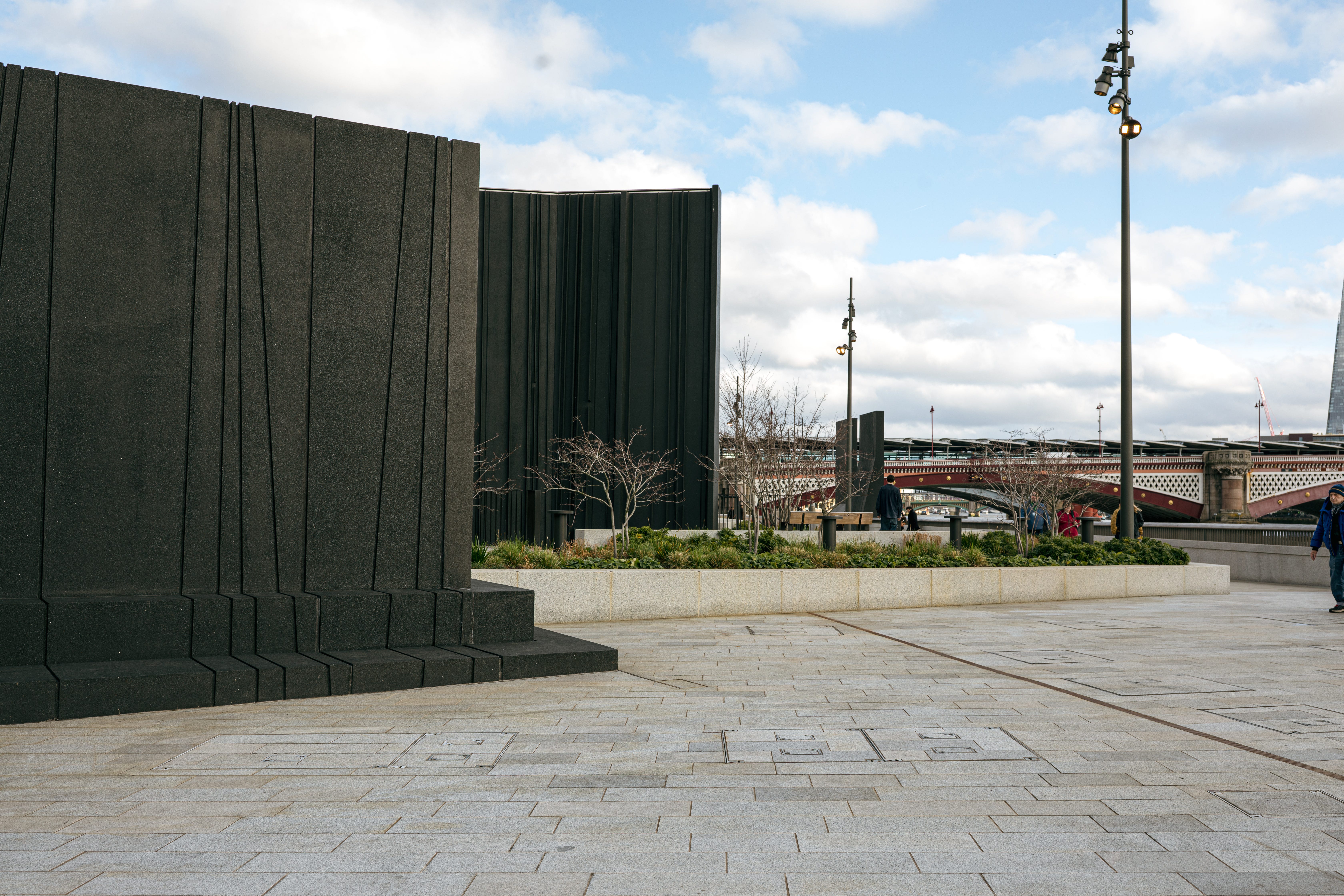
One of the issues he had to take into account was the microclimate of the site, said Donnelly: “There’s a really strong prevailing wind that comes down the river. It’s about creating areas of shelter behind and slightly more enclosure. And also about framing views. It could have been quite a flat, open space.”
One of Coley’s artworks will feature a cascading waterfall, which is due to be switched on later this year, with the intention that the running water will hide the noise from traffic on the nearby Blackfriars underpass. Children will be encouraged to play in the waterfall, just as they do at Granary Square in King’s Cross.
3. There’s a plan for shops and cafes to rival the South Bank
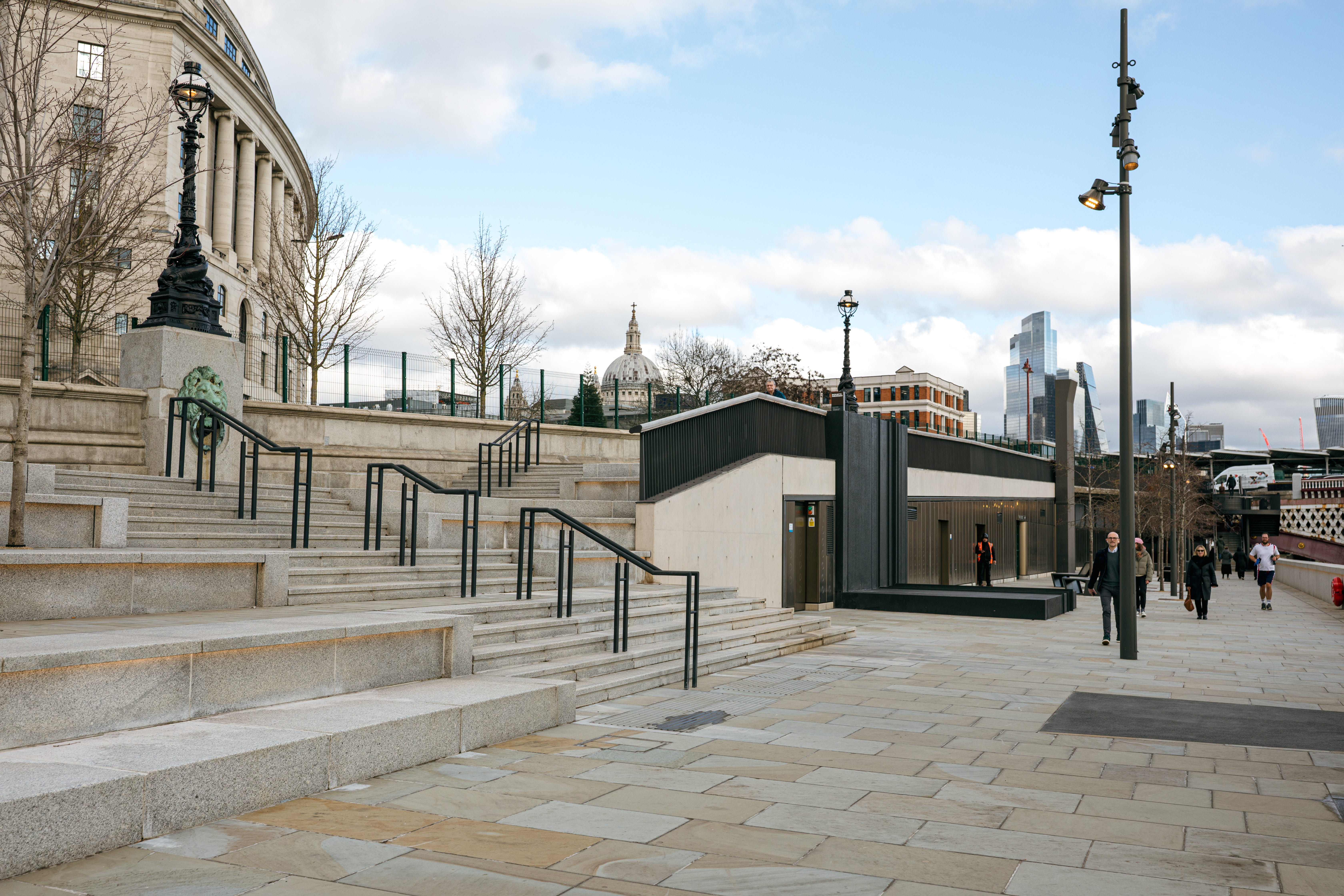
Donnelly’s aim was to create somewhere you should stop while walking along the north side of the River Thames, on a route that previously had few benches or places to sit. That’s why there are terraces to sit on, furniture, and other design features designed to make you linger.
“It’s about trying to do simple things, like provide benches and provide viewing platforms so you can actually stop and enjoy the river environment rather than just getting from A to B,” she said.
There’s already a small empty kiosk unit which is likely to become a coffee shop. In a rarity for central London, there will also be public toilets. Then, underneath the slip road to Blackfriars Bridge is an undercroft, which until 2015 contained the Lord Wakefield Range — used by shooting fanatics to practice their rifle skills after a day at work in the City. At the moment this area is hidden behind panels but there are considerations as to whether shops or restaurants could ultimately be fitted in there.
“You’ve got the South Bank over there, which is oversubscribed,” she said. “This is south-facing and sunny. There’s a real opportunity.”
4. It wasn’t a given that London would gain an open space
Utilities companies like to have unlimited access to their sites so they can conduct maintenance without members of the public wandering around on top.
The original plan for the site also involved giant ventilation shafts that would have taken up much of the area. But over time, Donnelly said, the team realised this wouldn’t be acceptable at this location.
“They don’t let you reclaim land from the Thames anymore,” she said. “We were only allowed to build [the embankment] because of the environmental improvement that stopping that sewage going into the Thames would have. It’s a piece of operational infrastructure. It’s doing hard work below the surface.”
She said engineers working on the sewer welcomed the potential to combine their work with something above ground: “Most of their stuff is never visible, never seen. The idea that we’d be able to put something on top of that structure, that they can bring their families to see, they were really excited about that.”
5. If you know where to look, you can spot the hidden portals to the structural side of things
Walk along the new embankment and you’ll notice hatches on the floor indicating where the sewer equipment is hidden and maintained. Some of it covers the River Fleet overflow. Other parts plumb into the Victorian sewers built by engineer Joseph Bazalgette, who gave his name to this embankment.
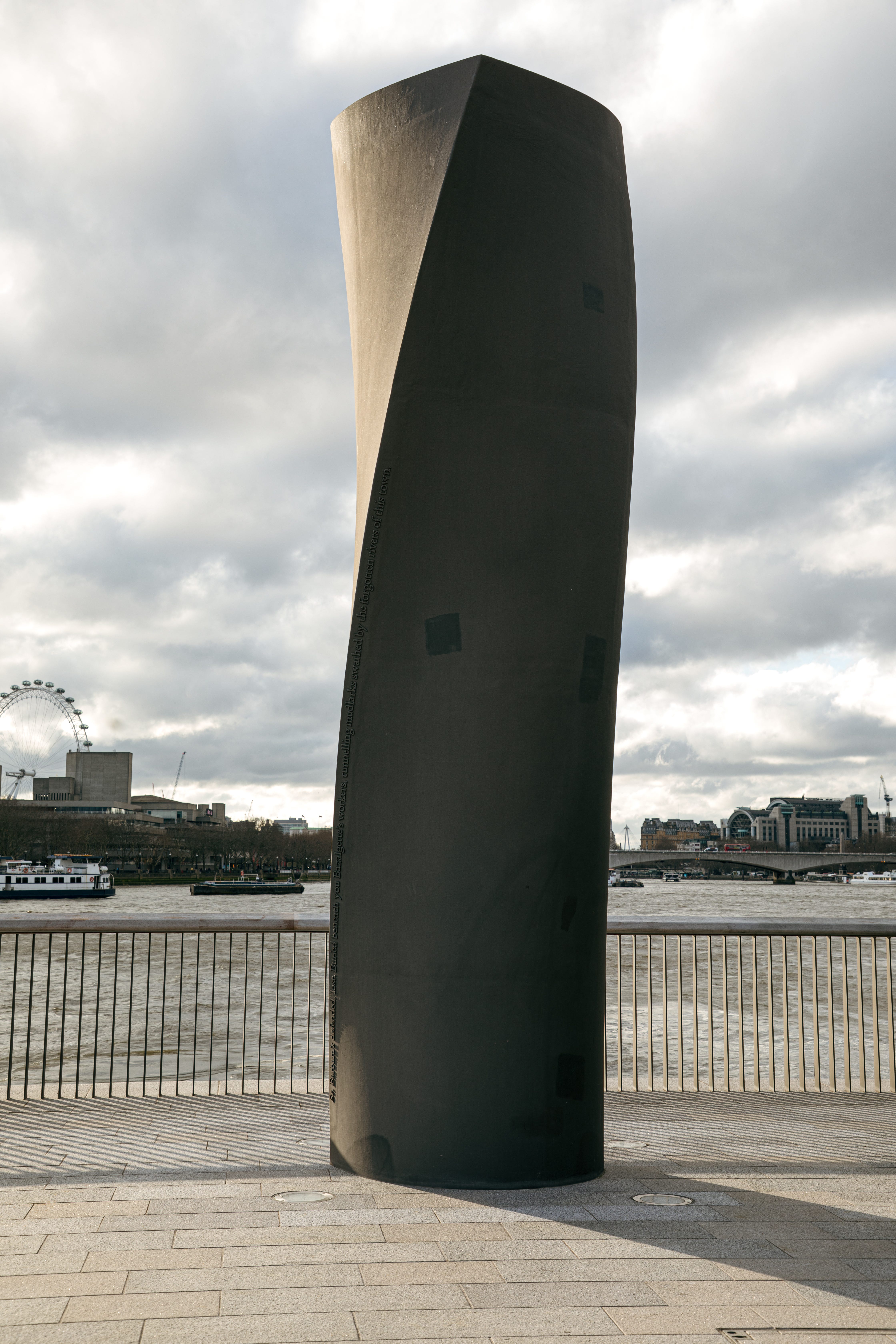
At one end of the embankment are three curved pipes designed to look like statues. Those are ventilation shafts, where displaced air from the sewage is released after being scrubbed with carbon filters to remove the smell.
There’s also a metal circle on the floor of the main public space that indicates the location of a giant concrete lid that stops people falling 50 metres down into the sewer.
If you do go to visit the site, have a look for the square line in the middle of this lid. This is what the team call the “moon buggy hatch”. Every ten years of the super sewer’s life, this hatch will be cracked open and a crane will lower a small vehicle into the tunnel — with engineers driving up and down the length of the sewer to check for any problems. Smaller hatches are also visible in the middle of the public square for temporary access to fish out sleepers, shopping trolleys or any large items that somehow make their way into the sewer.
The opening of the Embankment was delayed by the dry summer and autumn — which meant there weren’t enough moments to test whether the sewage system would work in storm environments. The early January rain was enough to give the project’s bosses confidence that everything was working well enough to take the barriers down and let the public onto the site.
6. It’s designed to repel skateboarders, who are there regardless
As we walk along the river, it’s clear that London’s skateboarders have already found the site. This is ironic, as Donnelly’s team had been asked to include anti-skateboarder measures, including deep notches along the edge of seating areas, in order to reduce the damage that can be done to surfaces and corners.
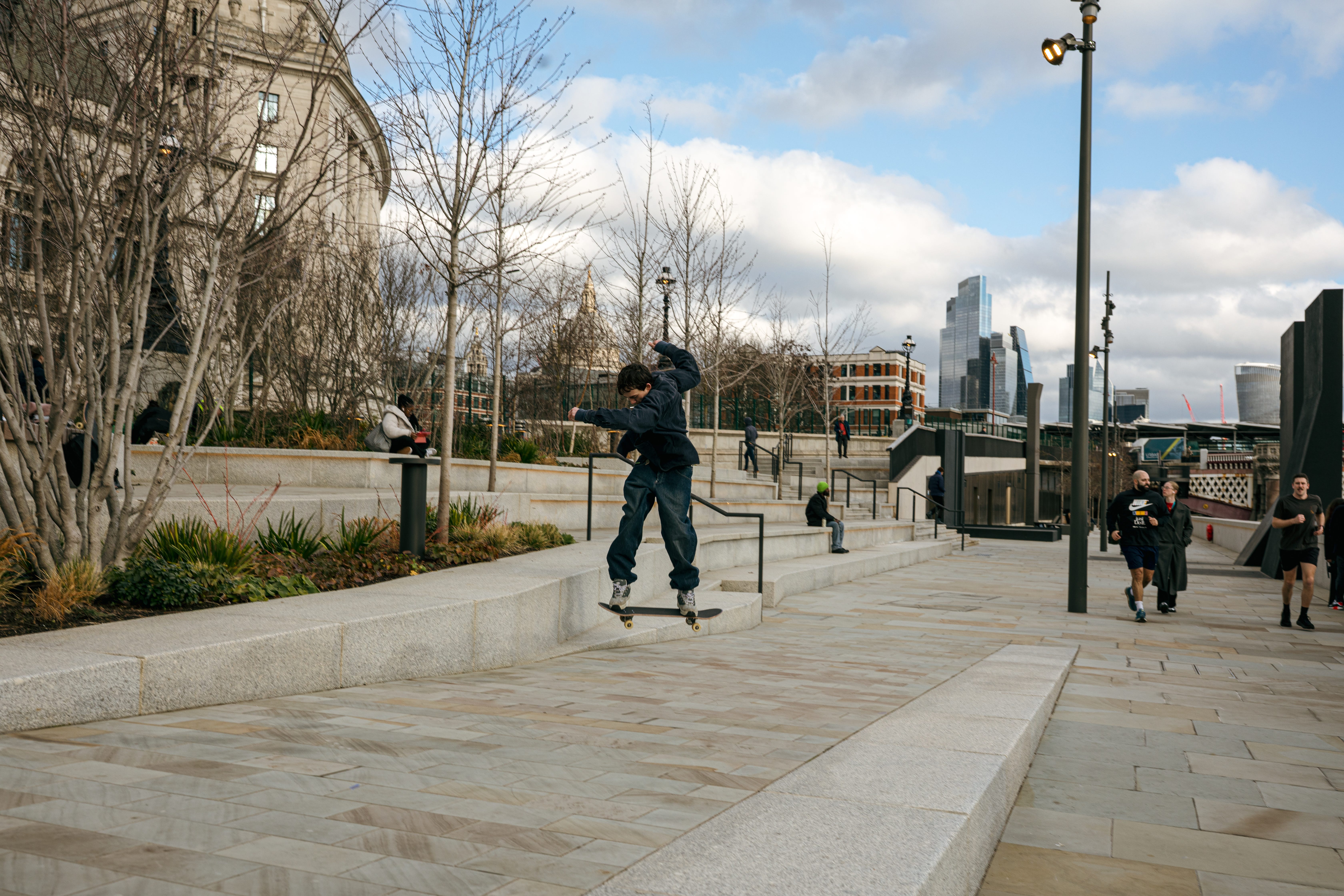
“I’m enjoying the skate here, but it’s not easy,” said one skateboarder smoking a joint on the new terrace. “We’re just happy to have a new area in London. Everyone’s chilling.”
He then enthusiastically offered his services to the architect as an adviser who can make future public squares more friendly to skateboarders. Soon afterwards he was spotted falling painfully on the granite floor after trying to use one of the statues as a ramp.
7. Londoners will pay for all of this, so you might as well enjoy it.
Thames Water customers will ultimately subsidise the £4.5bn super sewer, including the new open spaces, through a roughly £20/year surcharge on their bills. Legally the Bazalgette Embankment is not ‘classic’ public space but private land controlled by Thames Water that the public are allowed to access.
In addition to helping to clean up the Thames, the new open spaces along the river — of which Bazalgette Embankment is the largest and most noticeable — are one of the main benefits. Other sites have already been opened at locations such as Charing Cross station and Vauxhall Bridge, with a final new open space at King Edward Memorial Park in Shadwell due to come soon.
Donnelly, who grew up in Ilford, said it had been daunting to oversee the construction of a new bit of London that is designed to outlive everyone reading this: “It felt like a massive responsibility. Then you start seeing the opportunities and how much you can make it better. It’s the best job you can have, really.”
She predicted the Bazalgette Embankment will really come into its own this summer: “People will be really taking ownership of the space. More skateboarders. Kids splashing around in that fountain. Sunbathing. It will be a really sunny, lovely spot. I want people to come back and say, we want more seating. We want to make more use of this.”
At the moment everything is box-fresh. Won’t it just end up being full of human chaos and clutter?
“I’m fine with that. You’re making a platform for things to happen on.”
After we published, the architectural teams working on the project asked if we could credit their work as well. Which seems fair enough. Clare Donnelly’s architectural practice Fereday Pollard carried out early work with Arup Landscape. Later on, architects Hawkins\Brown and landscape architects Gillespies got involved, along with Hyland Edgar Driver and Orbit Architects. All in all, there’s a lot of people whose work went into the site over many years – but we’re grateful to Clare for the tour and for sharing her vision.
PS…
With enormous apologies to everyone who enjoys their high-end property gawping, I forgot to insert the link to the Hampstead house with the living room swimming pool in last week’s email. That’s now been reinstated. One reader who claims to have been inside the property says it is “amazing” and crucially, despite the swimming pool in the living room, “doesn’t smell of chlorine”.
Thanks to everyone who took the time to read London Centric’s profile of Reform UK’s Laila Cunningham over the weekend. We’ll be doing similar looks at other mayoral party candidates, as and when they are announced.
Our invitation to send in new information on London landlord Asif Aziz elicited some interesting leads. With particular thanks to the reader who got in touch to say Aziz’s potential redevelopment of the St Giles Hotel near Tottenham Court Road has been causing concerns among some gay Londoners who regularly rent its rooms for a very specific act. Sadly, if we provided any further details then this newsletter would probably be blocked from your inbox.
Just a little correction to this one... I referred to a forthcoming Tideway site on the river near Canary Wharf because I'd been chatting with Clare about the site being popular with Canary Wharf joggers — but really you'd be stretching the definition and it's a mile upriver at King Edward Memorial Park in Shadwell.
Rachel Reeves discuss snail farms at Davos https://youtu.be/0My7QJxc4ZU