

Harry Potter shops raided after London Centric investigation
Plus: Is London’s iPhone theft era really coming to an end? • A £9.5m mansion next to Henry VIII's childhood home • Go underground for your phone coverage


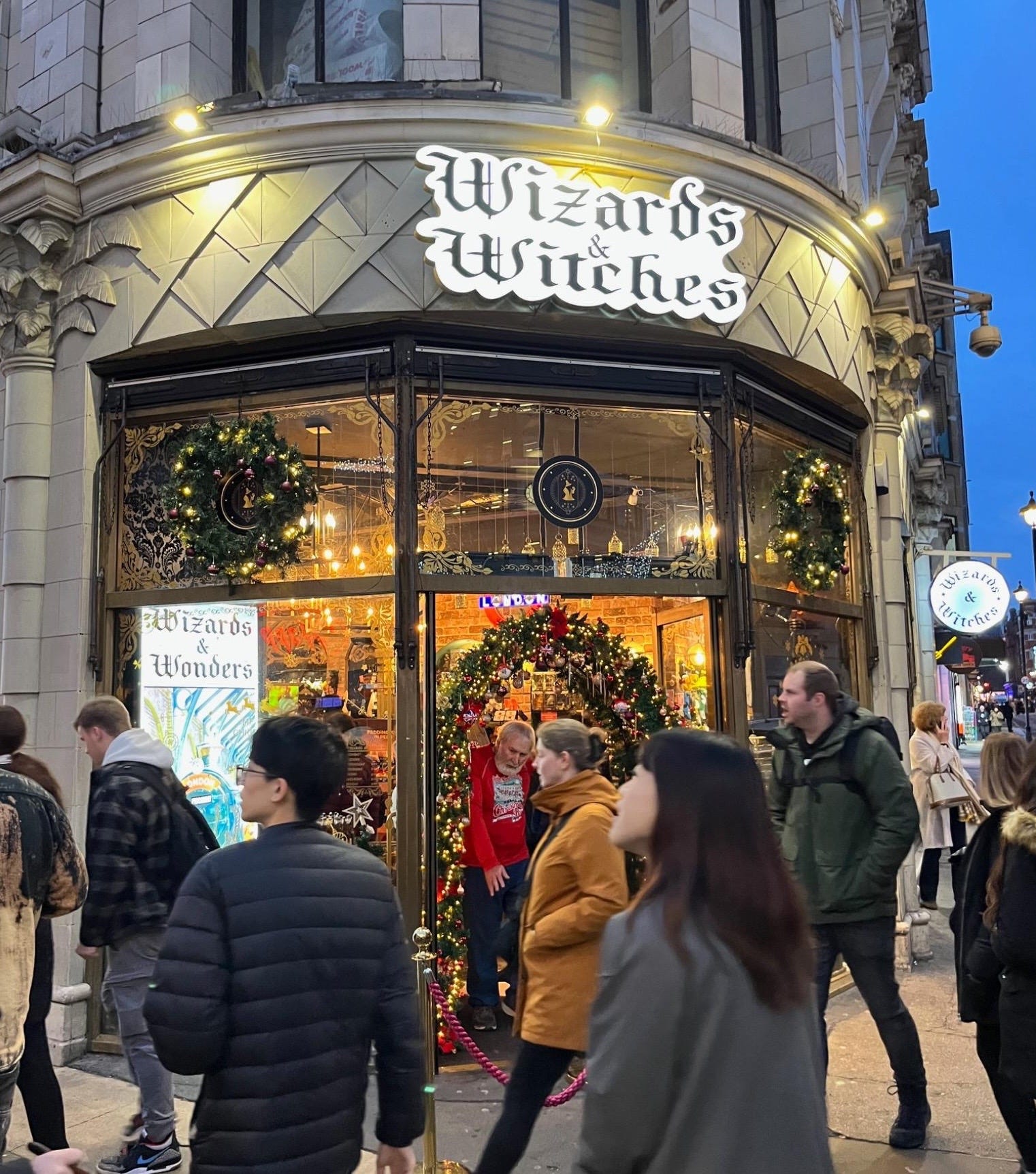
Harry Potter gift shops in central London were raided by HMRC this week following a London Centric investigation into rampant tax evasion.
Over the last 18 months we’ve exposed the dubious ownership of many of the capital’s gift shops, highlighted how billionaire landlords collect their rent, and traced their dodgy profits all around the world.
One of the people who read London Centric’s reporting was Dan Tomlinson, the Labour MP for Chipping Barnet and exchequer secretary to the Treasury. He is the government minister in charge of HMRC and chairs the board of the tax authority.
This week Tomlinson oversaw a series of raids on six central London gift shops, including those stocking “wizarding” goods. He said this will be part of an ongoing campaign targeting the tax affairs of the capital’s souvenir stores. The raids found several criminal offences had taken place and HMRC officials are now examining detailed financial data from the businesses.
In a statement the government minister said: “I want to thank Jim Waterson and local campaigners for highlighting the issue of dodgy shops in London. To dodgy shop owners and landlords turning a blind eye everywhere: we are coming for you.
“Too many high streets have been blighted by illegal activity that harms local communities and undercut honest businesses, and we’re determined to fix this. We’re increasing our action across the UK to target the criminals using shops as a front for tax evasion, money laundering and fraud.”

How the gift shops actually make money
London Centric’s reporting has tried to bust the myth that dodgy gift shops in the centre of the capital are empty money laundering fronts without any real customers.
Instead, we’ve explained how many Harry Potter shops, American candy stores and other similar souvenir operations are high revenue businesses that target popular tourist areas and sell substantial volumes of goods to real people. The shops can make millions of pounds a year in illicit profits thanks to their decision to unilaterally opt out of paying taxes, paying the minimum wage, or employing staff with the legal status to be in the UK.
A core part of this business model involves paying small monthly stipends to individuals, usually recent immigrants or overseas students who do not intend to remain in the UK long term. These individuals then sign the legal paperwork at Companies House stating they run the shops.
These patsy directors, including one who gave their home address as a location that we tracked down to an abandoned car park, often have low incomes, live in precarious housing situations and are willing to take the blame on behalf of the people really running the operations.

When anyone in authority starts to question a specific shop’s failure to pay business rates, VAT or corporation tax, the operator “phoenixes” the unit. This means the shop sheds its existing legal identity, only to reopen within days under a new name, with a new legal owner, often with the same stock.
Gift shop businesses that actually pay their taxes, or other legitimate companies that want to rent central London retail units, cannot compete with the higher rents that a tax-evading outlet can afford. The end result is a sea of highly profitable tat shops enveloping central London and Oxford Street.
Our reporting is based on talking to dozens of people directly involved in running London gift shops over the last two years. All requested anonymity due to fear of the individuals and criminal organisations involved in the trade.

“Magic and wizarding products”
In the past, many raids on London’s gift shops were led by trading standards staff. Officials focused on seizing fake or dangerous goods, such as chocolate that doesn’t meet food safety standards. These raids sometimes resulted in fines, which could be written off by the shop owners as a cost of doing business.
Thanks to the support of paying London Centric subscribers who fund our journalism, we’ve been able to make the case to politicians that, if they want to clean up central London, they instead need to follow the money and treat this as a tax enforcement issue.
This week saw a new approach. HMRC officials were present at the central London raids and seized full downloads of all the till data at the gift shops. In a statement, the tax authority said it will now analyse the data and conduct “detailed tax compliance enquiries” before deciding on any further action.
HMRC said the raids targeted “shops selling royal family, London and UK-themed gifts, along with magic and wizarding products”. They were a coordinated operation with Westminster Council, the Met Police and the Home Office.
This week’s gift shop raids have already resulted in three arrests for immigration-related offences and a £40,000 civil penalty issued to one shop for employing an illegal worker. Trading standards officials also seized goods worth £5,433, including 289 disposable vapes, 173 squishy toys, counterfeit bags, hats, scarves and unsafe travel adapters.
It is not known which specific central London gift shops were raided by HMRC officials, due to taxpayer confidentiality pending any prosecutions.
Magic away the tax bill
At least one major landlord that has hosted tax-evading gift shops has previously stated its willingness to cooperate with authorities. Last summer we informed Asif Aziz’s Criterion Capital that the company had repeatedly rented units in the Trocadero building near Piccadilly Circus to tax-evading gift shops that had engaged in “phoenixing”. The company’s lawyers said that while a landlord is “entitled to let to tenants who will pay a market rate for the property”, it would assist HMRC with any investigations.
What’s clear is that there does seem to be a change in attitude underway at HMRC, recognising that the sight of blatant tax evasion on some of the country’s most prominent streets undermines faith in the entire system.
As Kensington and Bayswater MP Joe Powell, a longtime campaigner on this issue, put it when he raised our reporting with Treasury ministers in the House of Commons last summer: “An increasingly common issue on our high streets is phoenixing. That is where a shop unit continues to trade while cycling through multiple limited companies every few months, none of which pays corporation tax, VAT or business rates.
“Can the minister encourage officials at His Majesty’s Revenue and Customs to walk along Whitehall, just a few hundred metres from this chamber, and take a look at whether the series of Harry Potter-themed gift shops across London - which have been accused by London Centric of doing exactly that - are playing by the rules? Will they ensure that tax enforcement supports legitimate small businesses on our high streets?”
Now it appears the tide is turning.
This isn’t the end of the gift shop story…
In recent months, London Centric has had reporters working on this story in distant locations such as India, Dubai, and Oxfordshire. Our aim is to finally identify the people who are really profiting from the capital’s dodgy gift shops.
Our reporting on these shops won the Wincott Award for best regional financial journalism in the UK. But we want to go further.
Reporting this story has cost London Centric more than ten thousand pounds and the bill is continuing to rise, alongside the substantial legal risk. We’re funded by our readers, we have no financial backers, and we’re not afraid to take on vested interests. If you’re able to become a paying member and support original investigative reporting about the capital, your subscription will help fund this work.
Preposterous property of the week
Are you desperate to simultaneously channel Henry VIII and a James Bond villain from the 1990s? We’ve got the property for you. Mottisfont Hall, an eight-bedroom Victorian mansion, is on the market for £9.5m.
Situated in south east London, the house is on the historic site of a medieval Royal Jousting Yard and next door to Eltham Palace, where the Tudor monarch spent his childhood. It’s fair to say that it is a unique combination of old and new.

Not only does it come with the standard mansion amenities, such as a cinema room, wine cellar, and gym, but it also features a frigidarium plunge pool, orangery, and a cottage for staff.

Is London’s iPhone theft era really coming to an end?
Following increasingly angry accusations that the Metropolitan Police is failing to tackle phone theft – including by allowing thieves to use the capital’s flowerbeds as holding areas – the force has launched a very public campaign to promote its efforts.
We’ve previously highlighted figures from former Liberal Democrat campaigner Rob Blackie that show the abysmally low chances of a prosecution of anyone who steals a phone. The Met has now released figures claiming substantial falls in reported phone thefts this year, especially in central London.
The Met has also repeatedly complained that the main reason phone theft is out of control in the capital is because it’s so easy to flip the phones for a quick profit.
In March, Met Police Commissioner Mark Rowley gave tech companies until this summer to come forward with “concrete commitments that make stolen phones unusable anywhere in the world”, or else he would ask the government to legislate to force them to improve their technology.
This week the Met announced it had reached a deal with Apple to brick more phones. iPhones are the main target of London criminals, with Samsung devices often dumped by thieves due to their relative undesirability to criminals.
What’s actually changing?
Part of that deal relates to increased data sharing, with Apple pledging to tell the Met whether or not a stolen device reconnects to a phone network once it’s been stolen, which allows the police to better understand where handsets go after they’ve been snatched.
The other part relates to the new safety precautions that Apple has introduced, which Rowley said means “rather than the vast majority of phones being factory reset after they’re stolen, it’s now a small minority, maybe around 20% of Apple devices.”
What is the Met saying is new?
Apple devices have a tool called Activation Lock, which is designed to prevent thieves from using a device once it’s been reported stolen. But criminals have designed software able to bypass this feature.
While this doesn’t give thieves access to the phone’s data, it does enable them to factory-reset stolen iPhones and sell them on. Apple says it will now block software that enables this factory-reset bypass, billed by some media outlets as a “kill switch.”
But is it really that simple?
Jake Moore, an advisor for cybersecurity firm ESET, told London Centric that while the idea of a kill switch “sounds incredible, conjuring up this idea that we’ll just press a button and the phone will never work again,” the reality is much more complicated.
“Criminals have increasingly relied on software tools and workarounds to bypass protections,” he said. The problem is that a lot of phone theft is not done by petty thieves, but by “structured criminal organisations” that can “start at a bus stop in London and it goes all the way over to China”.
The game of cat and mouse between law enforcement agencies and criminals has a long history. Moore, who used to be in a police digital forensics unit, said: “We used to get a phone, and sometimes we wouldn’t be able to crack into it because the encryption was too strong.”
Rather than giving up, Moore’s team would “sit on it for six months” and wait for new unlocking software to come out.
He said that “what criminals are also going to potentially do is still steal your phone” then work out a way to crack the devices: “I can’t see how they will ever be able to fully protect this.”
Talking of phone networks… TfL this week doubled down on its pledge to have phone coverage on all the underground sections of the tube network by the end of the year. It now has 60% of the network live, with new stretches of the Bakerloo line, Metropolitan line, and Circle and District lines gaining coverage in recent weeks. The Northern line will also see a major upgrade in the coming weeks.
If you’re interested in the nuts and bolts of this enormous technical challenge, we’ve previously explained how a single joined-up, successful infrastructure programme led by Boldyn Networks has resulted in the strange situation of Londoners now having better phone signal while moving at speed deep underground, compared to when they pop up onto the capital’s streets.
We’ll be back with more original investigative journalism next week.
Get in touch if there’s a story we should be looking into. If you want to follow London Centric on Instagram, that is a thing you can now do.
This is a brilliant example of the power of good investigative journalism! Congratulations.
It feels like much of this could be avoided by adjusting legislation to shift the burden of responsibility to the landlords of these units.
If landlords were ultimately liable for unpaid tax from their commercial renters (even if only in the high-traffic zones most prone to this type of behaviour), then it would incentivise a great deal more due diligence and selectiveness in who they allowed to rent their properties.
Congratulations Jim and to your team. Absolutely worth paying a subscription for this and all of the other outstanding journalism you provide.