

Who's queuing to buy London's gold bars?
Plus: When will it stop raining, is Labour giving up on one of London's boroughs, and the Hampstead property where Marie Antoinette would feel at home.


I’m aware that sometimes the news can be a bit… much. After we published our “Confessions of a London fake news TikToker” piece this week, one reader got in touch to say it was “brilliant reporting” but they’d just “lost all faith in humanity”.
So, today we’ve got something a bit lighter as our main story – a look at the curious collection of Londoners, ranging from welders to music producers, who have been rushing to buy physical bars of gold at central London locations in recent weeks. Scroll down to read that.
That said, I’ve spent the last few months investigating online content creators who make big money from inaccurately talking London down for a series of forthcoming pieces. I’d love to hear if you’ve got a story about a friend or acquaintance – whether in the UK, or around the world – who has raised baffling concerns about life in the capital after overdosing on online videos. Please do send me an email or a WhatsApp with your story. And thanks to all the paying subscribers who fund our reporting.
Before we move on, SmartLet, the estate agency at the centre of our TikTok investigation, has asked us to reiterate once again to all London Centric readers that they find the videos secretly filmed inside their client’s properties to be “repellant”. They have also asked us to emphasise that their former viewing agent, who they hold responsible for the videos, was a contractor rather than on staff.
So, when will it stop raining?
London Centric was walking through Soho on Wednesday afternoon, checking the tax status of a newly-opened American candy shop, when we spotted one of the rarest sights in the capital this year – a glowing orb in the sky. The vision lasted about ten minutes before vanishing back into the drizzle.
We phoned Professor Liz Bentley, chief executive of the Royal Meteorological Society to ask about the capital’s never-ending rain and to find out if London will ever be dry again.
Bentley had some home truths to deliver. While London has had more wet days than normal in 2026, she said that the “total amount of rain actually isn’t that exceptional”. Instead, what’s unusual about the capital’s weather is how persistent the drizzle has been: “It’s been light rain that’s enough to wet you, but not lots of heavy rain that would cause flooding problems across London.”
While the weather is forecasted to let up this Saturday, with Londoners set to be briefly reacquainted with the sun, Bentley warned that will only be a “very brief respite” before we return to “what we’ve had for the last few weeks”.
All the umbrellas in London
The problem, she says, lies with the jet stream. This band of strong winds, which sits 30,000 feet above our heads and directs weather towards the UK, has sucked in other weather systems from the Atlantic, bringing with it an unsettled spell of weather.
At the same time, an area of high pressure across continental Europe has meant that low pressure weather systems coming off the Atlantic have been getting stuck over the UK. “They just sit on top of the UK and these bands of rain just circulate round them,” explains Bentley.
Meanwhile, climate change is also making this the new normal. “As temperatures warm, the atmosphere can hold more moisture, which means that we’re going to see wet winters,” Bentley said.
Cities like London aren’t necessarily designed to deal with constant rain, with the endless drizzle meaning that “things just don’t dry up”, drains get blocked, and some surfaces in public places such as railway stations are becoming dangerously slippery. That’s not just for the capital’s infrastructure, but for the soul. Long, grey days without the sun can impact our wellbeing, she said: “Science has shown that when the sunshine is out, our well-being [and] our happiness is much higher.”
When will the rain end? While a daily forecast looks 14 days ahead, meteorologists also produce seasonal reports that look three months ahead. The boss of the Royal Meteorological Society is not optimistic about any let-up before April: “We’re going to see wetter than average conditions.”
Preposterous property of the week

This ten-bedroom property in Hampstead Garden Suburb, north London, was completed in 2025. It’s being marketed to those who want a “discreet and secure” home with the option for 24-hour private security protection and the occasional visit to the nearby golf course.
Some property developers think that decorating every surface in a baroque style could limit a house’s potential appeal. Those property developers are cowards. As the estate agent puts it in the listing: “Gold leaf detailing, gilded stucco and intricate murals bring Versailles-level drama to every room.” Yours for £17.95 million.
An Ilford wind blows nobody any good
London MP Wes Streeting has, without anyone really asking, released a large number of his private WhatsApps with Peter Mandelson. Among other things they reveal Streeting expressing concerns he will lose his constituency of Ilford North, which he only just held by 528 votes at the last general election, to a pro-Gaza independent – and that Labour is in for a kicking at the forthcoming council elections in his local borough of Redbridge.
“I fear we’re in big trouble here - and I am toast at the next election,” he tells Mandelson in one message. “We just lost our safest ward in Redbridge (51% Muslim, Ilford S) to a Gaza independent. At this rate, I don’t think we’ll hold either of the two Ilford seats.”
If Streeting were to become Labour leader and therefore prime minister, expect this to add to the internal party speculation we’ve reported before that he could switch to a safer seat elsewhere in the capital.
“Armageddon fund”: The Londoners queuing to buy physical gold
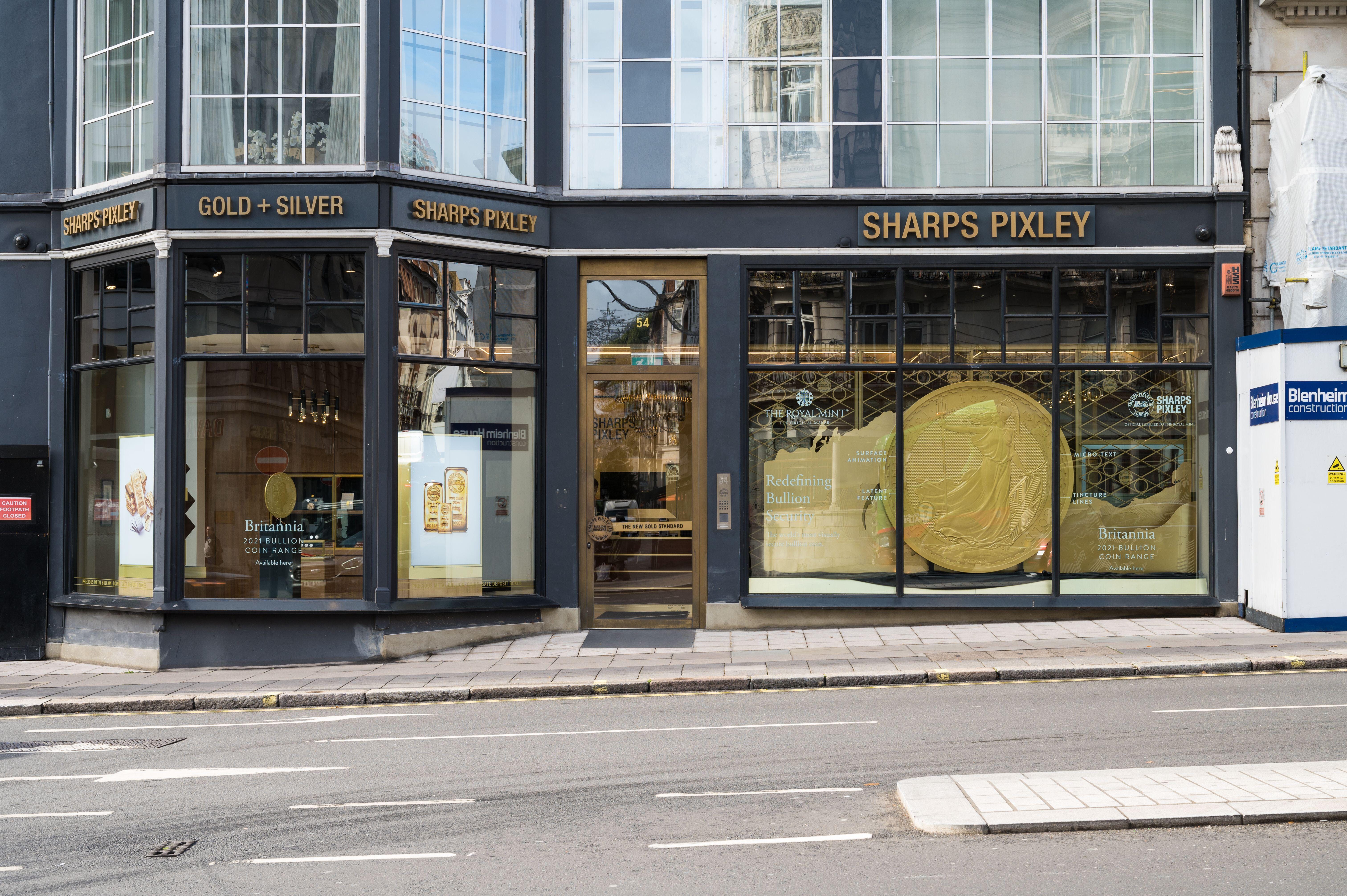
By Conrad Quilty-Harper, editor of Dark Luxury, writing for London Centric
The St James’ Street showroom of Sharps Pixley, the capital’s most prominent gold dealer, usually sees about 20 customers a day walk in off the street. At the moment it’s more like 200 people a day – ranging from music producers to welders – who are walking down the road behind the Ritz and into the showroom.
For the first time since the pandemic, Londoners are queuing to buy gold – even though the precious metal just suffered the biggest price crash in 40 years.
The clearest sign that things are not normal in the Sharps Pixley showroom is that it’s nearly 3.30pm, and Bruno Garcia on the front desk still hasn’t taken a bite of the sandwich he bought for lunch. He’s too busy moving back and forth between the electronically-timed security door guarding the gold and the front counter, a journey his battered leather shoes make hundreds of times a day.
Bruno’s sandwich remains untouched because at the end of January the price of gold soared above £4,000 an ounce for the first time in history, sparking an extraordinary buzz around the precious metal. Within 24 hours, it had fallen off a cliff. The one-day price drop of 10% is the kind of volatility more associated with meme stocks or crypto than one of the world’s oldest stores of value.
“Are you buying or selling, sir?” Bruno asks each new arrival.
“Buying,” comes the reply, eight or nine times in the space of 40 minutes or so. Don’t these Londoners know what’s just happened to the price?

Across London, it appears to be a similar story. Direct Bullion, the dealer endorsed by Nigel Farage that’s based above the nearby Green Park tube station, was so busy when I called last week that the background chatter made it hard to hear. Chards and Hatton Garden Metals are warning of delays in shipments and queues, while J Blundell & Sons, one of the oldest goldsmiths in London, were too busy to speak to me on the phone.
Although the team at Sharps Pixley are not used to gold behaving like a volatile stock, it’s probably good for business. The company, which recorded £169m in turnover last year, takes a commission on every transaction. The more volatility, the more transactions, and every transaction means a cut for the house. For the smallest amounts, the markup can be an eye-watering 25%.
Giles Maber, the firm’s sales director, offers Bruno another sandwich, unaware that’s he’s still trying to eat the previous one. “I’ve got one there I’ve been trying to eat for two hours,” Bruno says, as he lets another customer in.
Bruno’s job is a mix of a bank teller, bouncer, maître d’ and air traffic controller. He, along with his colleague Tomasz, manage the door, the security and, increasingly, the emotions of the customers who have decided that the correct response to global financial chaos is to buy physical gold, silver and platinum.
“Everyone walks in the first time, looks at him and thinks he’s going to be bad cop”
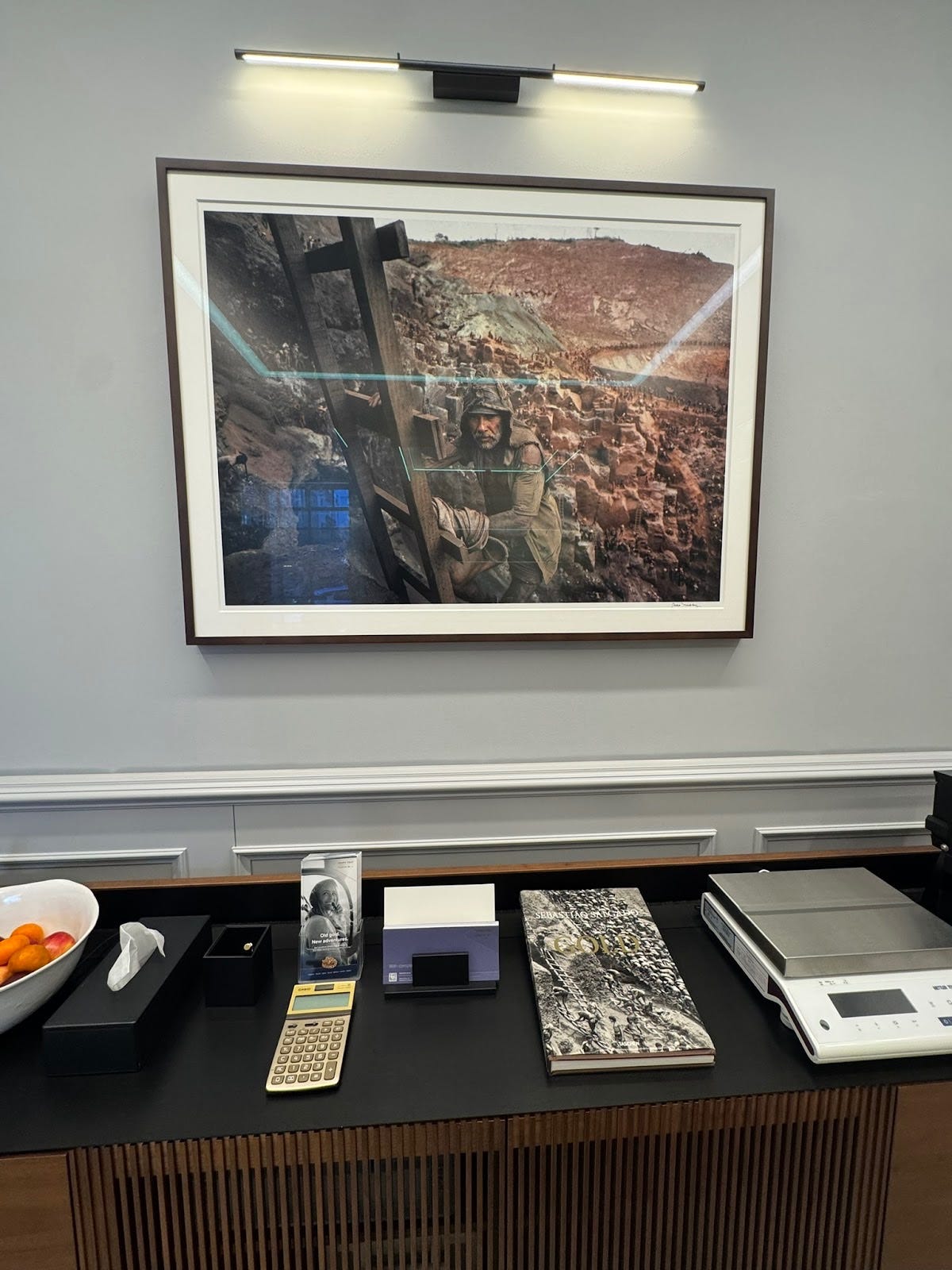
Inside, the scene is something like a modern day version of the bank in Mary Poppins. Light jazz plays in the background, there are copies of the Financial Times and Money Week on a nearby table and light boxes around the room display gold sovereigns and 1kg silver bars. An iPad on the front desk shows the website with live prices which are likely to change before you reach the cashier.
There is no limit on the size of the gold order, big or small. Anyone can walk in off the street and buy tiny half gram bars of gold which cost about £100, all the way up to multiple orders of 1kg bars which cost over £100,000, at the time of writing. It just needs to be in stock.
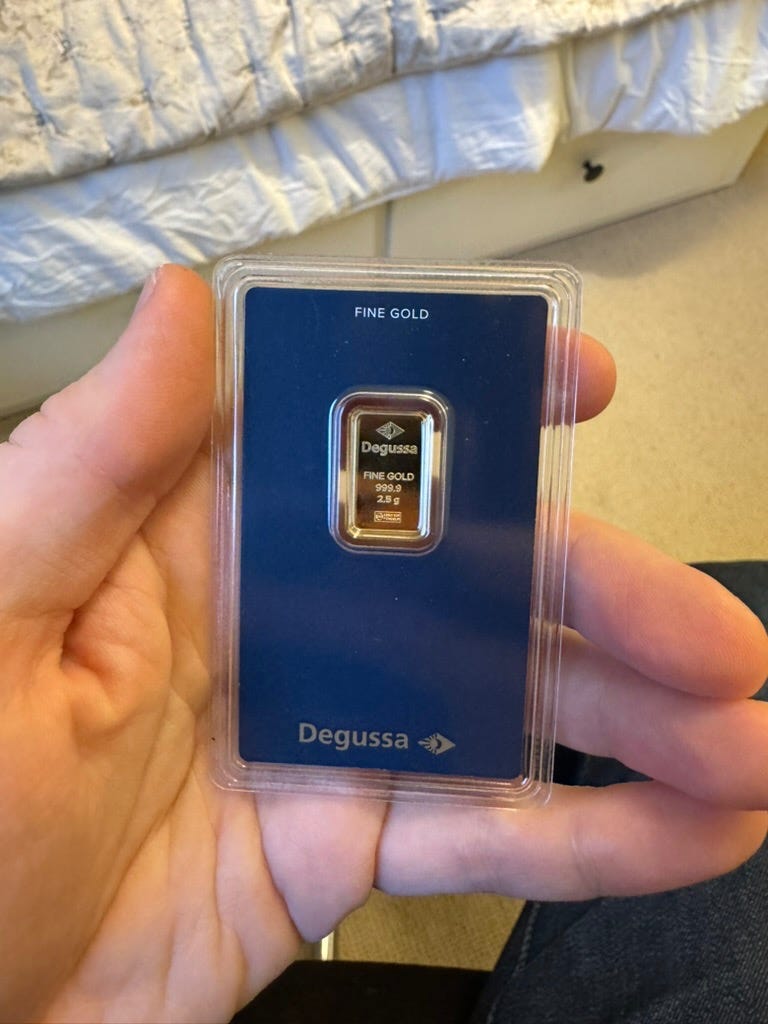
The central London location of Sharps Pixley’s showroom, just around the corner from the Ritz and St James’s Palace, is designed to enhance its credibility with both locals and customers who are visiting the capital from around the world. The firm traces its roots to 1796, when the original Sharp name was established. In 1957, two of London’s “Big four” bullion brokers merged to form Sharps Pixley, one of the founding members of what became the London Bullion Market Association. Today, the brand name is owned by a Swiss family office, Degussa Group, one of the largest sellers of gold in Europe. The name, the St James’s Street address, the security on the door and the glowing yellow lights inside are all meant to signal the importance and the trustworthiness of this London outpost in a vast global trade.
The customers are a cross-section of London life. A smart man in a double-breasted navy suit and black turtleneck arrives with a friend in a puffer jacket, who both discuss “the AP” which they want to buy, an Audemars Piguet watch which can cost thousands of pounds. Two Chinese women come in together, one carrying a leather Louis Vuitton holdall and a paper M&S bag. She browses the FT while her friend rings up an order for £40,801 worth of gold at the counter. Bruno greets a man in a fake fur jacket with “bonsoir monsieur,” who then disappears downstairs to his safe deposit box after scanning his fingerprint.
Every few minutes, the cashier Nicole’s voice crackles over the intercom. “Cash or card?” “Ten ounces?” “Six Britannias.” The numbers sound abstract until I realise that the man in muddy Hoka trainers, Polo Sport sweatpants and a hoodie who was just sitting next to me is about to walk away with six gold coins worth more than £20,000. And these are just the customers who are in the lobby. I’m told much bigger deals are being done in the closed conference rooms which surround the showroom, and even bigger still over the phone.
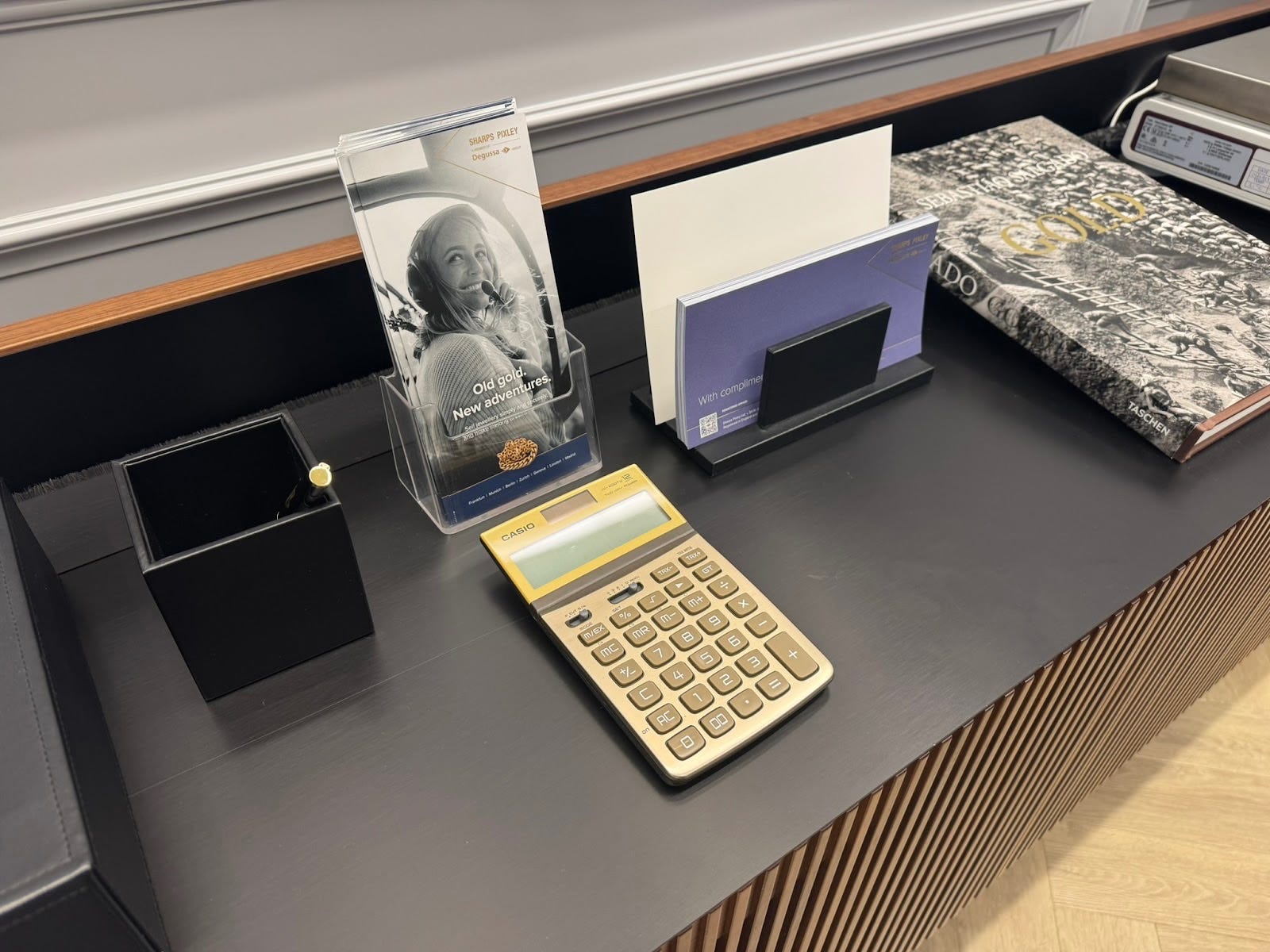
Bruno, the man at the door, is half-Mexican, half-English, and grew up in Miami. He has a clipped English accent that sounds like it came from a British boarding school. Tall, dressed in a grey suit with braces, wearing aviator-style spectacles with a strong prescription, he uses charm and learned psychological tricks to calm often-wealthy customers, who are used to getting everything they want. He adapts the speed of his walk to the door, sometimes giving himself more time to assess customers. If they make it in, they are smoothly guided to a seat, coddled by his deferential language, finding themselves calmed, seated and happy to wait 20 minutes or more to access the counter.
Tomasz, his shorter and brawnier Polish colleague, wears a blue suit and black tie, and looks like a nightclub bouncer, which he used to be. He says he feels more comfortable with the uniform look. I tell Tomasz that I am slightly intimidated by his appearance, and ask if this is intentional. Bruno interjects. “Everyone walks in the first time, looks at him and thinks he’s going to be bad cop… but he’s lovely,” he says. On the occasion that a customer does cause trouble, Bruno says, “I’m much quicker to be a prick to someone if they’re being that way.”
“A bit of a conspiracy theorist”
They need to keep their wits about them, because together Bruno and Tomasz must distinguish between nervous first-time buyers, seasoned regulars, the occasional chancer who won’t make it past the security door, and criminals, who they know are out there. “In my opinion, we’re the only ones who do this properly anymore with the level of security and service,” Bruno says. That service and security is what a lot of the customers are here for. Anyone in the showroom can easily buy “digital gold” for a tiny fee on any digital trading app. Instead, they pay up to 50% in “premiums” to get their hands on physical gold and silver.
These Londoners are not just buying a commodity, but a belief system. And their belief system requires something you can hold (and hide), and something that exists outside the digital world, which they do not trust. Despite, as I am to learn, the fact that many of them do trust some rather questionable digital news sources.
A smartly dressed man in a wheelchair enters the showroom. He is happy to talk, telling me he is “a bit of a conspiracy theorist.” He’s here to buy some more gold because he fears the imminent arrival of Central Bank Digital Currencies and 15-minute cities. “They’ll be able to track everything,” he says. “If you say the wrong thing and your social credits go down, or you spend too much on meat and go past your CO2 limit, you won’t be able to buy any more meat that month.” Owning physical gold is his “side hustle,” and his act of defiance against this imagined dystopian future.
He gets his information about the gold market from an anonymous AI avatar on X, the service formerly known as Twitter, called “AG Asian Guy.”
“It’s an AI voice and image, but obviously what he’s saying is scripted. No-one knows who he is, but he seems very accurate. He seems to be very well informed,” he says.
Then there’s the young welder in dungarees who walks in and buys a one ounce gold coin with a wad of cash from his paycheck. Nicole feeds 192 notes through the counting machine, the sound of which crackles and whirrs through the intercom. “I don’t trust my money in the bank,” he says. He plans to put the gold coin he’s buying today, worth about £3,800, under his pillow along with the other one he bought a few weeks ago. The two coins amount to about half of his savings.
“Armageddon fund”
Not everyone is a buyer. An electronic music producer with greying hair and stubble is here to sell £10,000 of gold from what he calls his “Armageddon fund,” which he started just in case he needs to get out of London in a hurry. He started buying gold six or seven years ago, sweeping any cash in his savings over the government’s £85,000 compensation limit into the precious metal. He says this helps him sleep better at night. “Just in case the banking system collapses, I’ve got something small that has some value to help the family survive,” he says. The fund has grown so large in recent weeks that the value has become a worry. He plans to put the cash into Bitcoin.
Tomasz has been on a journey from skepticism about these customers, to a place that appears to be one of weary acceptance. “A few years ago I saw all these people buying silver and I thought, ‘Hmmm’. But now I think, what do I know?” It’s a sentiment that hints at the power of the belief in physical metals held by the customers who walk through the door each day. “I’ve got young children,” says Giles Maber, Sharps Pixley’s sales director, “and trying to explain to them my job, you can only really tell them that we deal with treasure on a daily basis.” He says the crash has not deterred his customers, many of whom are using the crash to buy more. “They were looking for a pullback, looking for a dip,” he says.
The hunt for this treasure isn’t confined to St. James’s. On Hatton Garden outside rival dealer Tavex, I meet Dave Espy, a 65-year-old retired property developer from Arizona who trades hundreds of thousands of dollars in silver options for “fun.” He’s cashing in some silver jewellery today worth £150, but his philosophy is the same as the buyers. “Imagine if everybody had real silver and gold in our pockets around the planet,” he says. “They’d go crazy,” he says, referring to unnamed authorities. “They wouldn’t know what you’re buying or what you’re doing with it. Drive them mad.”
Back at Sharps Pixley, the parade continues. An author and astrological consultant is buying some gold because of her deep distrust of Elon Musk – “I don’t like the owner of PayPal” – and because she can’t get her head around online banking apps. (In reality, Musk offloaded his stake in PayPal back in 2002.) An Italian restaurant owner from Rome who’s visiting his father in London is buying because he is worried about war, and the ups and downs of the tourism business.
A man in a red puffer jacket has been buying gold every few months for six years. “The system printed money out of thin air, it’s always going to lose value,” he says. He learned about all this from YouTube videos by a man called Mike Maloney, a 69-year-old precious metals investment expert. His friends are into metals too. “I’m planning to keep buying at the same rate, even though it’s very high,” he says of the price of gold.
What unites this cast of characters is a profound conviction that the crash in the price of gold is an opportunity. They are not speculating on an asset which they aim to buy and sell quickly. Everyone I spoke to was buying and holding for an extended period, and aside from the welder who was all-in on the metals, they were only investing small amounts of their total assets. A common thread was their need for physical and mental insurance – and reassurance – about a world which might spiral out of control at any moment. For that, they are willing to pay a steep premium for something they can hold in their hands.
As the day winds down, the queue finally begins to thin and for a brief few minutes, there’s no-one in the waiting room. Bruno, perhaps allowing himself to think about the end of his shift, finally reaches for the sandwich that has been sitting on his desk for hours. He takes a bite. Tomorrow, more Londoners will arrive, looking for something just as real to hold in their hands.
Enjoy this newsletter? Please forward it to a friend and help us spread the word.
Check out the book ‘Material World’ by Ed Conway for the extraordinary lengths gone to, to eke more of this metal out of the Earth. I’d never buy gold since reading it. We’re quite bonkers as a species. 😂
Not relevant to this thread, but notice tonight (13 Feb) BBC London covered the opening of the London lights... and gave credit to Asif Aziz. Mentioned him as a generous donor who owns a foundation that helps people. Astonishing they didn't seem aware of his other interests...