

The end of the noisy London pedicab
Plus: Crouch End at war over Hornsey town hall arts centre, the Labour > Green defection machine continues, Catford's cursed cinema comfort, and an incredibly expensive suburban house.


It’s 28 years since the modern London pedicab arrived on the streets of Soho and 23 years since the first unsuccessful attempt to ban them.
Now, after almost a quarter of a century of work, vast amounts of parliamentary time, plus the efforts of the greatest minds that Transport for London has to offer… there might finally be a legal process to stop pedicabs playing ABBA very loudly from their speakers in central London while charging rip-off fares.
Read on to find out what’s happening, plus a load of other stories.
London Centric’s reporters have spent this week criss-crossing the capital working on a series of forthcoming investigations into money and power in London. All of this is funded by our paying subscribers, who receive exclusive editions.
“That’s not enough to satisfy our owner”: London’s pedicab drivers face the end of their old business model
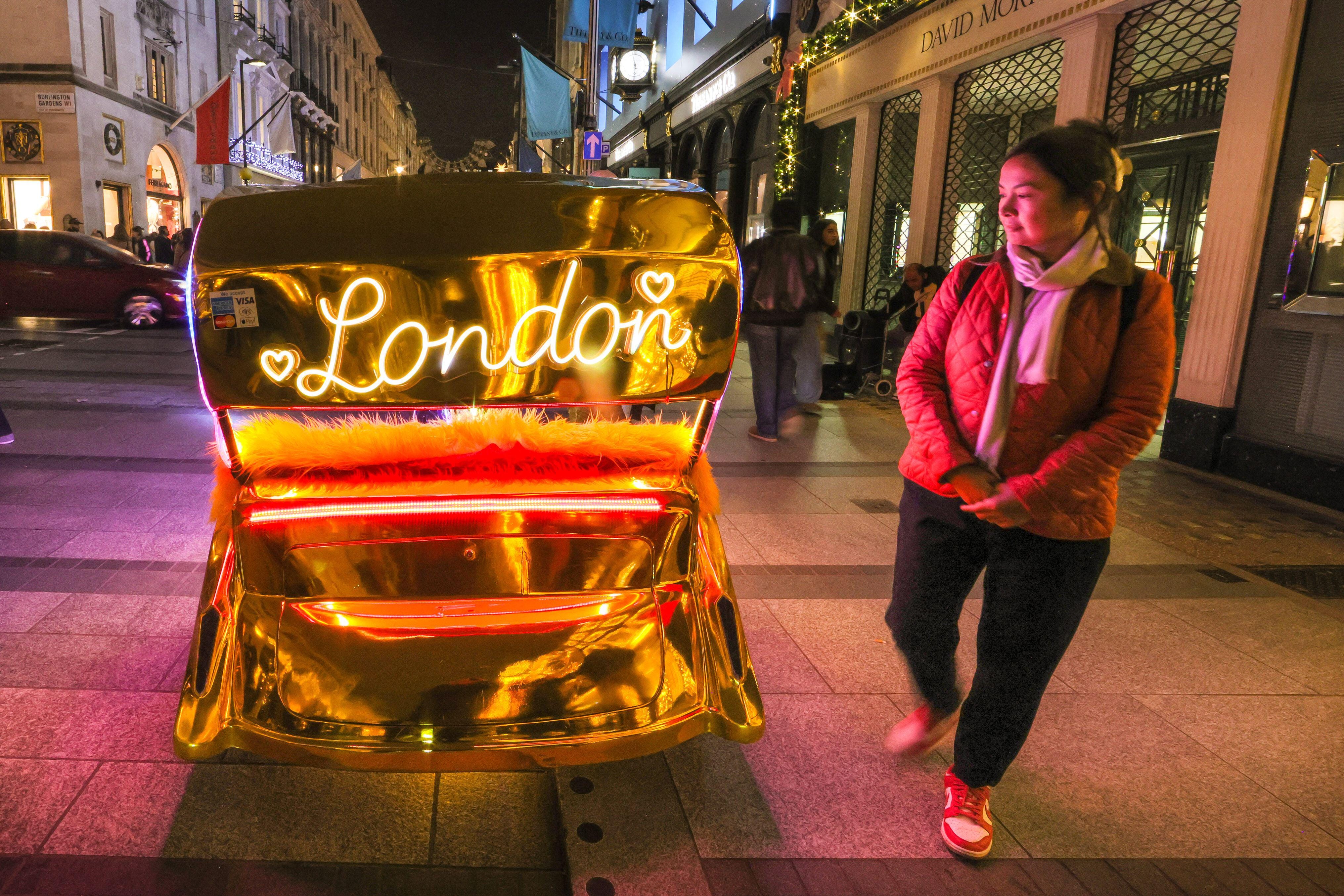
On Tuesday evening London Centric’s reporter broke the news to the pedicab drivers of Leicester Square that their fares would soon be capped at a maximum of £1 per minute. There was a mixed reaction.
The first driver said we were “probably BBC” and wouldn’t speak to us on account of the fact we’d just portray him as a scammer intent on ripping customers off. They were trying to entice parents on half-term holidays to treat their children to expensive rides around central London and didn’t want the attention.
Others were more willing to listen — and immediately clocked that TfL’s forthcoming regulations would not be compatible with their current way of making a living. Tanvir Ahmed, 27, said he paid £120 a week to rent his pedicab. Under the new proposed rates, he didn’t think he’d earn enough to cover that cost and have enough to live on.
“It’s not enough. Right now, it’s a very quiet season. We might get only £50 or £60. That’s not enough to satisfy our owner. So the rates might work in [busy times such as] November or at Christmas, but not now.”
On Wednesday morning Transport for London lifted the embargo on their plans, which are designed to turn the existing pedicab Wild West into a tightly-regulated environment.
Among the requirements are:
From October fares will be metered and capped. Drivers will be able to charge a base fare of up to £5, plus a per-minute charge of up to £1, then a supplement of £3 for every additional passenger.
Drivers will have to pay £114 a year for a pedicab licence. In order to obtain this they’ll have to have an enhanced background check, hold a full driving licence or valid theory test certificate, meet English language requirements, be assessed for their understanding of safety, equality and regulatory requirements, plus meet minimum medical standards.
Vehicles will have to undergo regular safety checks, be banned from having external audio playing from the pedicab, and carry a numberplate.
Vehicle owners will be required to have premises with fire risk assessments, record keeping and background checks for staff. (The fire risk element is particularly notable following a fire at a pedicab garage in Southwark which resulted, according to sources who spoke to London Centric, in a number of naked people “being intimate” on the premises having to flee the burning building.)
Who stands to benefit?
At the moment the pedicab market is a vipers’ nest of small operators, vehicle owners, easily-exploited workers, and over-supply. Get it right and a driver who owns their own vehicle can make £50,000 a year. But under the new system, the regulatory requirements could be so onerous that only a small number of the existing drivers will be able to make the transition.
What’s notable is there’s clearly substantial demand from tourists willing to pay for a ride around central London. For every viral TikTok video of someone being ripped off, there’s a wealthy visitor who doesn’t mind spending £100 so they can film themselves on a fun journey from Piccadilly Circus to Selfridges.
Will it actually be any cheaper?
When two London Centric reporters took a pedicab ride from Leicester Square to Westminster Bridge last year, it lasted 11 minutes and cost a flat £50 to sit in the back as our driver broke almost every rule in the Highway Code to get there in the shortest possible time. Under the new system our journey would have cost £19 — but the driver would also be incentivised to go much slower. It could be an issue if per-minute charging accidentally created a series of very slow-moving pedicabs clogging up central London.
Correction: With apologies, the London Centric calculator broke while this piece was being written and some of you received an email with a line suggesting a much higher fare under the new system. In reality, the new fare for the sample journey would be almost always be substantially lower than what was previously charged.
What’s the likely outcome?
Regulation is likely to drive out some of the sketchier elements currently involved in the London pedicab business. It’ll also make it harder for individual operators to make big money during the busy holiday periods to carry them through the wet and cold parts of the year.
A common suggestion London Centric keeps hearing — approvingly or disapprovingly depending on the person making the argument — is that the system will likely lead to private companies trying to move into the space with a fleet of vehicles, possibly hailed via an app. It could be a case of goodbye tinsel and loudspeakers, hello standardised pedicabs featuring corporate sponsorship.
All of this is a uniquely London problem (at least in the UK)
As London Centric explained in last year’s deep dive into the London pedicab industry there’s no one who dislikes a London pedicab driver like another London pedicab driver.
What’s more, the regulatory mess that enabled them to flourish is unique to the capital.
The modern music-blaring neon-light-covered electric-powered London pedicab you see on the streets of the capital exists entirely thanks to a loophole accidentally established by the Victorian members of parliament who wrote an 1869 law designed to govern horse-drawn vehicles.
The Metropolitan Public Carriage Act, passed before the invention of either the modern safety bicycle or the motor car, defined two forms of vehicles which could “ply for hire” and pick up passengers at the sides of the capital’s roads. There was the hackney carriage (a horse-drawn vehicle rented in its entirety, now used as the basis of the definition for the motorised black cab) and the “stage carriage” (where someone rents a single seat in a horse-drawn carriage and each passenger is charged a separate fare).
When the first modern pedicabs arrived on London’s streets, back in 1998, the black cab drivers brought a court case arguing they were illegal hackney carriages. Unexpectedly, a high court judge concluded that
Within the boundaries of London, pedicabs are not “hackney carriages” but “stage carriages”, on the condition that passengers pay a fare calculated on a per passenger basis.
A “stage carriage” is better known today as a “stagecoach”. As a result, it’s a law that has more in common with the era of Dick Turpin than modern London that has left us in this mess. It’s the need for a compromise with an industry based around this loophole which is why London is only regulating the vehicles, rather than banning them completely.
Read more: London’s Pedicabs: Sex, loathing, and highway robbery
…or get in touch with a story we should be covering, or read on for more nuggets of news.
Crouch End Tiger, Hidden Dragon
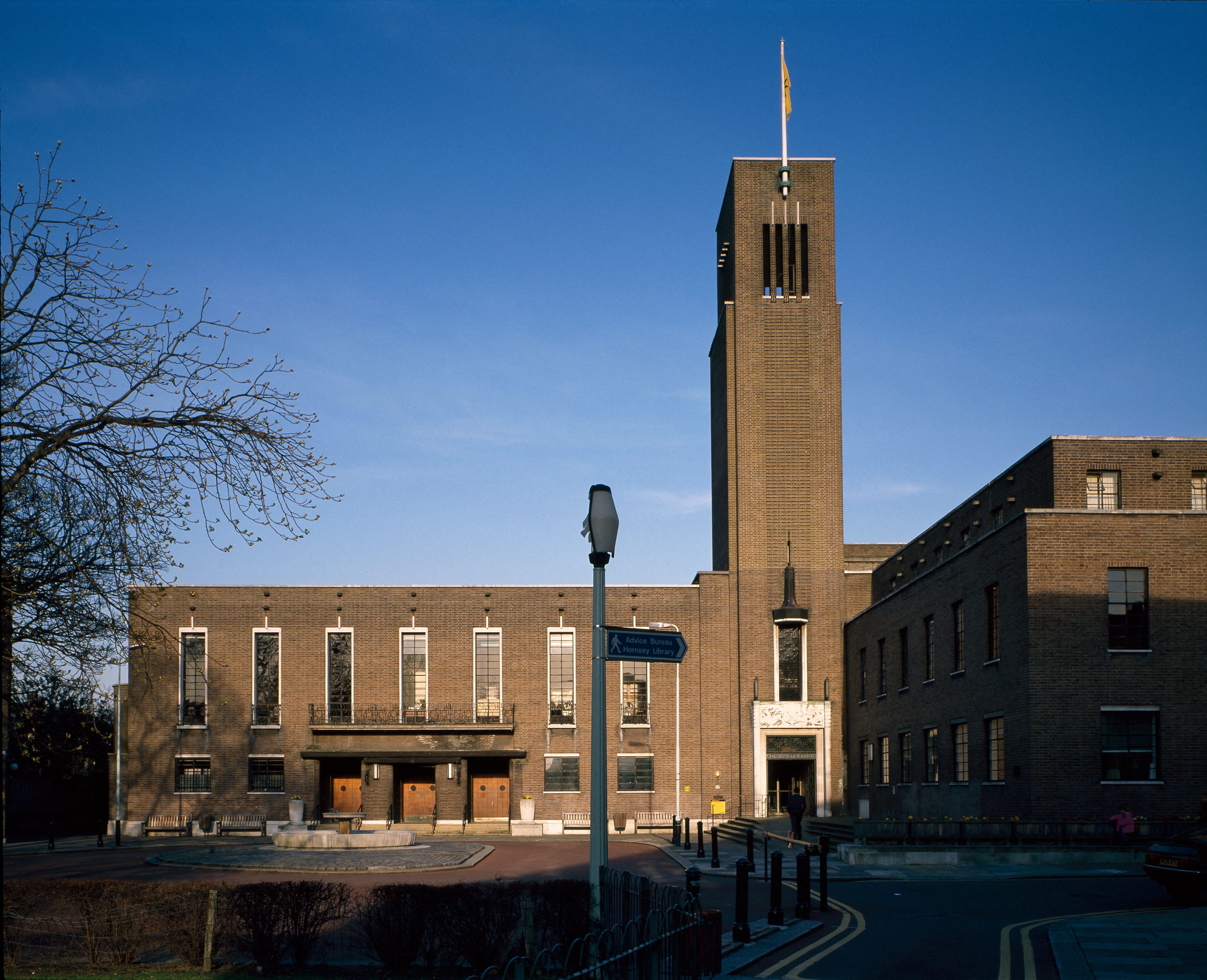
When Hornsey Town Hall closed for redevelopment in the 2010s, the community was told that the council couldn’t afford to maintain the north London landmark. The trade-off was that Hong Kong-based developers Far East Consortium would reopen it as a public space if they were allowed to build flats on the site.
A decade later, Haringey Council has been accused of “betraying” Crouch End amid claims that the Hong Kong developer has built the flats — but failed to deliver the promised community arts centre.
The modernist building is a north London landmark, with bands such as The Kinks, Queen and Dexys Midnight Runners having performed there. But the 2010s saw it fall into disrepair, with asbestos and leaks eventually leaving it closed to the public for years. When the site was sold, a development agreement between the council and the property developers included an explicit commitment to community use and ongoing arts activity as part of the restoration. While private flats and a boutique hotel have been completed, residents have repeatedly expressed concerns over whether the promise of an arts centre will come good.
Following a meeting last Monday between the Far East Consortium, Haringey Council, local community groups and General Projects, who manage the space, a group of local campaigners told London Centric it is now confirmed that Hornsey Town Hall will not be a community arts centre.
Campaigners say that there is no planned schedule of events or community engagement projects. Instead, all that is on offer is building hire, with rental rates that are prohibitively high.
Haringey council declined to provide an on-the-record comment on their claims, while Far East Consortium did not respond to our questions.
General Projects, the group managing the venue, said it was committed to providing a mixed-use location, with a “strong and active community programme” operating alongside private events, such as weddings. It said it would offer 25 hours of free use of one of the building’s newly restored event spaces to local groups, as well as offering discounted community rates for charities. It added that it planned to make some space available free of charge for community-led activity, having already run events like Crouch End Community Chanukah Celebration and a three-day course teaching teenagers about film.
Chris Arnold, co-founder of the Crouch End Festival, said this was the equivalent of showing “a few crumbs and claiming you’ve made bread”.
He argued the price of venue rental would be well beyond most community groups: “They promised a community arts centre. That’s not a dry hire that occasionally gets rented by someone doing something cultural. By that logic, the local church or pub is also an arts centre. This isn’t about scheduling a few arty activities so that you can tick a box.”
Preposterous property of the week
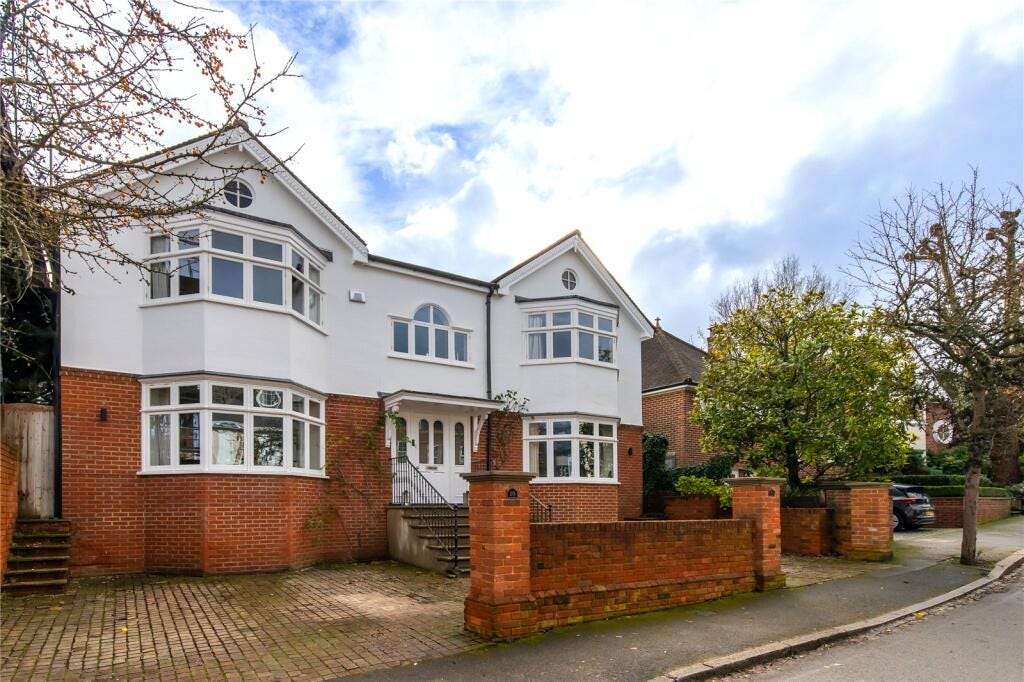
There’s nothing inherently extreme about this week’s dive into the London property market. It’s just one of those properties that leaves anyone living elsewhere in the UK gawping and going “…how much?” Because if you want to live in this five-bedroom property in Wimbledon you’re going to be paying £4.45m. That’s twelve times the price of a private island in Wales.
Walk like a defection
A few weeks ago we wrote about the Greens’ London defection unit picking off Labour candidates ahead of May’s local elections. Last night Southwark cabinet member James McAsh became the latest to jump.
McAsh was briefly elected as leader of Southwark council last summer before the result was overturned amid an internal battle between two factions of the Labour party. Yesterday he defected to the Greens, saying Labour is “no longer the vehicle for social justice I once thought it was”.
Like many Green defectors in inner London, McAsh now faces a three-way battle to remain a councillor against the Liberal Democrats and Labour — with voters having to work their way through contests where three or four parties could credibly win. Expect more of this chaos in the coming weeks in the most open and competitive London local elections in a generation.
That said, the Greens didn’t help themselves by initially issuing a press release announcing McAsh as a Lewisham councillor who would be appearing with party leader Zack Polanski in Lewisham, before clocking they’d mixed up the two different south east London councils.
The nine lives of Catford Mews
Something that is definitely happening in Lewisham is the reopening of the cursed Catford Mews cinema site. Originally launched a few months before the pandemic by American entrepreneur Preston Benson, Catford Mews was welcomed by residents, who were delighted to see money being invested in the otherwise run-down, council-owned shopping arcade.
But it didn’t take long for excitement to turn to despair, with the pandemic exacerbating the implosion of Benson’s company, Really Local Group, leading to the cinema being repossessed by Lewisham Council over unpaid rent. When we looked into Benson’s multiple high-street cinema businesses, he wasn’t happy with our overall assessment of his company’s viability — but he did raise the interesting argument that he’d put in the money to fit out a cinema which the council subsequently repossessed.
After 18 months, the site is being reopened under the new name of 32 Winslade Way, with day-to-day management handed to the team behind Hackney’s Castle Cinema in east London. The challenge will be making sure the public turn up to support it — or else councils could once again find themselves on the hook for community cinema projects that people say they want, before then staying at home and watching whatever is on Netflix.
PS. Across London, councils are rushing to announce projects or start construction works before May’s local elections. In some cases that’s because they want credit from the public before the vote. In other areas, it’s because once a bike lane or low-traffic neighbourhood is under construction it’s harder for it to be removed if there’s a change in the ruling political party. Do let us know if you spot any particularly intriguing electioneering.
Enjoy this newsletter? Please share it with a friend.
With regard to pedicabs, why can't a Victorian era law be amended or repealed in such a way as to take this annoying form of transport of the streets. As the article states, the proposed regulations may encourage the drivers to go slow to rack up the time. What the afrticle doesn't mention is who will enforce these changes? This is the problem killing Britain, a lack of enforcement of rules.
Only the most optimistic of Crouch Enders ever thought the Town Hall would be a community arts centre rather than just (hopefully) a profit making arts centre. Not sure what events General Projects reckons it will put on at Hornsey Town Hall though given that they have not yet bothered with putting in either lights or a PA into the main concert hall space. The restoration is beautiful though.