

Reform UK's leaked plan to win in London
Plus: Is this Google Map the way to unlock London's real hidden gem restaurants, are you the driver who owes Hackney council £250,000, and is the Bakerloo finally getting new trains?


I spent much of the 2010s as a Westminster reporter covering the rise and fall of UKIP as a political party. Nigel Farage won the Brexit referendum but on a domestic electoral level his party would frequently talk big about a looming electoral breakthrough, make a splash on social media, then collapse at the polling booth — especially in London.
UKIP was constantly undone by unforced amateurish errors in the capital. I remember watching as they held a chaotic “diversity carnival” outside the Whitgift Centre in Croydon, where a steel drum band went on strike and stopped playing because they hadn’t been told it was a political event. On another occasion I was with Farage as he bemoaned UKIP’s party name being missed off the London mayoral election ballot paper because someone hadn’t filled out a form correctly.
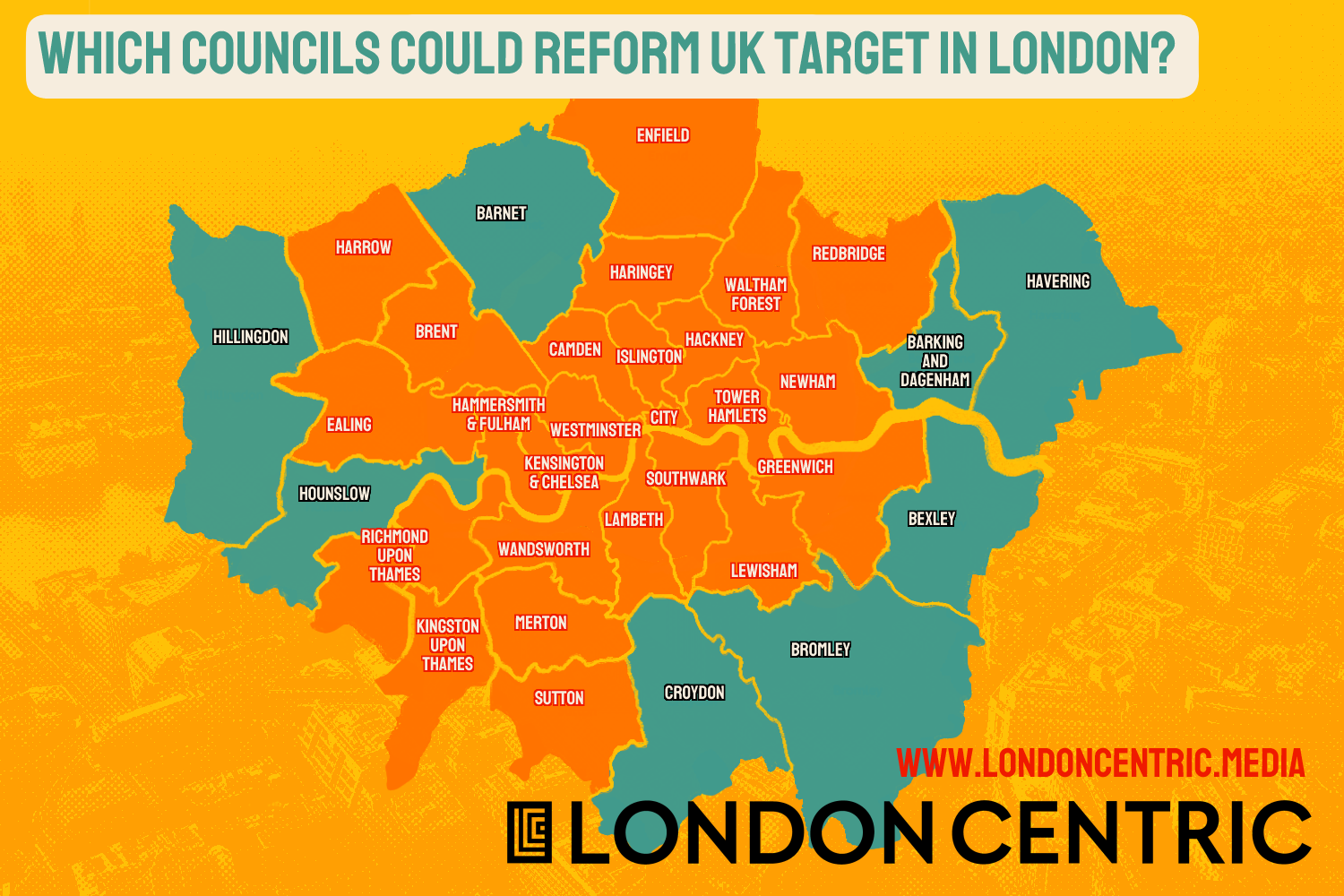
This week London Centric obtained internal training documents given to Reform UK candidates ahead of next year’s local elections, where the party will be hoping to take advantage of a fractured left-wing vote to make substantial gains in parts of London.
Heavily influenced by old-school Liberal Democrat tactics from their time as an insurgent party, the leaked guidance suggests Reform UK will focus on local issues such as bin collections, sets out how the party can appeal to Remain voters and those upset by Conservative cuts to benefits, and urges its local candidates to stay off social media at all costs. It should be of serious interest to supporters and opponents of Farage’s party alike.
London Centric members can scroll down to read it.
The one Google Map you need for London’s restaurants?
Finding a new restaurant to try can be a pain. You might be the sort of person who takes out a subscription to Vittles in the hope of being tipped off about the best South Korean in New Malden. You might rely on the fabled 3.5 star filtering system for Chinese restaurants. Or, as many people do, you might simply key the word “restaurant” into Google Maps when you’re hungry.
As a result we’re obsessed with this new attempt by data scientist Lauren Leek to sift online recommendations using machine learning in order to uncover more than 5,000 “underrated gems” across the capital. So we gave her a ring to find out more about it.
When you use Google Maps, she explained, there are three things that determine which restaurants you’re shown. The first is relevance, where a search for “Italian food” will try and find restaurants with a listing where the word Italian is mentioned. The second is your distance from any given restaurant. The third is a mysterious characteristic created by Google called “prominence”.
“Prominence has its own algorithm, which we don’t know a lot about,” she explained. “It depends on how many reviews a place has, how often people click on it, if it’s a big brand or not.” This, combined with the fact restaurants can pay to be promoted on Google Maps, means independent venues aren’t always as visible on the dominant mapping app as you might think.
To try and fix that, Leek scraped all the information off Google Maps that was available and built an alternative map which allows you to filter for “underrated gems”, which can then be filtered by price and cuisine. This rates restaurants based on what she believes their Google rating should be if reviews weren’t being adjusted, with more than 5,000 restaurants receiving a boost.
Is she worried that the new tool will accidentally make a whole host of previously in-the-know restaurants too popular?
“Worried? I hope that’s going to happen! There’s a very high turnover in restaurants. If you walk down a street, a year later, half of the restaurants won’t be there anymore. I hope that maybe, if this map gets enough attention, it might motivate people to eat outside of their regular restaurants.”
The 1970s called, it wants its trains back
Did transport secretary Heidi Alexander accidentally confirm that London will finally be able to order new Bakerloo trains? Speaking on LBC, Alexander was asked whether she supported a 5.8% rise in tube fares, despite a national freeze on rail tickets prices.
“We gave London £2.2bn of capital investment, which is actually going to enable investment in things like new Bakerloo line trains, new DLR trains,” she replied. A few minutes later, she reiterated that “we do need to invest in new Bakerloo trains”.
The 1972 tube stock on the Bakerloo line is the oldest passenger train in daily operation in the UK. The ageing trains are increasingly unreliable, and were briefly the target of a vigilante clean-up by activist group Looking For Growth. Coincidentally, this morning TfL has confirmed that Sadiq Khan has asked TfL to look into bringing all of its cleaning facilities in-house, after facing a summer of embarrassment over the state of the trains..
Ghost plate killer
Cars using illegal ‘ghost’ numberplates that cannot be read by traffic cameras are costing Transport for London £950m a year in lost fines, according to evidence provided to a parliamentary group. In London, with up to one in seven traffic offences going unpunished on account of unreadable registration plates.
Ghost Plates’ are usually covered in plastic film that appears reflective to Automatic Number Plate Recognition (ANPR) cameras, which rely on infra red light, rendering plates unreadable. Other popular forms of ‘Ghost Plates’ use raised digits made of gels or plastics which appear see-through to the infra-red light, or distort the images they produce.
The vast majority of breaches relate to private hire vehicles, with spot checks suggesting 38% of licensed taxis in London are using ghost plates to evade road charging fees and charges at airport drop-off zones. The number of breaches has shot up following the introduction of the ULEZ charging zone in 2021.
Hackney council told the APPG for Transport Safety that it has lost out on £11m in road fines over the last decade due to this issue, with one vehicle owing a debt of £250,000.
Want to give the gift of London Centric this Christmas? We’re sending out dozens of gift cards this week to people who have done just that. Just click here to learn more!
Inside Reform UK’s under-the-radar plan to win London councils
By Polly Smythe and Jim Waterson
Every council seat in London’s 32 boroughs will be up for election in May’s local elections. That’s when Reform is expected to arrive properly on the London political map. They are hoping to take control of several councils on the edge of the city from both Labour and the Conservatives, upending many of the capital’s political institutions in the process.
Today London Centric has got hold of Reform UK’s internal candidate training from the party’s new “centre for excellence”. It’s a recording of a lengthy presentation narrated by Jack Duffin, Reform’s director of campaigns and training, which is being used to teach hundreds of would-be Reform politicians how to win seats in the capital.

Paying members can read on — or new members can join for 25% off.
Keep reading with a 7-day free trial
Subscribe to London Centric to keep reading this post and get 7 days of free access to the full post archives.