

Why is there another tube strike?
Plus: Where is Zack Polanski going to stand for election, the thinnest house in east London, walk-in drug testing comes to Camden and Hackney, and hunting for an Iranian banker's Kensington home.


As you read this London Centric has reporters working in London, Edinburgh, and India on forthcoming investigations about big money and powerful figures in the capital. This is really expensive, complicated, time-consuming work but will enable us to bring you exclusive stories in coming weeks.
We’ve got a pretty simple model: the more paying subscribers we have, the more ambitious journalism we can afford to produce. There are no outside investors demanding profits. As money comes in, it goes straight back out of the door to pay for more reporters. Thank you to everyone who supports us. If you’re not already signed up and can make the jump, it’s massively appreciated. Right now we’re at one of those crunch points where every bit of backing is helpful.
Today – we go hunting for an Iranian banker’s London home, find the thinnest house in east London, and look at where Zack Polanski could stand for election.
The RMT wants a four-day working week on the London Underground – but not that four-day working week
Tube drivers belonging to the RMT union have confirmed plans for 12 days of strikes running from the end of this month through to May.
This might be confusing for anyone who remembers autumn’s tube strikes, which ended with a pay deal that was heralded in some media outlets as ending disruption for three years.
London Centric reporter Polly Smythe was ahead of the curve on this one, explaining back in November that the two biggest tube driver unions are deeply divided on plans for a four-day working week and nothing was really settled.
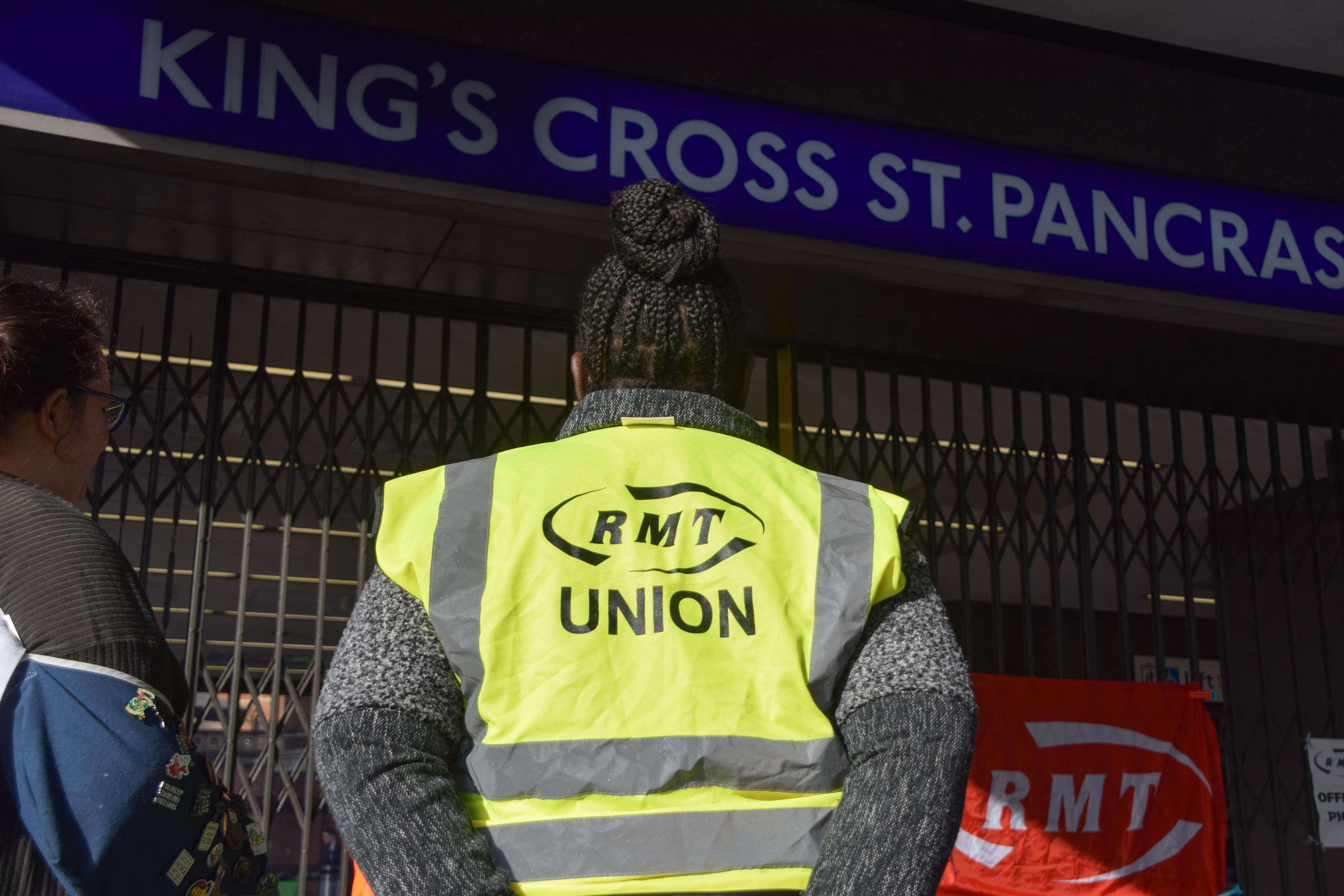
Mention the words “union” and “tube” to most Londoners, and they’ll likely think of the RMT. But the underground has nuanced politics when it comes to unions. The RMT, which is traditionally more militant, represents all categories of workers, whereas rival union Aslef represents only tube drivers.
Both unions compete for drivers who pay union membership fees, with Aslef having slightly more drivers than the RMT.
The dispute at the heart of the forthcoming strike is the arrival of the four-day working week on the London Underground. Last April, TfL presented a proposal for a 35-hour four-day week to the capital's 3,500 tube drivers, which would be achieved by compressing hours and paying drivers for their meal break for the first time.
Aslef welcomed the plans as a "once in a generation opportunity" for its members to have a day off every week. But the proposal was rejected by the RMT, which argued that the change needs to be accompanied by a shorter working day.
RMT general secretary Eddie Dempsey said TfL’s plan raises “serious concerns around fatigue, safety and work-life balance,” with the union asking for drivers to work a maximum of 32 hours a week.
This was dismissed by Aslef. Its regional organiser Finn Brennan publicly criticised the RMT’s decision to strike: “It will be the first time in the history of the trade union movement that a union has voted to strike against a shorter week and fewer days at work.”
The RMT hit back at Aslef, with a source at the union telling London Centric: “This scheme is being imposed without agreement with RMT members. [London Underground] bosses want a blank cheque to be able to extend maximum driving time, push drivers to work more intensively throughout the day, start earlier and finish later, with the ability to change drivers’ shifts at just one day’s notice and curtail drivers’ ability to transfer between depots. It’s for these reasons a majority of drivers on [London Underground] oppose this change.”
TfL is now trying to implement its proposal on a voluntary basis, starting with the Bakerloo line. This will see the introduction of two parallel rotas for drivers depending on which working pattern they prefer.
As things stand, tube drivers who are members of the RMT are due to go on strike for 24 hours on six separate occasions, spread across 12 days in order to maximise the impact:
24–25 March (12:00pm Tuesday to 11:59am Wednesday)
26–27 March (12:00pm Thursday to 11:59am Friday)
21–22 April (12:00pm Tuesday to 11:59am Wednesday)
23–24 April (12:00pm Thursday to 11:59am Friday)
19–20 May (12:00pm Tuesday to 11:59am Wednesday)
21–22 May (12:00pm Thursday to 11:59am Friday)
Disruption is likely to be more limited than in the autumn, with RMT members in other London Underground roles, such as station staff, not on strike. Aslef drivers will also be available to run some services. The ability of London Underground unions to bring the capital to a halt has also been limited by the growth of the separate London Overground and Elizabeth line services – plus the Lime bike.
Preposterous property of the week
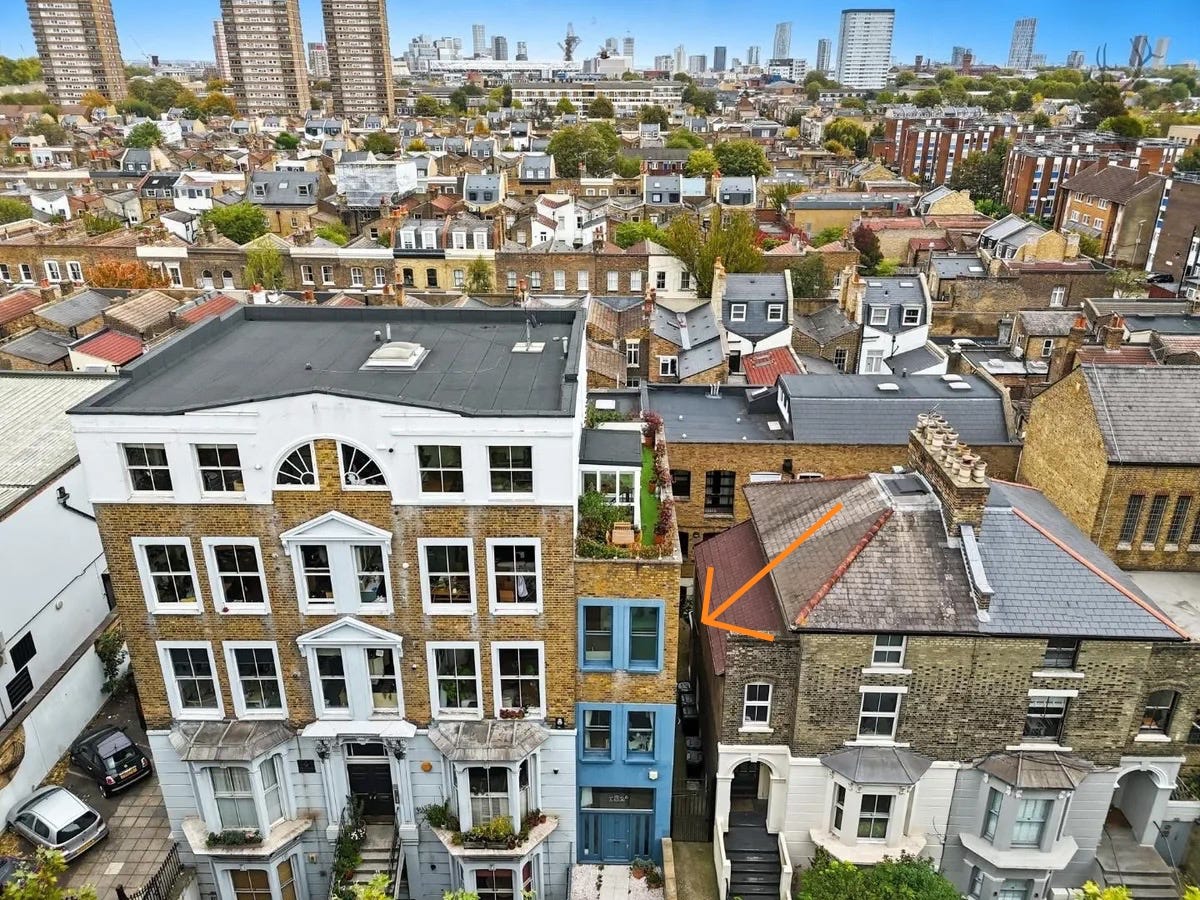
Ever wondered what a Victorian townhouse on Ozempic would look like? Well, wonder no longer. This skinny house in east London offers the prospective buyer 26 square metres on each of its three floors, along with a roof terrace.
What the property lacks in space on each floor it makes up for in height, with high ceilings, “expansive” sash windows, and a private roof terrace overlooking Mile End park. The estate agent’s turn of phrase describes the house as being both “spacious and intimate.” Yours for £850,000.
Hunting for the Iranian banker’s London home – and the Crown Estate connection
Over the last few months London Centric has been working with the financial analyst Duncan Stewart to trace the assets of the Iranian elite in London.
One of our main people of interest is Ali Ansari, an Iranian banker who is close to the country’s leadership and was sanctioned by the UK government for funding Iran’s Revolutionary Guards. In addition to developing the world’s biggest shopping mall in Tehran, he’s the owner of two opulent flats that cost a combined £35.75m on a side-street on the edge of Hyde Park.
We first visited the Palace Green apartments in January, passing security guards, the Israeli embassy, and a 15-bedroom mansion owned by former Chelsea owner Roman Abramovich on our way to the front door. Paperwork suggested that Ansari had based one of his overseas companies at the address but it was hard to prove he had actively used the property.
But sometimes, if you ask a direct question, you get a direct answer. The concierge at Palace Green freely confirmed to London Centric that Ansari still owned both the properties but that the Iranian hadn’t been seen for two years. The building employee promised to do his best to pass on London Centric’s business card to the banker. We never heard back.
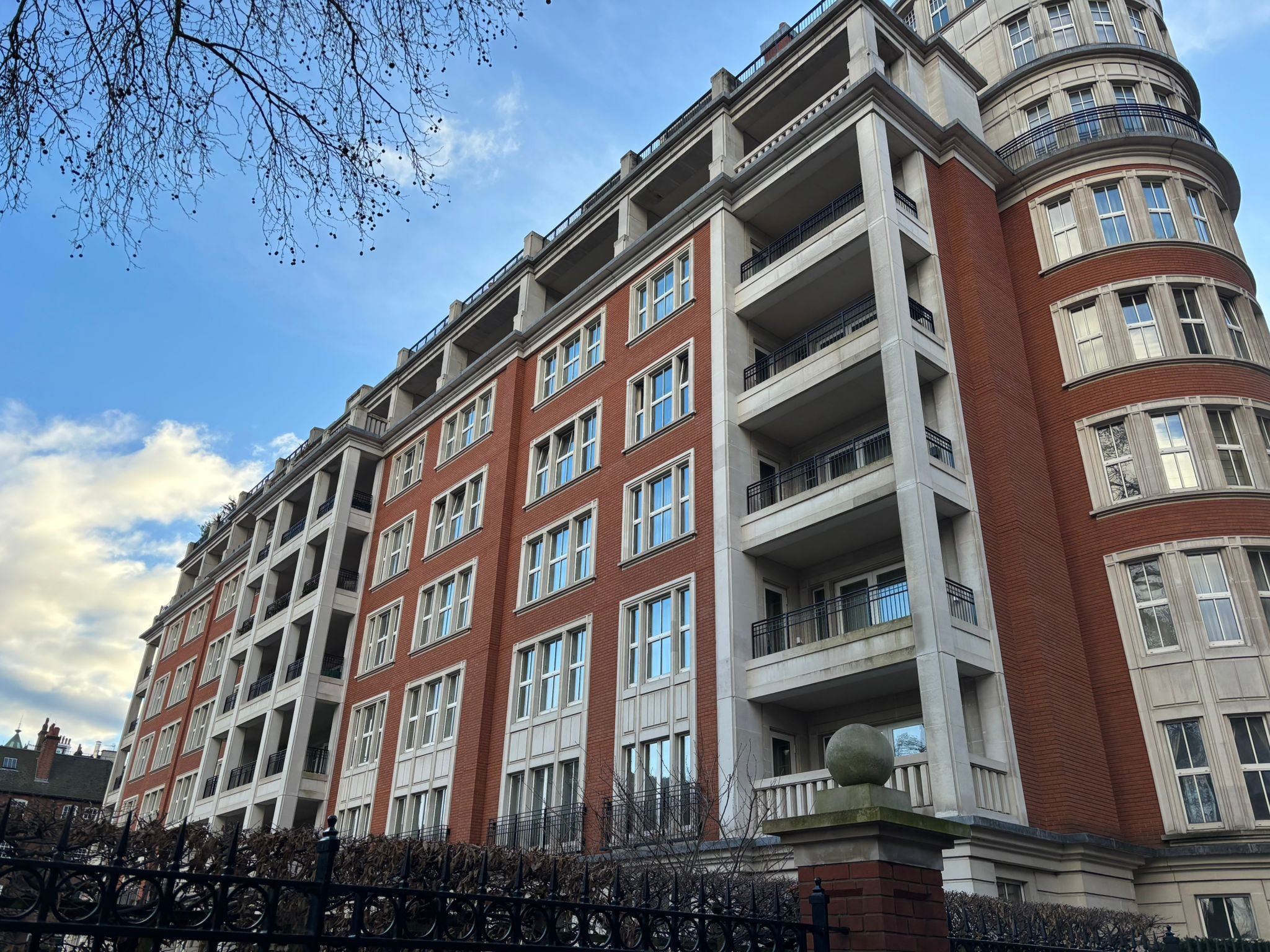
What we did notice was that the freehold of the building is ultimately owned by the Crown Estate, suggesting that some modest ground rent payments have been travelling from the Iranian businessman to the organisation that holds the King’s land on behalf of the government. The Crown Estate did not respond to a request for comment on whether this has now stopped.
Ansari came to the government’s attention in October 2025 after an article in Private Eye used Iranian court records to tie the banker to the ownership of a portfolio of derelict properties on Bishops Avenue in north London. Ansari was sanctioned a few days later, with ministers arguing that Ansari has been funding Iran’s Revolutionary Guards.
Ultimately, we were beaten to publication on Ansari’s property empire by Bloomberg News. They went further and claimed that Ansari really bought the flats on behalf of Mojtaba Khamenei, who was elected as Iran’s new supreme leader this week following the assassination of his father. We haven’t been able to establish that element of the story. Ansari’s lawyer has rejected the idea that the banker has “any financial relationship with Iran's Islamic Revolutionary Guard Corps” or the new supreme leader of Iran.
What is certain is there are now two vast, seemingly unused flats in central London – and another example of how behind the capital’s high-end property purchases, there’s often a story of global intrigue.
London’s first public drug-testing units to open – with club drugs also covered
London is getting its first regular public drugs testing services, with two new drop-in harm reduction centres launching in Hackney and Camden.
The sites, run by drug-testing charity The Loop, will provide tailored health advice, quick chemical analysis of drugs, as well as collect information about dosages or contaminated batches that can be shared with communities.
The charity said the new testing sites, which will initially be pop-ups that open for one day a month, are particularly important given drug-related deaths are at an all-time high in the UK. This is driven by the emerging prevalence of synthetic opioids, which are far stronger than heroin, posing a particular risk to drug takers.

Although the system is aimed at dependent drug users, people will be able to take drugs associated with recreational use such as cocaine and MDMA for testing. The Loop told London Centric that it encourages “people who take drugs, of all types, to visit our services to find out more, possibly surrender a substance, and access harm reduction advice”. The sites are licensed by the Home Office and supported by the Metropolitan police.
For the last 18 months, the charity has been delivering a “back of house” service in London, testing drugs that have been confiscated or surrendered to amnesty bins or handed over by medical staff, but without providing direct advice. It also monitors drug trends, such as highlighting the spread of Lime bike-shaped ecstasy pills on the capital’s streets.
There have been several recent high-profile drug-related deaths at London’s nightclubs, including Drumsheds and Fold, but drug testing, especially in clubs, has historically faced opposition due to the belief it could encourage illegal usage. A nightlife taskforce set up by Sadiq Khan, the mayor of London, concluded that some club operators avoid “drug-related harm reduction, for fear of inviting involvement from the police”.
Zack to the start in Stokey?
Speculation over exactly where Green party leader Zack Polanski intends to stand for parliament continues to swirl, especially with the politician putting down roots in east London. Labour MPs in that corner of the capital have been nervous, resulting in a game of Polanski-ology among Labour activists, who try to second-guess his intentions by looking at where the Green leader is popping up in local Facebook groups. David Lammy in Tottenham, Stella Creasy in Walthamstow, and Meg Hillier in Hackney South and Shoreditch are among those worried they might have to go head-to-head with the increasingly popular Green party leader.
Polanski, a member of the London Assembly, last tried to get into Westminster politics in 2016, when he sought selection as the Liberal Democrat parliamentary candidate for Richmond Park in south west London. This time he’s aiming to become one of London’s first Green MPs.
What’s interesting is that London Centric has been hearing of pushback from the local Green party activists over the idea of Polanski standing against Labour’s Diane Abbott in his home constituency of Hackney North and Stoke Newington.
Even though they’re in opposing parties, many Greens in the constituency don’t want to see Labour left-winger Abbott kicked out of office. Polanski has now nodded to this in an interview, saying he won’t stand against a “national treasure” but would consider running in the constituency if Abbott voluntarily steps down.
“It’s definitely not up to me to decide when Diane Abbott is going to retire,” he told The House magazine. But he added: “Hackney North and Stoke Newington is one seat that is definitely in consideration.”
Asif Aziz, you have our number
It’s now almost two weeks since London Centric first asked Asif Aziz’s Criterion Capital if they had issued fake electrical safety certificates to tenants in their properties. Failure to issue the correct safety paperwork can lead to a fine of up to £40,000 per flat.
We’ve still yet to receive a response from one of the capital’s biggest and highest-profile landlords on this specific matter and the company has stopped replying to our emails. They’ve also yet to respond to tenants, local councils, and Sadiq Khan on this matter – even though the mayor of London has publicly raised concerns about the safety of Aziz’s residents.
So, please forgive us if we ask again publicly: Mr Aziz, if you can explain what’s gone on here, we’d love to print your company’s side of the story and reassure your tenants that their flats are safe places to live while they await eviction.
Meanwhile, Conservative peer Lord Jamieson posed a question of government ministers in the House of Lords on Monday. He asked if the mass eviction of tenants by Asif Aziz’s Criterion Capital was ”a rational response” to the forthcoming Renters’ Rights Act “or the action of a rogue landlord”.
Want to get in touch with London Centric? Click here.
Brennan is in the real world ie this is bread and butter TU issue, Dempsey believes in world wide revolution and thinks Putin is a great guy. We will miss Mick Lynch, who was also in the real world.
But turkeys voting for X-Mass, Liz line and hire bikes have moved the dial.
Reading this while having a quick half and realising that the 'slender house' is pretty much across the road. I love London! And London Centric!