

Why Zipcar gave up on London
Plus: The curious collection of CBD cookies and knock-off Labubu dolls seized at Piccadilly Circus — and why London's going to need new types of tree in the future.


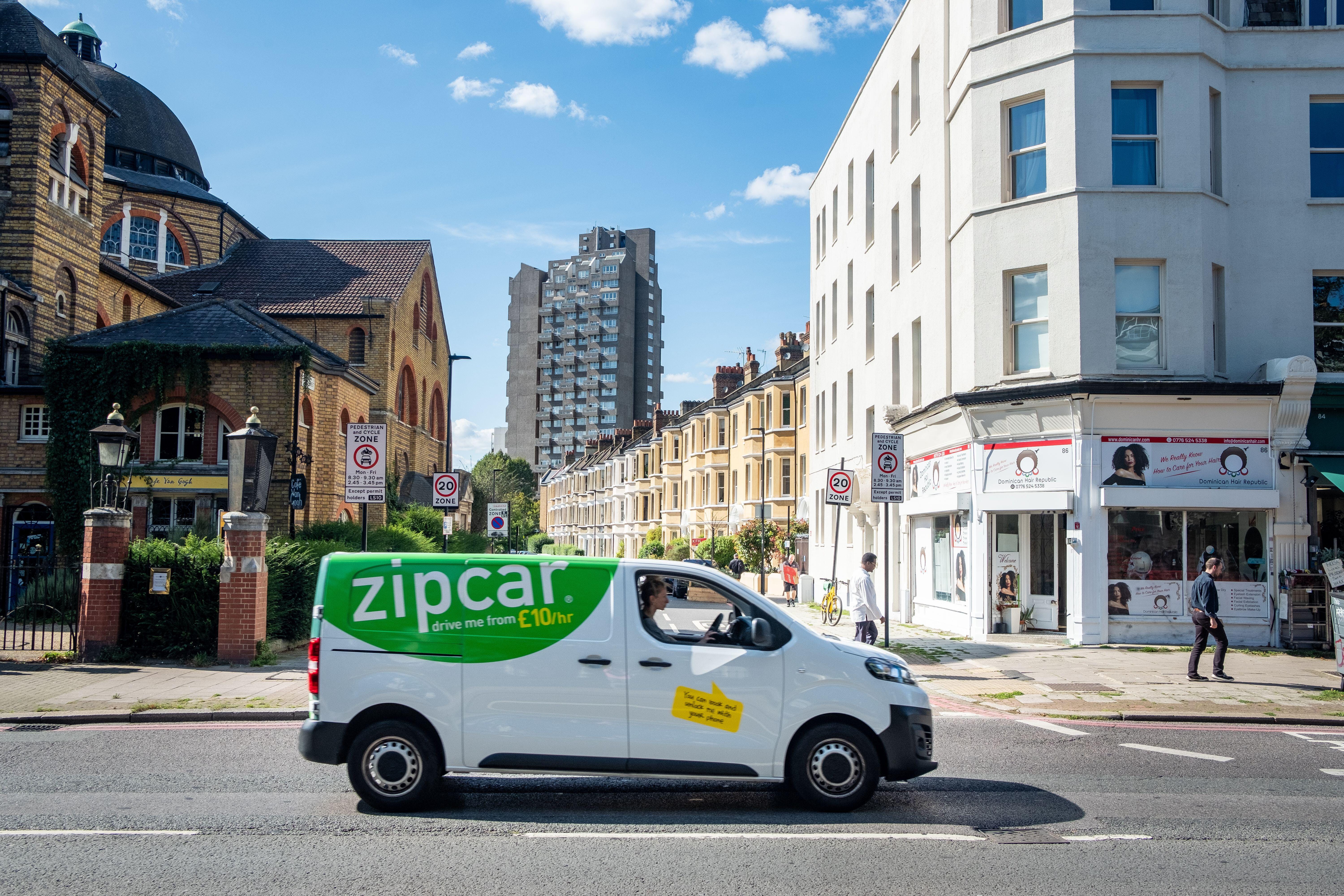
Zipcar is shutting down in London at the end of December. For some people that won’t mean anything — but for hundreds of thousands of Londoners the closure of the car-sharing service will make it far harder to live the capital without owning a car.
For the unaware, Zipcar offers thousands of cars and vans across London that could be rented off the street for between £6 and £15/hour including fuel, insurance, and breakdown cover – all unlocked through a phone app. Users are billed according to the time used, as well as the mileage if they went a long distance. Some cars are based in specific locations and had to be returned there. Others can be used for one-way journeys and dropped across most of central London and at Gatwick and Heathrow airports.
Over the two decades, Zipcar has become the de facto monopoly provider of car-sharing services in much of the capital, used by people who need to move flats, pick up furniture, or just do a big supermarket shop without having to pay to own a vehicle full-time.
Then, on Monday afternoon, Zipcar announced it intends to close down at the end of this month, posing new challenges for Sadiq Khan’s already-troubled targets to decarbonise London transport and reduce car dependency.
“Costs have continued to rise”
Caroline Russell, the leader of the Greens in the London Assembly, told London Centric it was “grim news” and noted that on a personal level she depends on it “to visit my elderly mum”.
Zipcar’s planned closure date coincides with the mayor’s decision to introduce a new £13.50 daily congestion charge on electric vehicles, a move that would hit any Zipcar that is picked up outside the zone and driven through central London. The company had already said it would pass on the cost to drivers, substantially raising the price of a car journey through the heart of the capital — and making it much less financially attractive.
“I wish it was more of a surprise,” said Richard Dilks, the chief executive of CoMoUK, a charity dedicated to promoting shared transport. He said Zipcar had been in trouble for a while: “Costs have continued to rise while consumer demand has been fairly fragile.”
So what went wrong?
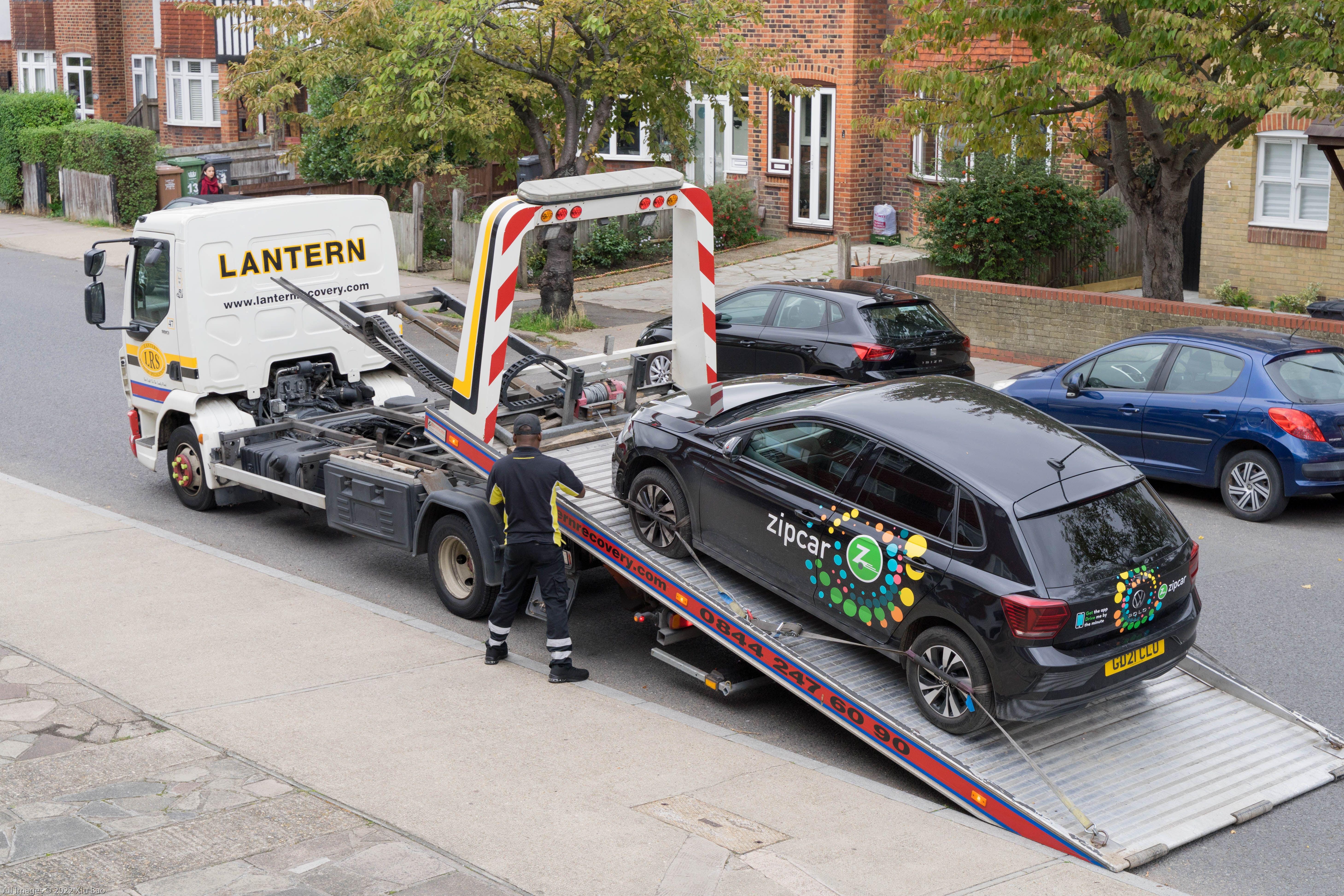
The congestion charge extension might have been the final nail in Zipcar’s coffin. But looking at the company’s UK accounts, it’s clear the business model had been in deep trouble for several years due to rising costs and flatlining revenue.
Zipcar’s UK income fell by £3.95m to £47m in 2024, due to customers taking fewer and shorter trips in their cars. Costs increased, meaning post-tax losses widened dramatically to £11.6m. The company said the cost-of-living crisis “reduced members’ disposable income and impacted their demand for leisure activities”. Electric vehicles proved to be costly to buy and difficult to resell.
The arrival of Uber in the mid-2010s ate into Zipcar’s business model of enabling people nipping around London for short car trips. It’s also reasonable to assume that some people who might have been tempted by a one-way Zipcar Flex in the past are now choosing to pop on a much cheaper Lime e-bike. IKEA started doing delivery.
All in all, People just aren’t travelling as much and while a substantial number of Londoners came to rely on Zipcar as an emergency back-up travel option, that wasn’t enough to sustain it as a profitable business.
Parent company Avis Budget, which is already in financially dire straits, simply appears to have had enough and pulled the plug on this comparatively small part of its UK operation at short notice.
What’s the impact going to be?
Moving house with one of Zipcar’s van and the help of a couple of friends became a rite of passage for many young Londoners. Zipcar claimed each of its vehicles removed 27 barely-used privately owned cars from the capital’s roads, with 12,000 businesses supposedly using its services.
Some London hospitals signed deals with the company to enable staff to get around. Croydon council has a now-effectively-defunct deal with Zipcar which enabled it to avoid owning and maintaining its own fleet of staff cars. (A council spokesperson could not immediately explain to London Centric how they’d cope in the new year.)
Only this summer Hackney council struck a £1m deal to subsidise the expansion of Zipcar in the borough as part of its aim to cut the number of cars on its streets by 25% and make “space for walking, cycling, and public life”. All of that is now up in the air, unless a smaller rival such as Enterprise Car Club feels able to step up.
“There’s no free lunch”
One major issue for Zipcar was something that’s a common theme in London Centric’s reporting: the mayor of London has nothing like the central powers that you’d expect in a global city. Car-sharing needed to be negotiated on a borough-by-borough basis, rather than through a single contract with Transport for London. As a result there was no one taking an overall view on the financial sustainability of companies such as Zipcar in London.
This means permit charges that the individual London councils charged for spaces have gone up dramatically, with Kensington and Chelsea charging thousands of pounds a year for each parking space. At the same time the mayor’s extension of the congestion charge to electric vehicles was expected to add around £1m a year to Zipcar’s costs.
“There’s no free lunch,” said Dilks, who pointed towards governments in Belgium, France, and Germany that had passed policies to boost car clubs rather than just leaving it to the private sector to try and turn a profit. “You can’t move all those costs on to consumers because the economy is barely growing. Maybe this will wake policy makers up.”
He predicted Zipcar’s collapse will lead to an uptick in car ownership which could threaten the mayor’s progress on carbon reduction goal, as once someone owns a car it’s tempting to use it more often — slowing down buses and increasing pollution. Competitors such as Enterprise Car Club or peer-to-peer operator Hiyacar might step into the gap, although the latter’s accounts also suggest it is heavily indebted.
A spokesperson for Sadiq Khan said the mayor would wait to see what happened with Zipcar’s consultation before commenting further: “The Mayor’s Transport Strategy is clear on the important role car clubs can play to reduce the need for private car ownership. This is why the Mayor recently announced that electric car clubs with a dedicated parking bay in the Congestion Charge Zone will receive a 100 percent discount on the Congestion Charge from January.”
Separated by motor ways
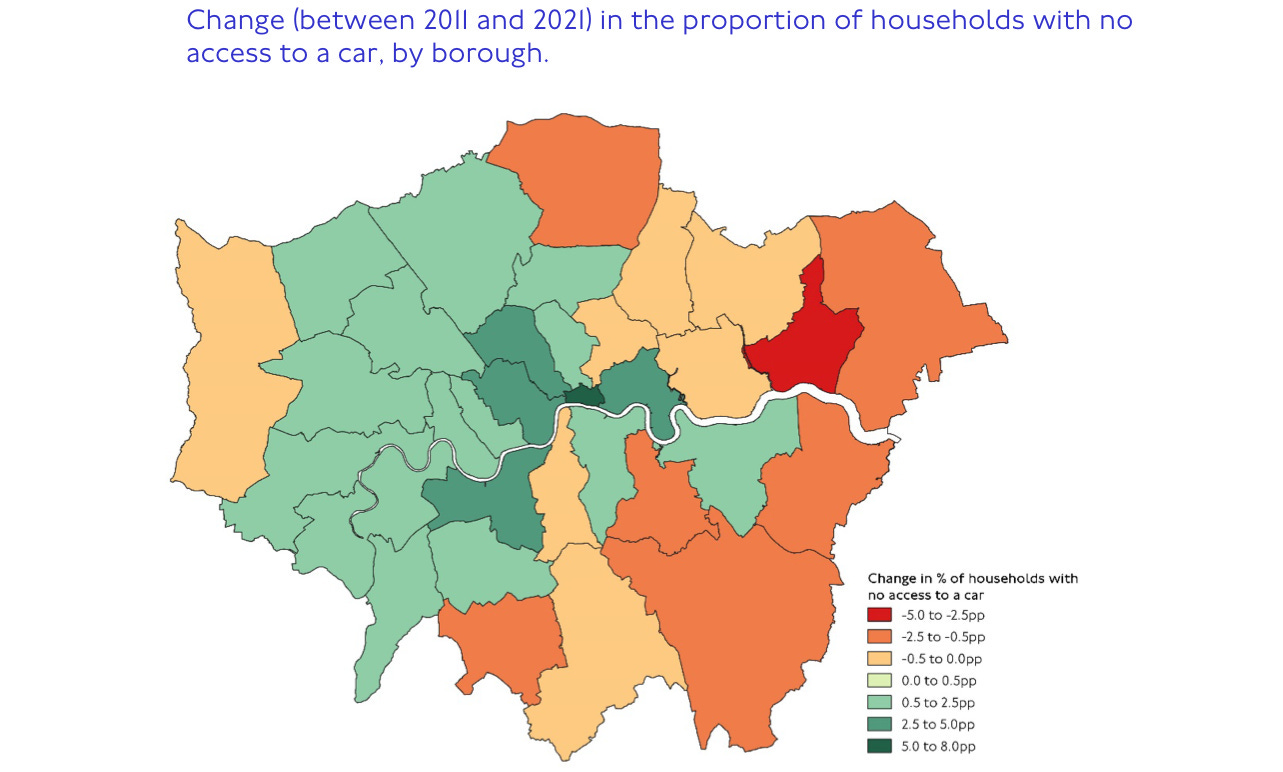
Access to a car is one of the biggest differences between inner and outer London, as we’ve reported before, with a decreasing number of people in the middle of the city having access to their own car. Zipcar’s collapse could slow this trend down, as people revert to buying their own vehicle.
London Centric readers have already been in touch to highlight the impact that Zipcar will have on them, with many predicting extra cars will start clogging up parking spaces.
Mark Chapman, who relied on Zipcar for work and shopping felt that London’s politicians were neglecting those who don’t want to own a car but can’t physically ride a bicycle: “Car clubs seem to have zero support from local or central government. Every week brought more restrictions on where they can be picked up. I use Zipcar a couple of times a week. I’m not sure what I’ll do without them — the only option seems like owning a car full-time, which seems like a backwards step.”
Or as a different Zipcar user put it, it was the end of an era: “18 years without a car, I suppose we’ll need to buy an EV [electric vehicle] now and have it sat in a kerbside parking space for 98% of its life.”
Scroll down another exclusive story on the future of London’s trees!

Thanks to everyone who has already been buying gift subscriptions for their nearest and dearest, we’ll be sending out the first gift cards imminently.
Click this link to buy a gift subscription for your nearest and dearest. Just make sure to click the button to schedule it to start after Christmas Day. Then drop us an email or WhatsApp and we’ll also post you a physical festive gift card to hand over!
Putting the high into London’s high streets
Westminster council’s trading standards officers got into the spirit of Christmas by raiding a US candy store near Piccadilly Circus last week.

They found 26 tubs of CBD cookies in various flavours, which failed in their requirement to be listed on the national register of novel food. (Yes this is a real thing.) The officials at the shop also lifted 141 fake Labubu dolls, 295 illegal disposable vapes, plus various counterfeit mobile phone covers. Meanwhile, across the road, rampant tax evasion continues.
Farewell Large-leaved lime, hello Persian ironwood?
A previously unreported analysis seen by London Centric has found that 73% of the city’s trees could need to be replaced as the climate heats up.
The study, commissioned by the Greater London Authority and the Forestry Commission, analysed more than a million trees in the capital to see how they’d cope with London’s projected climate in 2090.
Its findings — which looked at the capital’s parks, roads, and other public spaces — concluded the city the could be forced to adopt a very different look by the end of the century, as many existing trees will not be suitable for conditions expected at the end of this century.
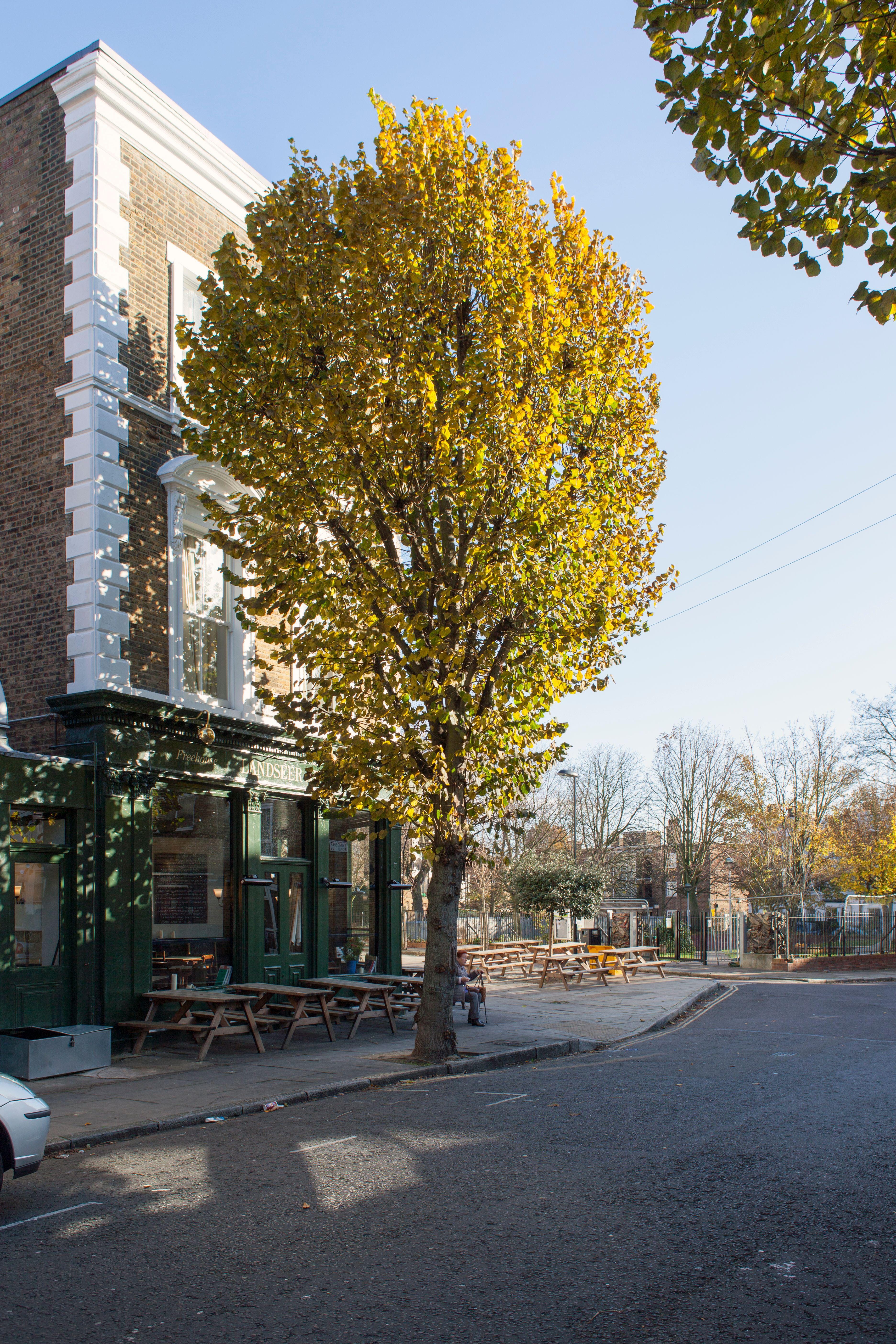
The authors found that growing and maintaining trees is set to become harder as London becomes hotter. Given that London already experiences “urban heat island effect,” where the city is warmer than its surrounding areas, growing conditions are set to become uniquely difficult for the oaks and maples currently growing across the capital.
That, combined with existing poor soil quality and limited rooting space, is expected to put huge pressure on the most ubiquitous London trees. Among those that might not survive include the sycamore, ash, wild cherry, silver birch, and large-leaved lime.
Despite annual rainfall in London expected to remain stable, hotter temperatures mean that the available water will increasingly be sucked up “into the atmosphere from surfaces, soils and plants.”
The findings have been mapped onto the giant interactive map of London’s public realm trees, maintained by the mayor’s office, which can now be filtered according to climate risk.
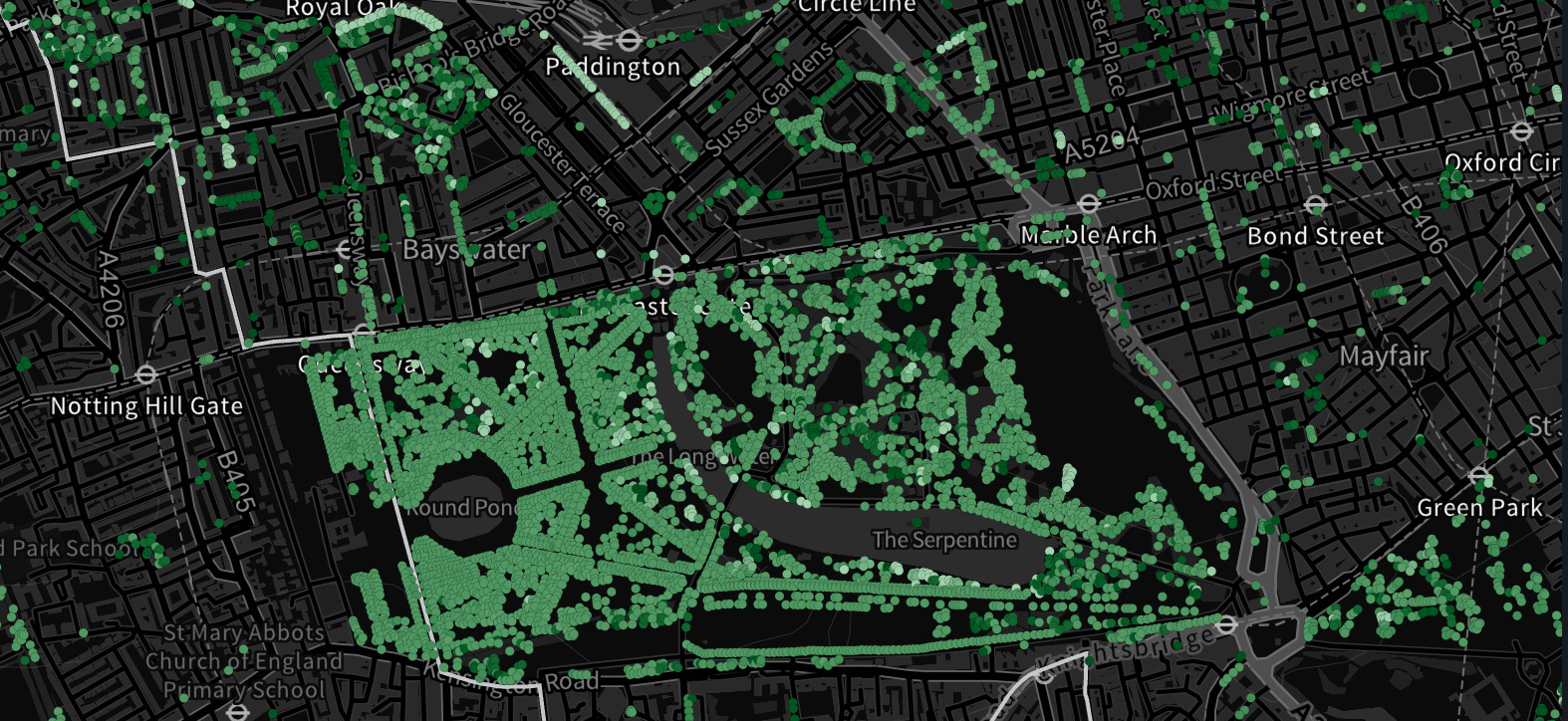
Of the most common 100 species of tree currently grown in the city’s public spaces, only two were found to be deemed highly suitable for the future weather conditions. They are the holm oak and Persian ironwood, both of which are native to the Mediterranean basin and western Asia.
Finally, London Centric is delighted to announce that this week our money-can’t-buy TROWELS OF TRUTH are landing with a heavy metallic thud through the letterboxes of lucky paying subscribers who won them in last month’s raffle.
Congratulations to Nicole Kobie (“I promise to put it to good use in our allotment, and not use it for crime”), Bella Travers, Katarina Thomson, Cara Rodway (“Obviously a lottery win would be even better, but I am very happy with additional gardening implements as a close second!”), Chris Kiely, Shaun Sanderson (“I do not yet own a trowel and I will be delighted to fill this void in my life”), Ned Pitman, and Charlie Berry.
As ever, if there’s anything you think we should look into, get in touch via email or WhatsApp.
The news about Zipcar is very depressing. I can't help but think if the economics of a car-club monopoly (or close to it) do not work in a city of c.10m, then something has gone badly wrong in policy making at a borough, city or national level.
I've never owned a car as Zipcar and it's predecessor Streetcar met my needs - shopping, the odd day out, the journey to the tip. More recently, it's meant that I could take my blind and mobility restricted father in law whom we now live with to (endless) appointments, visit friends and, frankly, anywhere not within a 500m radius without taxis and stress. There must be tens of thousands of people who could tell similar stories.
Despairing at this news. I don’t often use Zipcar but whenever I do there’s not really any alternative and I’m always very happy to have done so. This is going to make life much more difficult for a lot of Londoners.