

After the Golders Green attack
Plus: What's with all the local election leaflets that aren't about the local elections?


It’s the final week of local election campaigning in the capital, but in one area of London it was far from the most pressing thing on people’s minds, with a community living their lives under threat of attack in their streets.
I asked Sophie Wilkinson to head to Golders Green to hear what the local Jewish community is feeling. Her report is at the end of this newsletter.
London Centric will be back this week with much more coverage of the most consequential elections for the capital in a generation, including just how Reform UK could win big in London.
The suspect charged
Essa Suleiman, 45, has been charged with three counts of attempted murder in two different areas of London on Wednesday morning. He allegedly began the day by attacking Ishmail Hussein, an old acquaintance, at an address in Southwark. (The exact address in Southwark cannot be reported as it provides housing for individuals with mental health conditions.) He then headed north to the Jewish area of Golders Green, where he allegedly attacked two men, Shloime Rand and Moshe Shine, with a knife. Suleiman is due back in court on 15 May.
Polanski apologises for tweet – but says he faces “daily antisemitism”
Green Party leader and London Assembly member Zack Polanski has apologised for “sharing a tweet in haste” about the Golders Green incident and said he had a “responsibility for lowering the temperature at a time of such tension”. He had retweeted a post suggesting Met police officers may have overreacted while arresting Suleiman by “repeatedly and violently kicking a mentally ill man in the head when he was already incapacitated by Taser”.
Polanski’s apology followed highly unusual direct criticism by Met police commissioner Mark Rowley, as well as from political opponents. It came in the same week that two Green Party candidates in Lambeth, one of the party’s top target councils, were arrested on suspicion of stirring up racial hatred over allegedly antisemitic social media posts.
A Green Party spokesperson said Polanski, the only Jewish leader of a political party, “faces daily antisemitism, and in the past six weeks two people have been arrested for antisemitic actions towards him”. The party said elements of the media and rival politicians were irresponsibly directing criticism against Polanski following a “violent attack on his community”.
Why are Londoners getting so many local election leaflets that aren’t very local?
With less than a week left until polling day in the most open London elections in a generation, election leaflets are flying through letterboxes. But why do many of them not feature the actual local candidates you’ll be voting for?
It’s because spending in local elections is limited, with each candidate only allowed to spend £960 (plus an additional 8p for every registered voter in the ward) on their campaign. If, as is the case for most of the candidates, they’re campaigning alongside other individuals running for the same party in the same ward, then the spending limit is reduced even further.
In short, if you’re sending multiple leaflets to tens of thousands of potential voters, you’ll hit the spending limit pretty quickly.
But there’s a loophole. While leaflets promoting local candidates count towards individuals’ spending limits, mailouts that simply promote a party or a national message do not.
That’s why you might have received multiple leaflets bearing the face of Reform UK leader Nigel Farage or Lib Dem leader Ed Davey through your letterbox, but only a few mentioning which of their party’s candidates want your vote.
One side-effect of this is it means parties end up fighting ultra-local elections on national issues – whether that’s Gaza, the economy, or immigration. It also means deep-pocketed parties can target national messages on an ultra-local level without busting spending limits.
In Bromley, one woman told London Centric that she had received four Reform mailouts, but that only one made reference to the borough. The other three, which included a two-page letter from Farage, mixed national issues like pensions and energy bills with claims about Reform councils delivering lower council tax.
This Jubilee line train is departing Shoreditch…
For London’s aspiring creatives, finding studio space that’s not prohibitively expensive has long been a challenge. Back in 2006, venue owner Auro Foxcroft decided to save four old Jubilee line tube carriages – made redundant by the Jubilee line extension programme – from being scrapped. He hoisted them onto an old railway viaduct in Shoreditch and rented out the space to artists on the cheap under the name Village Underground.
Beginning as a workspace perched high up on Great Eastern Street, the project then expanded, renovating an old warehouse under the viaduct into a music venue. The old tube trains have become an iconic symbol of the neighbourhood, as the area became an Instagrammable tourist destination over the last 20 years. (Although some people we know who have worked in them suggest they could be painfully cold in winter and far too hot in summer.)
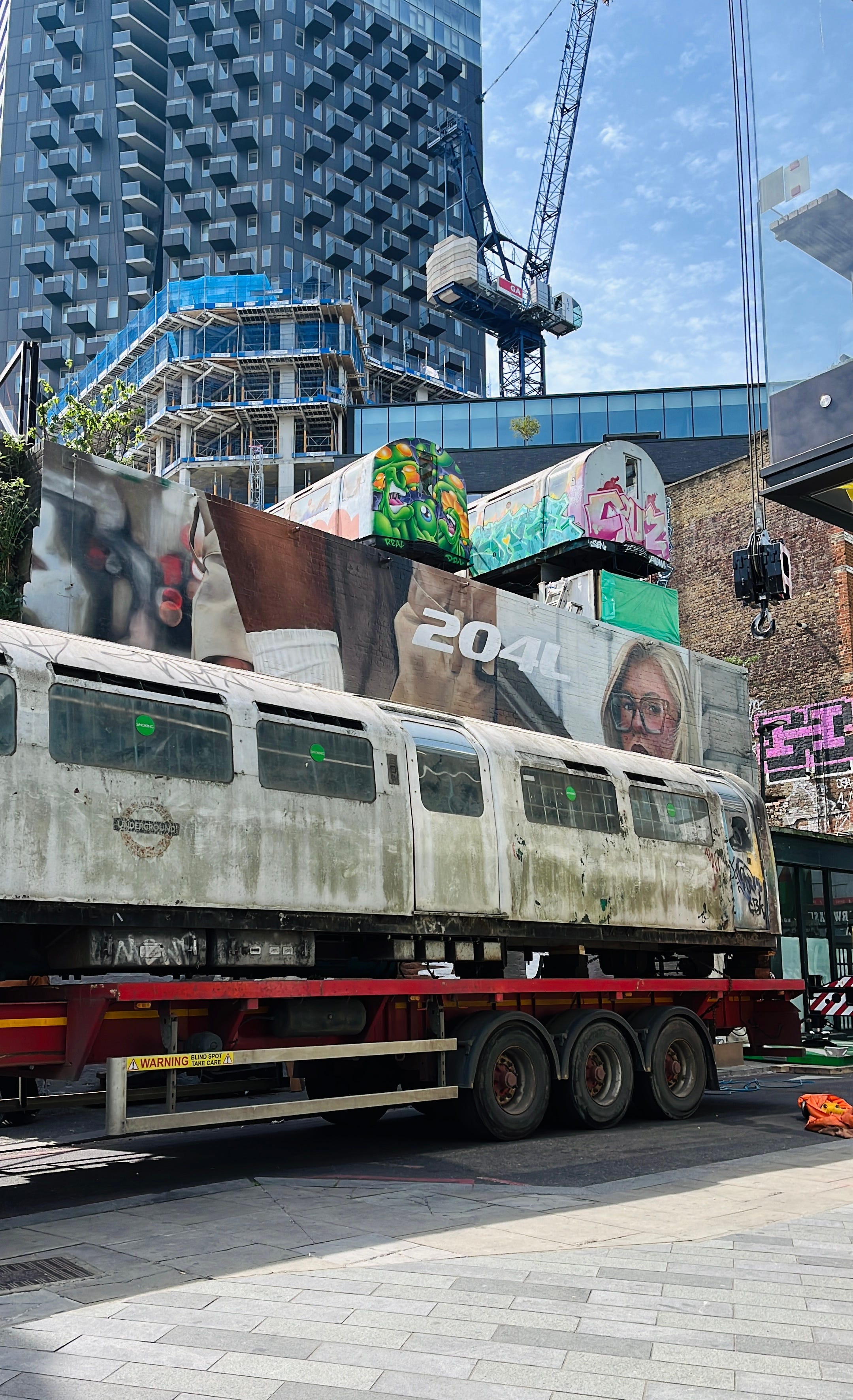
Twenty years of rain and wind haven’t been kind to the carriages, and this week, reader Montague Ashley-Craig got in touch to say she had seen the carriages being carted off on lorries.
While Village Underground didn’t respond to our message asking whether the carriages will be replaced or refurbished, a recent Instagram post by them said: “We’ve been going through some changes recently on the trains. Stay tuned to be the first to find out more…”
Clapham disorder charges partially dropped
While the media might have moved on from the disorder that broke out last month in Clapham, that’s not the case for some of the young people involved.
London Centric was at Croydon youth court this week, where a 17-year-old girl was facing charges of assaulting emergency workers. The girl, who cannot be named for legal reasons, was arrested on 31 March, during the second day of disorder in south west London, which went viral around the world.
In court, the Crown Prosecution Service said that charges had been dropped in relation to two of the police officers. The charge in relation to a third officer was changed from the more serious offence of assault on an emergency worker to a more limited one of assault on a police constable. The case was adjourned for six weeks, with the girl released on unconditional bail.
No fault, no eviction
A ban on section 21 “no-fault” evictions has finally come into effect this week, seven years after the idea was initially proposed by Theresa May.
The government’s Renters’ Rights Act, described as the biggest reform to the private rented sector since the 1980s, also limits rent increases to once a year, abolishes fixed-term tenancies, and allows renters to request pets in their home.
This new policy may be familiar to London Centric readers, as we have covered some of the attempts by landlords across the capital to evict tenants before the new powers came in. While new section 21s can no longer be served, solicitors, renters’ unions, and campaign groups have all reported a spike in the number of no-fault evictions issued to tenants in anticipation of May’s ban, including in the final hours when it was possible.
This means plenty of Londoners will still be leaving properties over the next few months – but the rest of the capital’s millions of private renters will be breathing a sigh of relief.
Life after the Golders Green attacks: “We’re Jewish, it’s what we do.”
By Sophie Wilkinson
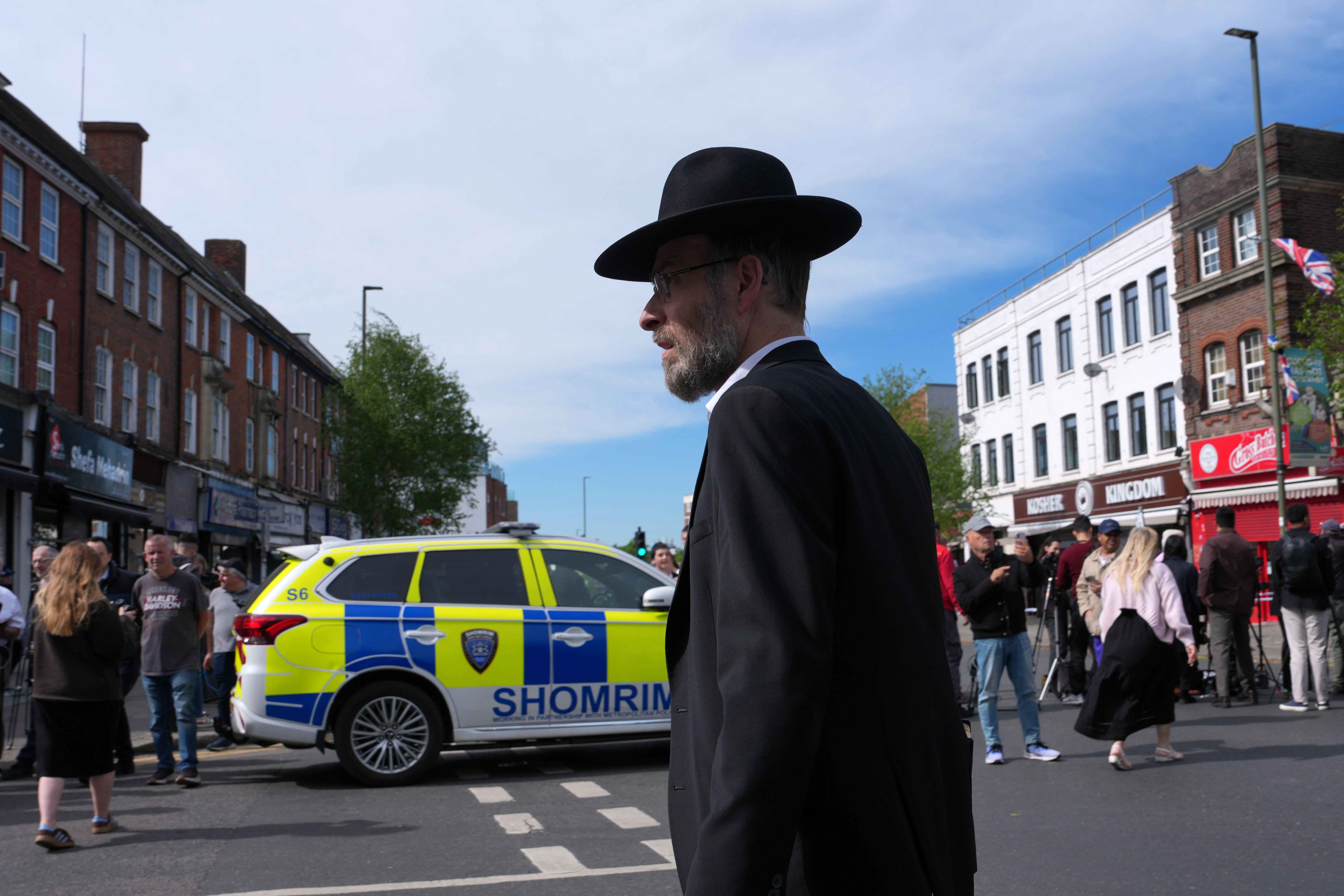
Shimon Cohen was directly across the road when a Jewish man was stabbed on Wednesday morning in Golders Green: “When it happened, I was there, and the police were shouting and helicopters were coming.”
Despite the commotion, he told London Centric the response for many was to continue: “Everyone was just filling up their shopping. We’re Jewish, it’s what we do.”
He said this stoical attitude should not be mistaken for acceptance, following a series of recent attacks on Jewish people, services and synagogues in London, some of which have been linked to Iran-backed groups: “If you are as old as I am, you remember that the last 50 years will be written up as a golden age of British Jewry. And now it’s business as usual.”
Essa Suleiman, 45, has been charged with three counts of attempted murder, relating to the two stabbings that took place in Golders Green, north London, as well as a separate incident that took place earlier that morning in Southwark.
The Met police has declared the incident a terror attack and the country’s terror threat level has been upgraded to “severe”. Ministers said the increase to the threat level was “not solely as a result” of Golders Green, but had also been “driven by an increase in broader Islamist and extreme right-wing” threats.
The “severe” threat level means that a terrorist attack is considered highly likely in the next six months. Yet in many corners of the capital, you’d have no idea – there’s not the shared sense of unease and fear that surfaces after other attacks.
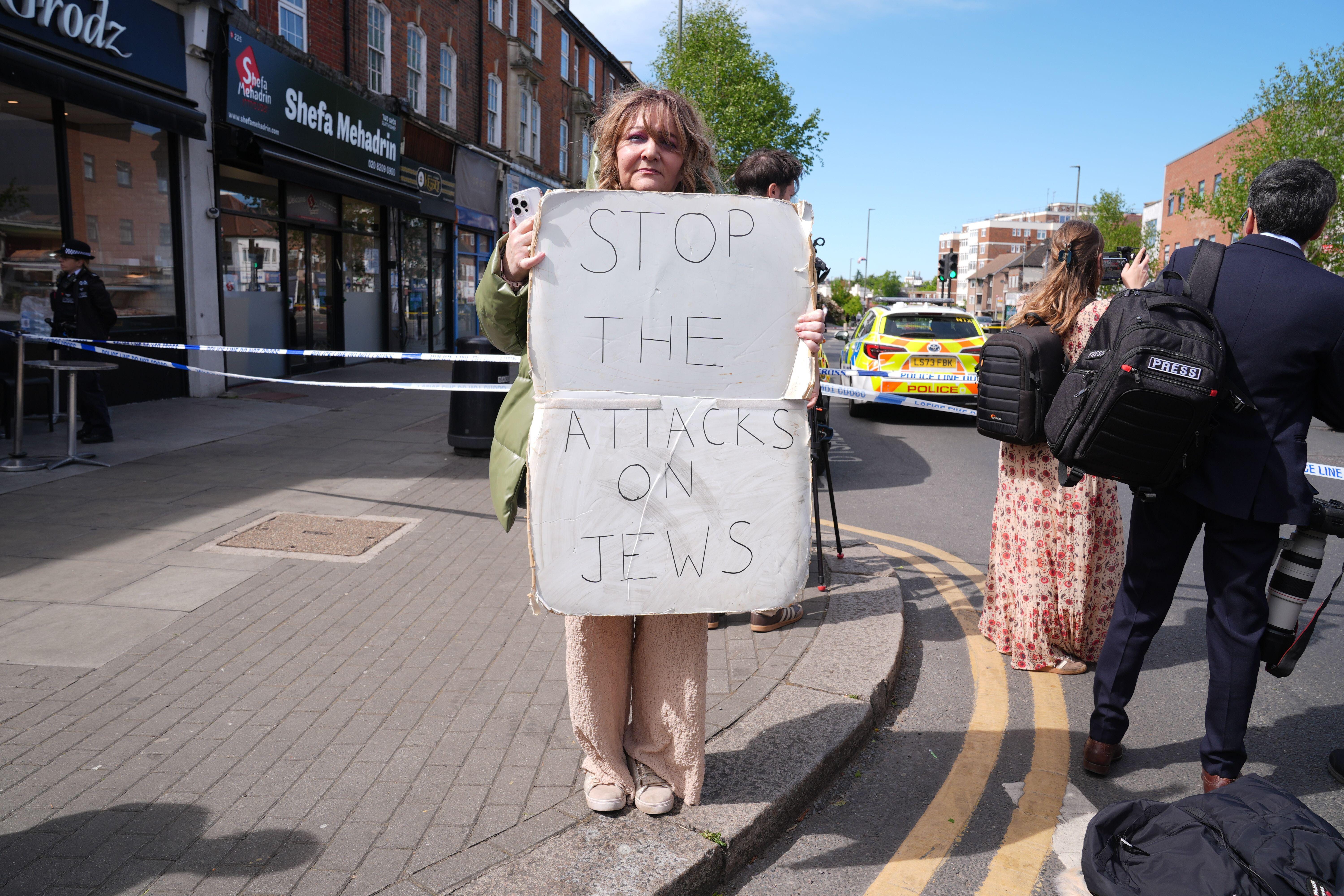
The stabbings are the latest in a string of incidents targeting the UK Jewish community. On Thursday evening in Golders Green, things feel both safe and unsafe. Groups of children are gathering, playing, nattering, scootering, tumbling into butchers, bakeries and cafes.
There’s no hint either of what happened the previous day or of these children’s parents being about. Are girls as young as five skipping across the road at dusk safe out here because there’s a sense of kibbutzim, of collective responsibility for the community’s children? Or is it because CST (Community Security Trust) wardens – volunteers protecting the Jewish community, weaponless and wearing tabards – are stationed every 30 feet along the road, keeping their eye out for anything or anyone suspicious?
Two mounted police have stopped to chat to locals. Visibly Jewish boys reach up to pat the horses’ necks and cars behind slow down to not startle the animals. Just up the road, groups of Persian men continue their vigil for the fall of the Iranian government, outside hoardings bearing images of the protesters killed by the regime.
Just across the road, I speak to Aby, a lawyer. “I’ve got two kids at a Jewish primary school, it’s actually one of the schools that’s been named in court as being surveilled.” She explains that Met officers do regular drive-bys through the area, and that police visibility has amped up since four Hatzola ambulances – run by the Jewish community – were set on fire in an arson attack.
She adds: “I’ve had an awful time over the past few months with worrying about security. They have a sniffer dog outside of their school. Nothing says ‘Welcome to primary school’ like a muzzled security dog.”
The attack has changed her behaviour. Aby works “in town” but has decided to stay home from the office “because I want to be close to my kids”.
Cohen says: “Look around, we’re not frightened. But we’re cautious, we have to be cautious, we have to be more aware than we’ve ever been before.”
The Israeli flag can be seen along the high street, although it’s far outnumbered by the union jacks at half mast on the lampposts. Cohen draws a geopolitical comparison: “There’s a lot of people who hate Donald Trump. Are there people running around stabbing Americans? Are there people running around firebombing McDonald’s? No, it’s just about Jews. So don’t pretend it’s got anything to do with Israel.”
“People don’t love what’s going on over there. It’s nothing to do with us. Most of us are not Israelis. We’re British, very British.”
Next to the bus stop where Moshe Shine was stabbed just the day before, young, visibly Jewish boys with kippot and smart shirts are trying out each other’s scooters, munching on slices of pizza, tussling about a bit. Across the road, three women are in deep discussion. As with any Jewish community, there is a real range of views, and people like to talk them out.
Apart from a sign declaring a bakery closed for the day – not out of caution but because the road closure following the attack meant staff couldn’t start their overnight baking shift – life is busy all around us while we talk.
I encountered Laura Marks, Denise Joseph and the comedian Rachel Creeger on their way back from a women’s solidarity walk.
“The place is swarming with CST [security], so right now I feel safe, and I feel generally safe in London,” says Laura.
However, Rachel, who wears a large Star of David, says: “I refuse to feel unsafe, which I think is a different thing.”
She highlights the increased presence of CST volunteers and police, but disagrees that more investment should be put into security: “It’s like building bigger walls. Last time we got put in a ghetto, it didn’t end well! I feel like there needs to be investment in community cohesion, not into separating people more.”
Denise echoes this sentiment. She helps run Nisa-Nashim, an interfaith group of Jewish and Muslim women who organise cross-cultural events to build community cohesion: “We’ve been going since 2015 and those relationships [create] a safe space for conversation.”
Laura is reflective: “We’re living in a world where the conflict in the Middle East is being imported here. And mostly we’re quite lucky that the government are very supportive. But it’s not enough, and it will never be enough if you’ve got people who are determined to attack people because of who they are, particularly Jews and Muslims.”
Thank you for the interesting and considered reporting about the Golders Green attacks.
I saw the footage of the arrest in GG & believe Polanski was right to call out the brutality of the police. The attacker was being held face down on the ground, unable to move while 2 policemen were giving him violent & unnecessary kicks, one I think in the head. The man is totally unhinged - now even more so. The Met needs to get it's act together, not only in an incident like this