

Asif Aziz's hotel and a "mystery" fire test
Plus: Self-driving taxis with a human in the driver's seat • Pizza Pilgrims' HMO failings • Labour sued by one of its own ex-councillors


Today we’ve got a story about how hundreds of thousands of people stayed in an Ibis hotel owned by billionaire landlord Asif Aziz without knowing it was coated in potentially lethal Grenfell-style flammable cladding.
Scroll down to read that piece, which looks at how fire safety reports were rewritten at the request of Aziz’s company, meaning it took eight years for the hotel to be shut down and the public to be made aware of the risk.
London Centric is funded by our paying readers. If you’re able to support original investigative journalism about the capital, every subscription makes a massive difference to what we can achieve.
Asif Aziz, the Wembley hotel, and a fire safety test gone very wrong
This article is the subject of a legal complaint from lawyers for Asif Aziz. They say it is defamatory of him and that it does not fairly and accurately report the Essendi UK Hotels 2 Limited v London Property Company Limited high court judgment, which can be read in full here.
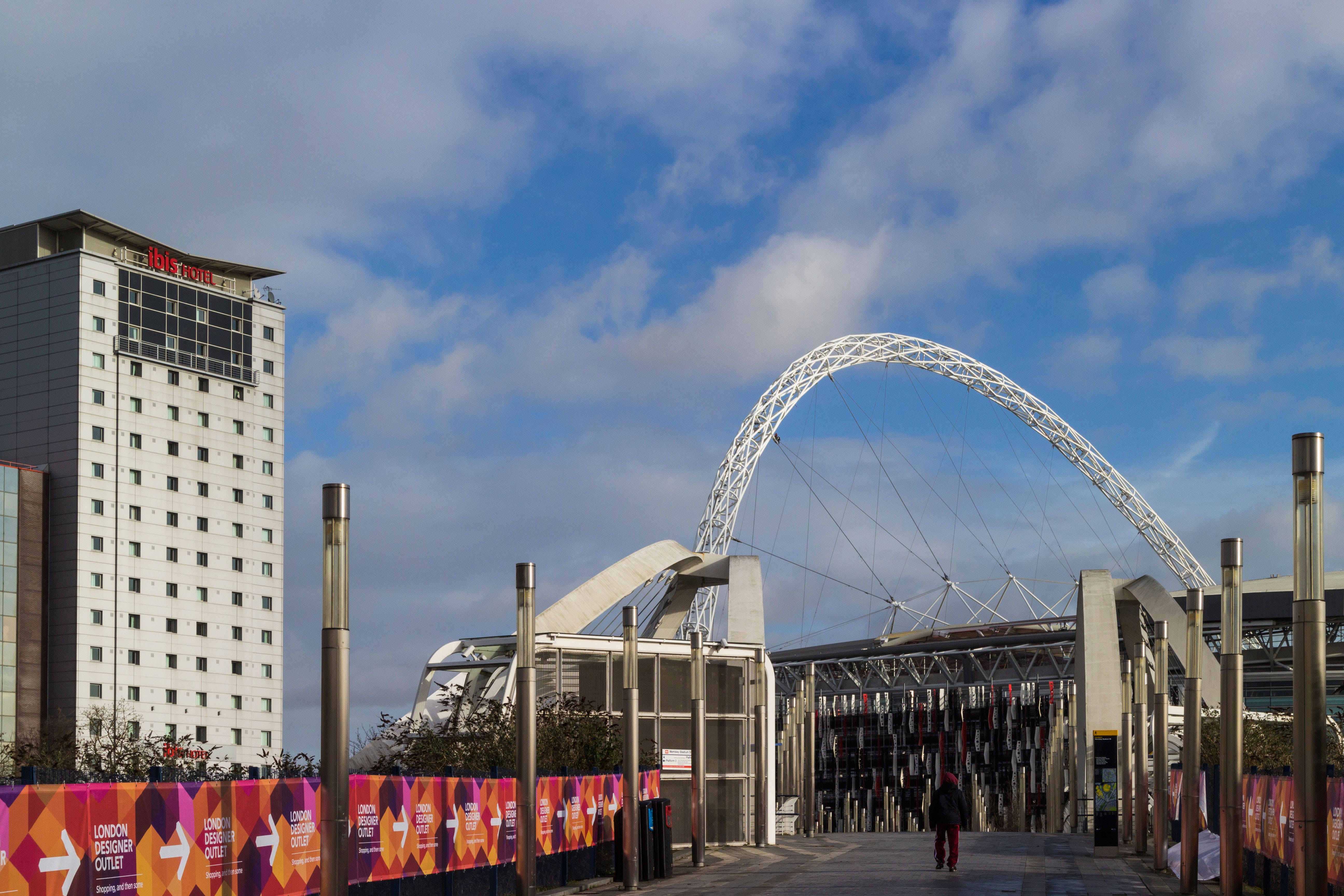
Billionaire landlord Asif Aziz has been personally criticised by a high court judge over how his company handled dangerous Grenfell-style cladding on a high-rise hotel it owns next to Wembley Stadium.
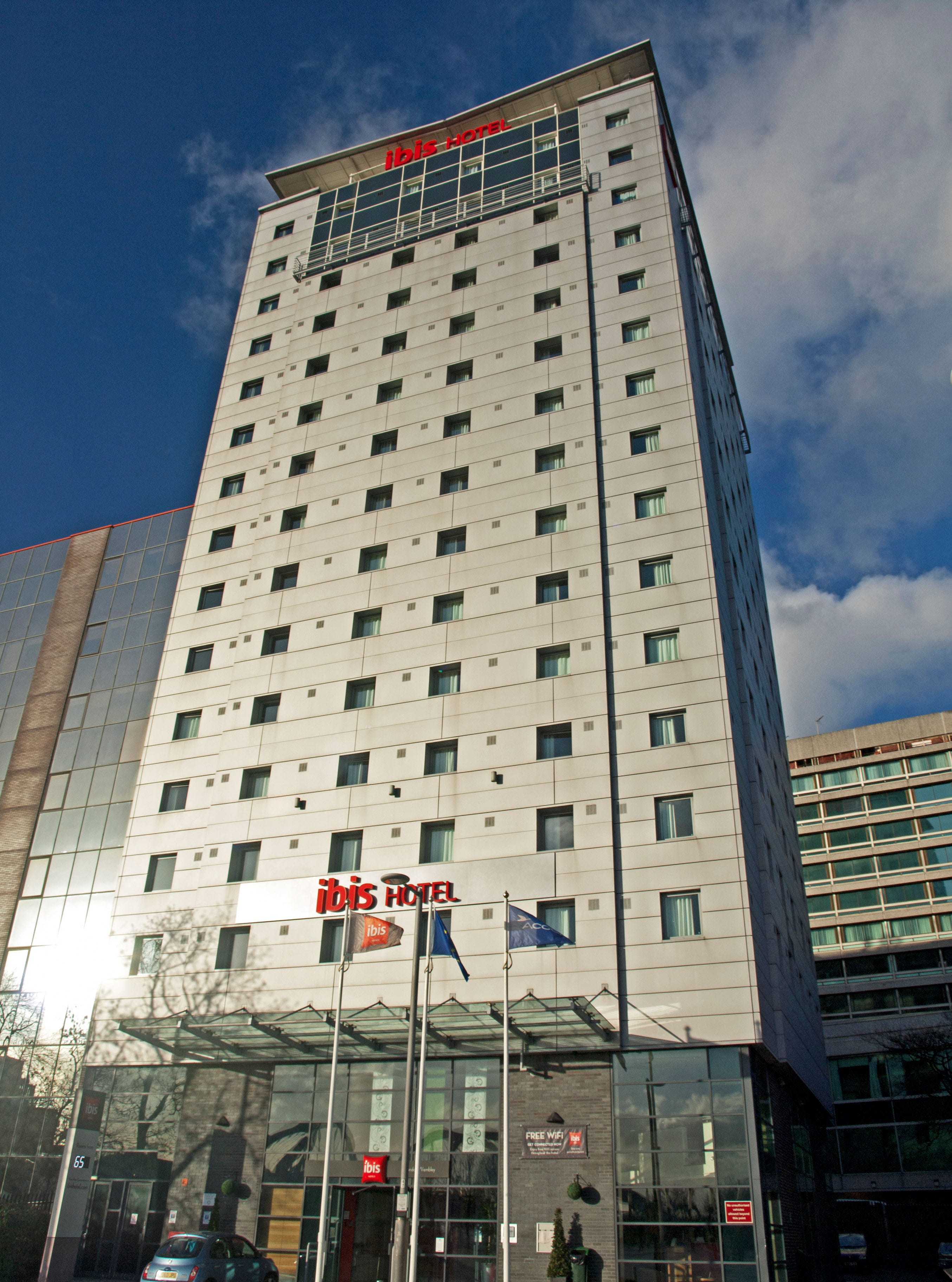
Hundreds of thousands of people stayed at the Ibis Wembley hotel over an eight-year period without knowing they were inside a tall building coated in material that had “no flame-retardant properties”.
London Centric has spent the last year investigating Aziz’s companies. We’ve revealed how they have a history of hosting tax-evading gift shops in their buildings, conducting mass evictions of tenants, and issuing fake electrical safety certificates to residents. We’ve also looked at the billionaire’s ownership of the Prince Charles Cinema and the purchase of the world’s oldest YMCA.
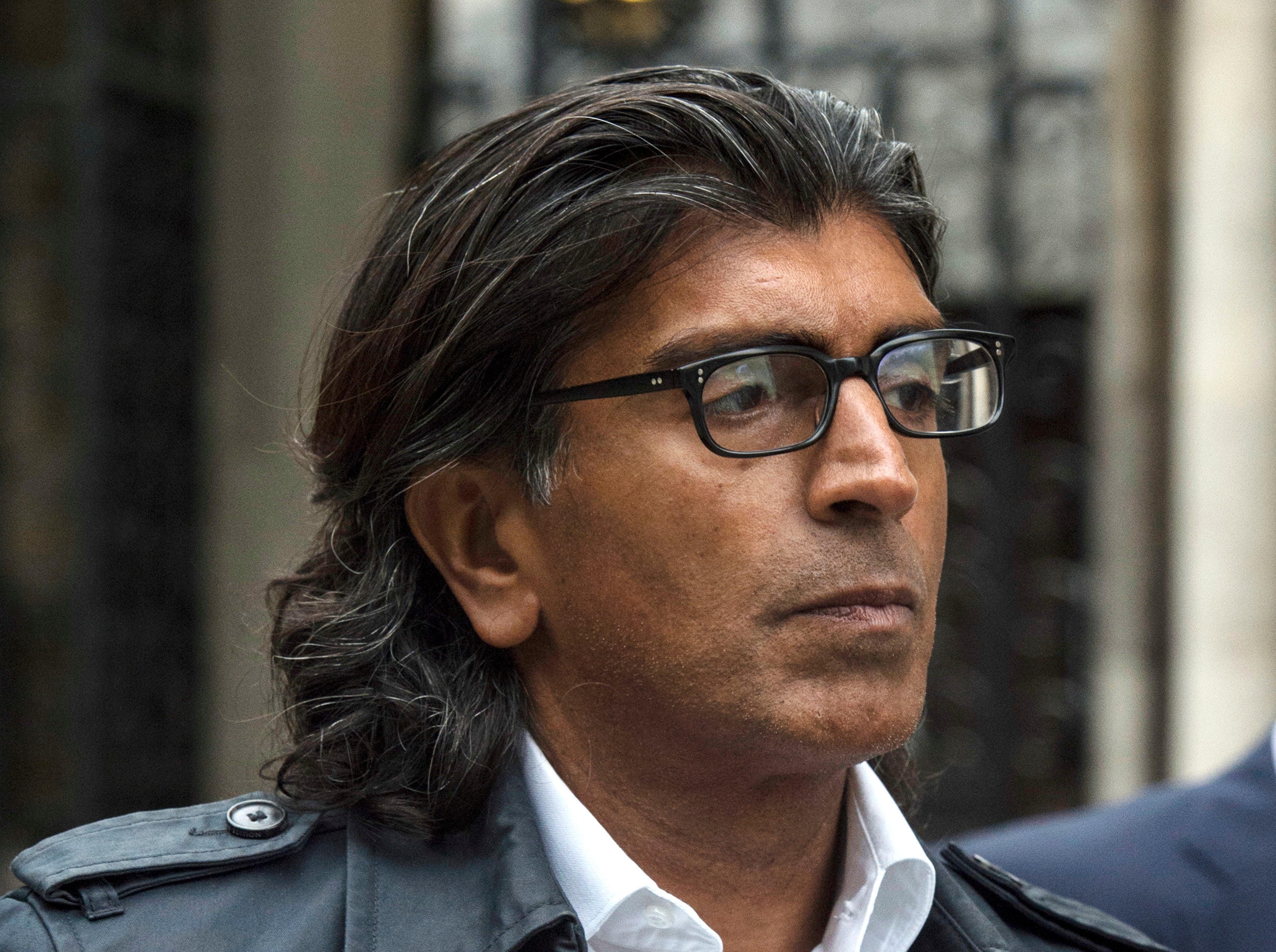
Now, in a damning high court judgment, His Honour Judge Stephen Davies raised a series of concerns about how one of Aziz’s companies handled the “intolerable fire risk” posed to people staying in its Ibis hotel next to Wembley Stadium.
The judge spelled out:
The personal involvement of Aziz, a Labour donor and self-styled philanthropist, in the response to fire safety concerns at the Wembley hotel.
Details of a “mystery” incident in which a piece of cladding supposedly from the hotel was provided for fire safety testing by an unknown person, even though it could not have actually come from the building.
How Aziz’s company had a fire safety report rewritten to remove suggestions that more detailed checks should be carried out.
Although safety concerns about the Ibis Wembley were first raised in the wake of the Grenfell disaster it took until late 2024 before a proper fire safety test was carried out. In that time vast numbers of people slept there after attending football matches, gigs, and other events at Wembley Stadium.
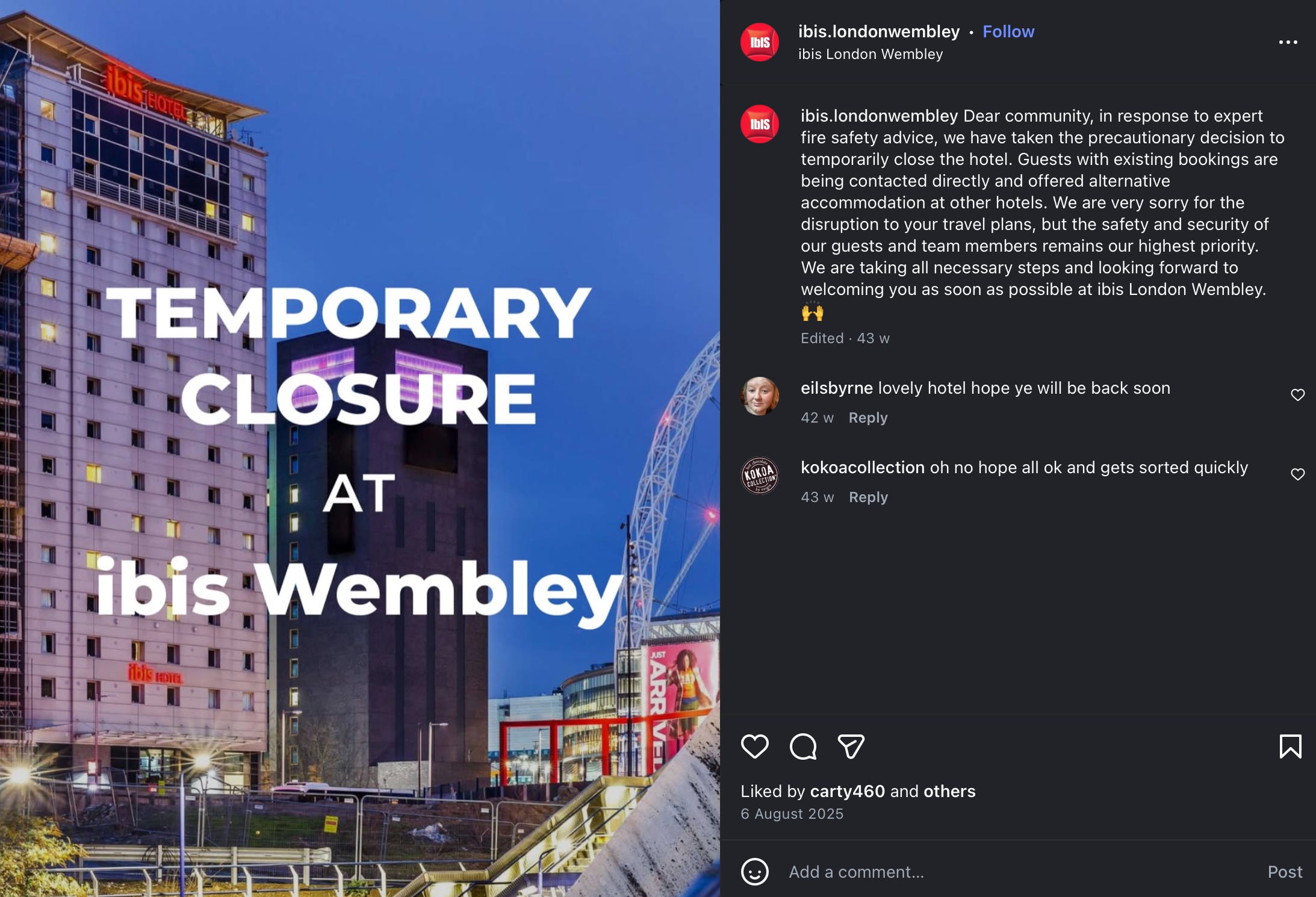
The building suddenly closed for remedial works last summer after checks were finally carried out by the hotel operator, which had come to doubt the evidence provided by Aziz’s company that the building was safe. The decision left hundreds of people attending that summer’s Oasis gigs with nowhere to stay and the hotel remains closed.
The “mystery” of the wrong testing sample
The Ibis Wembley is operated on a day-to-day basis by hotel firm Essendi but the freehold of the building, which comes with responsibility for maintaining its structure, is owned by London Property Company Limited. This is one of many offshore companies used by Aziz for his financial interests.
In late 2017, following the Grenfell disaster, Aziz’s company was warned that the cladding on the Ibis Wembley was “similar to that used on Grenfell Tower” and advised to refer the 210-bedroom, 16-storey building to the fire service.
This did not happen. As a next step, according to the court, Aziz’s company hired a different fire safety consultancy called Clarke Banks to investigate the cladding.
This check would normally involve cutting away a piece of the building’s outer wall and subjecting it to a fire test.
“What then happened is something of a mystery,” said the judge.
In most circumstances an external fire safety consultant would travel to the hotel, cut a chunk of cladding off the building, then inspect it to see if it met the required standards.
In this case, the judge said, an unknown individual instead obtained a piece of cladding and showed it to the consultants at Clarke Banks.
They concluded the specimen would have passed a fire safety test because it was made of pure aluminium.
There was one problem: the pure aluminium cladding sample didn’t come from the Ibis Wembley. It was a completely different material to the flammable cladding that was actually on the hotel, which was “similar to that used on Grenfell Tower”.
The judge suggested there were three possible explanations for what had gone wrong with the test and he could not definitively conclude which was correct.
One explanation was “someone positively misleading [fire safety consultants] Clarke Banks by providing it with a sample which could not have come from the hotel building”. The second was “an inexplicable error” by the fire safety specialists. The third was “some other unexplained reason”.
Aziz’s solicitors at law firm Ronald Fletcher Baker told London Centric it would be wrong to suggest London Property Company Limited “deliberately provided a wrong sample, knowingly misled anyone, or deliberately concealed the cladding issue”.
They continued: “On the contrary, the judgment records that what occurred during the 2018 sampling process remains a ‘mystery’ and that there was insufficient material to make a findings [sic] of deliberate concealment by any party. Any suggestion to the contrary would be false and highly defamatory. London Property Company maintains that Clark Banks [sic] had the correct sample.”
Missed opportunities
Even accounting for the “mystery” of the initial testing mistake, the true severity of the fire safety situation at Aziz’s Wembley hotel could have been resolved back in 2017 with a second, more thorough, safety check of the building.
Yet when the fire safety consultants at Clarke Banks wrote a draft report recommending further inspection of the cladding, the judge found they faced pushback from Aziz’s company, which demanded multiple rewrites to the report.
The intention, the judge said, was to remove the “caveats contained in the first version” which recommended additional testing.
Instead, a sanitised version of the report, giving the building’s cladding a clean bill of health, was then supplied to the operators of the Ibis, which the judge said potentially endangered people staying overnight in the hotel after events at Wembley Stadium.
If further checks had been carried out, it would have quickly revealed the cladding was dangerous and the hotel would have been likely to shut immediately, potentially leaving Aziz’s company with a vast bill for remedial works.
Clarke Banks did not respond to London Centric’s requests for comment on why it rewrote its fire safety report to remove the suggestion of further checks following pushback from its client.
The judge said he did not have enough evidence to “make a positive finding of deliberate concealment” by Aziz’s company. But it was clear to him that, having obtained a favourable report, the business “displayed a firm reluctance to have any further invasive investigations undertaken by any independent consultants”.
“Somewhat unconvincing and unreliable”
Amid growing concerns, the operator of the Wembley hotel finally carried out its own fire checks in 2024, which swiftly concluded the building was dangerous. This led to a messy court dispute over who was responsible and who should pick up the bill for remedial works. Aziz’s London Property Company lost, has to remove the cladding, and now faces paying substantial damages.
The judge was critical of the two witnesses put forward by Aziz’s company in the court dispute, calling one of them “somewhat unconvincing and unreliable”.
He also said he believed Asif Aziz was personally involved in the discussions regarding the cladding on the hotel as one of his employees had to “obtain instructions from Mr Aziz for all major matters”.
The judge said: “Although both [witnesses] were keen to describe Mr Aziz as a ‘big picture’ man... that is belied by the documented extent of his involvement in the case from start to finish, which shows that on occasions (although I accept not always) he was directly involved in the details.”
Why didn’t Asif Aziz personally put his case across in court?
Aziz styles himself as a major philanthropist in London, owning the Trocadero building along with vast swathes of central London and residential towers. Through his family foundation he has donated to Labour MPs and also funds journalistic internships in many major newsrooms.
The billionaire left the UK in early 2025, relocating to Abu Dhabi, with the media attributing his decision to leave to the tax burden of the new Labour government. He occasionally returns to the UK and this year met mayor of London Sadiq Khan at the switch-on of London’s Ramadan Lights, which are funded by Aziz’s family foundation.
The judge was critical of Aziz’s failure to give evidence at the trial and said the billionaire could have given evidence by video: “My strong suspicion… is that much of the evidence in this case in reality emanates from… Mr Aziz, who in my view plainly could and should have been called as a witness, unless there was some very good reason for not doing so.”
Aziz will soon become one of the biggest hotel operators in London, as his company rushes to open thousands of windowless rooms in buildings operating under his ‘Zedwell’ branding, many of them in underground basements.
Although the judge concluded that Aziz has “control of” the company that owns the hotel’s freehold, his lawyers said: “Mr Aziz is not a director of London Property Company Limited and is not involved in the day-to-day management relating to the cladding. The decision as to which witnesses to call was a matter for the legal team and was based on which individuals had direct operational involvement in the relevant issues. Unfortunately, the key witness and a valued employee passed away shortly before the trial. London Property Company Limited disagrees with the judgment and intends to appeal.”
Updates on previous stories… our story on Lime’s removal of speed limits for Deliveroo riders was raised with the company by Paul Swaddle, the leader of Westminster City Council… we’re hearing that the office in Hackney where goat sacrifice may be taking place has possibly already been cleared out….
Self-driving taxis are (sort-of) coming to London this summer on Uber
Is a self-driving taxi truly a self-driving taxi if it still has a human in the driving seat in case the self-driving fails? It’s a thought experiment that is about to become reality in London, after driverless taxi firm Wayve confirmed plans to start carrying paying customers around London by the end of the summer, attracting substantial media interest.
Wayve, for those struggling to keep up, is a homegrown startup that has been testing its cars on the streets of London since 2018. It is completely separate from the similarly named Google-backed Waymo which has also been flooding London with self-driving taxis in recent months and is planning to launch later in the year.
While Wayve plans for future operations to be fully driverless, at first all trips will have a licensed operator behind the wheel in case anything goes wrong.
Rather than build its own app, Wayve is launching in conjunction with ride-hailing company Uber. People requesting an Uber might find themselves being assigned a Wayve self-driving vehicle at no extra cost. If you want to increase your chances of being matched then go into your Uber account settings, tap on ‘ride preferences’ and register your interest in the ‘autonomous vehicles’ section.
We’ve been obsessed with who owns The Holme in Regent’s Park, formerly London’s most expensive home, since it was sold to an unknown purchaser for £139m in 2024. Now, the FT reports, the owner of the 40-bedroom house is close to flipping it to another unknown purchaser for £190m. Due to the UK’s unreformed property transparency laws, the owner is obscured by a trust and we’ll never know who stumped up the cash.
Would you like an unlicensed HMO with your pizza?
London Centric has reported on its fair share of dubious landlords. But we were surprised to see Pizza Pilgrims pop up on City Hall’s Rogue Landlord checker. It shows the proponents of Neapolitan pizza were fined £10,000 after being prosecuted for failing to ensure a house in multiple occupation was “safe and in good condition”.
A spokesperson for the pizza chain told us the breach of the law relates to a “historic administrative oversight” regarding a flat above the company’s Camden branch: “The issue was fully resolved as soon as the issue was brought to [Pizza Pilgrims’] attention and the property is now fully compliant. It did not relate to the operation of the restaurant itself, and there are no ongoing issues in relation to this matter.”
Lambeth Walk of shame
Despite the local elections taking place over a month ago, Labour in Lambeth is continuing to take a kicking. The former Labour stronghold now has a Green Party leader for the first time, after Zack Polanski’s party formed a coalition with the Lib Dems.
Now, former Labour councillor Andrew Collins is suing the party for deselecting him, after he was barred from standing in May’s local elections following what he claims was a “corrupt and unlawful process”.
First elected in 2022 to represent Clapham East, he saw his bid to stand again as a Labour candidate blocked by the party, which cited attendance issues. Collins has already defected to the Greens but told London Centric that he’s still bringing the case against his old political party for the “benefit of future Labour Party members whose rights we must safeguard.”
Got a story for us? Get in touch here via email or WhatsApp! We rely on your tips. Even if we can sometimes get overwhelmed by the sheer number of messages that we receive, we read every one of them.
PS We’re baffled and delighted to learn that London Centric has been mentioned in a novel. Thanks to reader Rebecca Elliot, who encountered the mention in Losing the Plot by Mia Page, described as a new “uplifting bookish rom-com” .
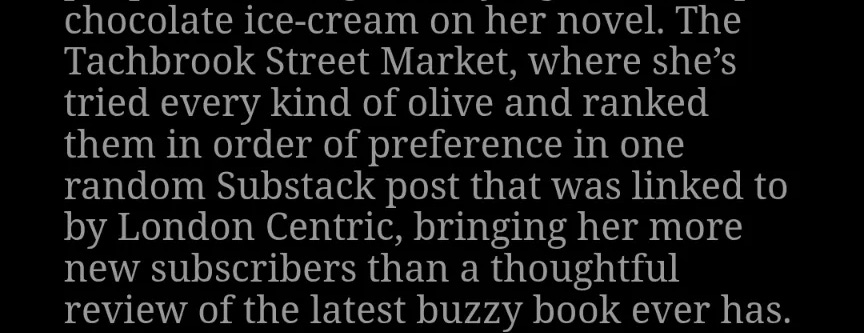
We have never, to our knowledge, linked to a ranking of olives, but there’s a first time for everything.
Sadly I've moaned about this before.
The Aziz case highlights the woeful state of regulation. From hospitals to social services, police to building control, regulations on safeguarding children (Rotherham), building safety (Grenfell), media bias (Ofcom/GB News) are, at best, parking tickets, and in general, optional.
There is simply no accountability. The chances of any regulation breach resulting is prosecution are small. The punishments for doing so, ineffectively small to deter potential offenders.
We simply must impose much more accountability. Breaches that threaten life and limb should result in huge fines, invocation of the Proceeds of Crime act and bans on having control over companies or institutions. It is only the threat of ruin that will make these avaricious oligarchs think twice.
You're literally more likely to be punished for using a mobile whilst driving (stupid, dangerous) than you are for allowing people to sleep in a flammable building for a decade, having done everything possible to avoid responsibility for your decision.
Yet again, London Centric delivers. Yet again, Asif Aziz is at the center. Quelle surprise.
It is the same old story and the contrast exposed here is staggering. Grenfell occurred nine years ago, prompting a wave of legislation supposedly designed to make high-density buildings safe. Yet, while thousands of ordinary leaseholders are being held hostage by bills running into the tens of thousands to remediate cladding, this major property developer was able to evade accountability and keep an intolerable fire risk hidden in plain sight for nearly a decade.
As somebody who manages a shared freehold in London, dealing with the fire inspection industry has increasingly felt like (for the rest fo the property industry) paying a financial ransom—this is a sector that has effectively turned post-Grenfell safety compliance into a lucrative cash cow. But while shared freeholders are squeezed for every penny by rigid, box-ticking surveyors, a billionaire developer can simply demand and receive multiple rewrites to scrub a draft report of its caveats and warnings.
For me, the real next question here is the works of Clarke Banks. If they compromised their independence on this high-rise building for Azis, how many other buildings have they done the same for? What is their professional integrity? The entire property sector is a self-regulated industry and this, excuse the pun, is a smoking gun.
LondonCentric keeps publishing exposés like this. What we need now is a politician—whether it is the Mayor of London, a local London MP, or the Housing Minister—to step up and treat the evidence uncovered by London Centric as an actionable brief. It is time for a formal inquiry into the fire safety inspection industry, a complete audit of Clarke Banks' historic reports, and genuine statutory penalties for developers who manipulate safety data for economic gain.