

Lime axes speed limits for Deliveroo riders
Plus: How to end the tube strikes • Did a London school really ban ham sandwiches? • Who's reclaiming lost sex toys from TfL? • Was a Waymo really lost on Waterloo Bridge?


The tube strike is on after last-minute talks failed, the heatwave has been replaced with rain, and we’ve got a load of leaked WhatsApp messages from within Lime showing how they’re allowing delivery riders to go faster than everyone else.
Scroll down to read today’s stories, including how the current London Underground dispute could finally come to an end.
Need a Father’s Day present? Why not buy a London Centric gift subscription? If you want a more flexible gift subscription, drop us a line on email or WhatsApp and we’ll sort you out.
Exclusive: How Lime removed restrictions to let Deliveroo riders go at full speed through London’s parks
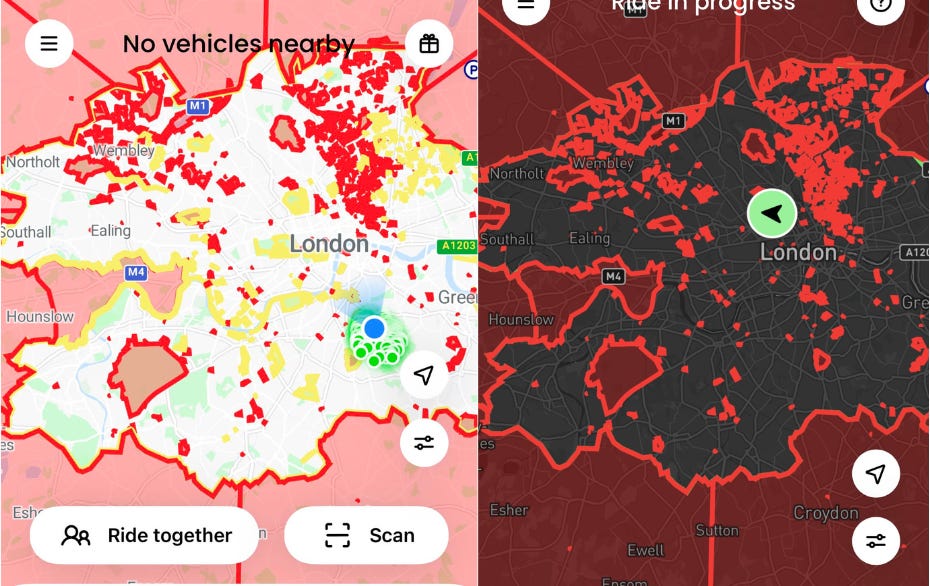
If you use Lime’s rental e-bikes, you’ll know that the capital is dotted with ‘go slow’ zones where the vehicles automatically slow down, enter ‘turtle mode’ and have their speed limited to as little as 8mph.
These areas, often agreed in negotiations with local councils, include public parks, busy high streets, or other areas where there is a high risk of collision with pedestrians.
That’s unless you’re a Deliveroo rider.
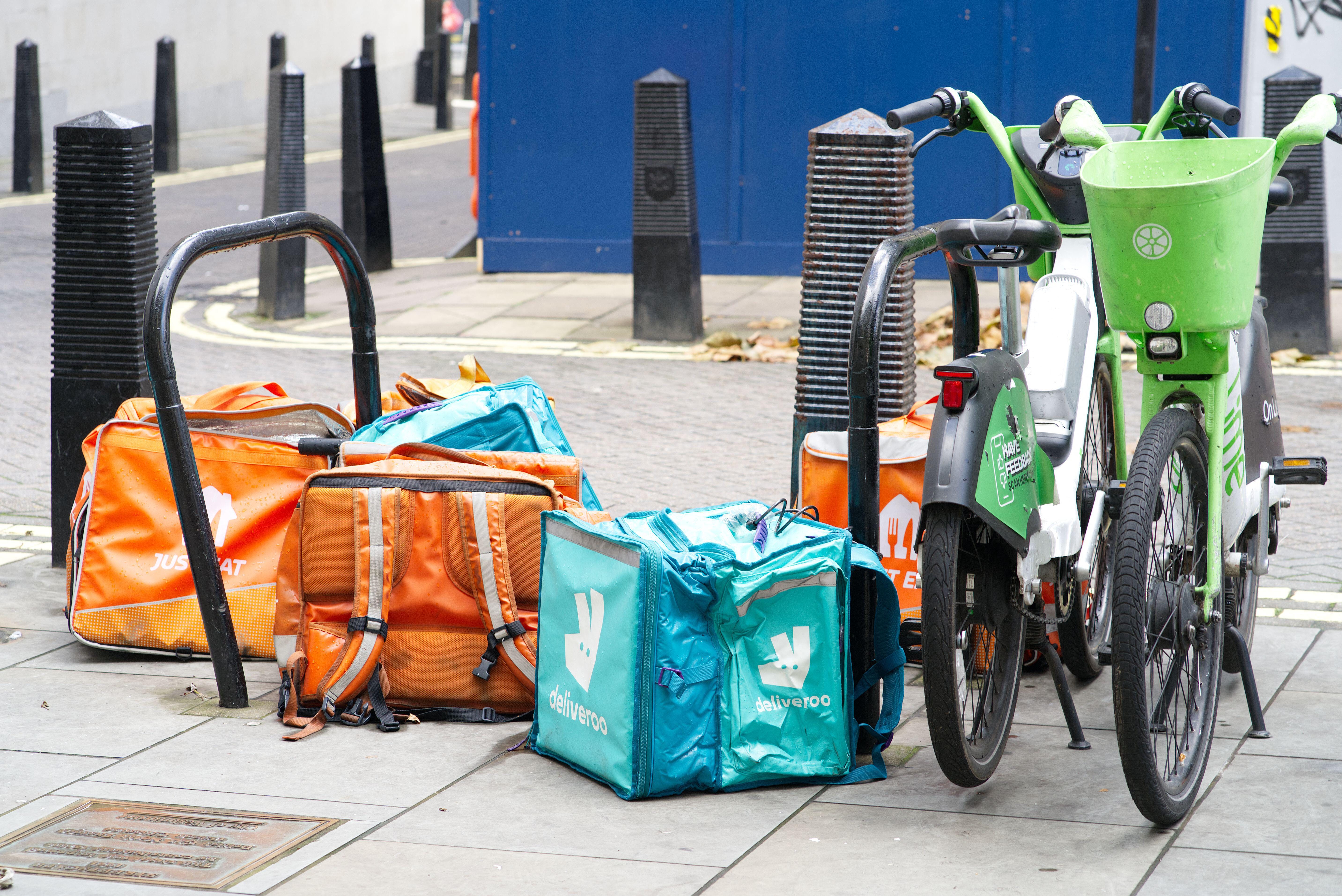
London Centric has been sent leaked internal WhatsApp messages that show how Lime has removed speed restrictions for London’s food delivery drivers. In the process the company has created a two-tier system where someone delivering a pizza is allowed to go through London’s parks and pedestrian areas at a top speed of 15.5mph but ordinary members of the public are not.
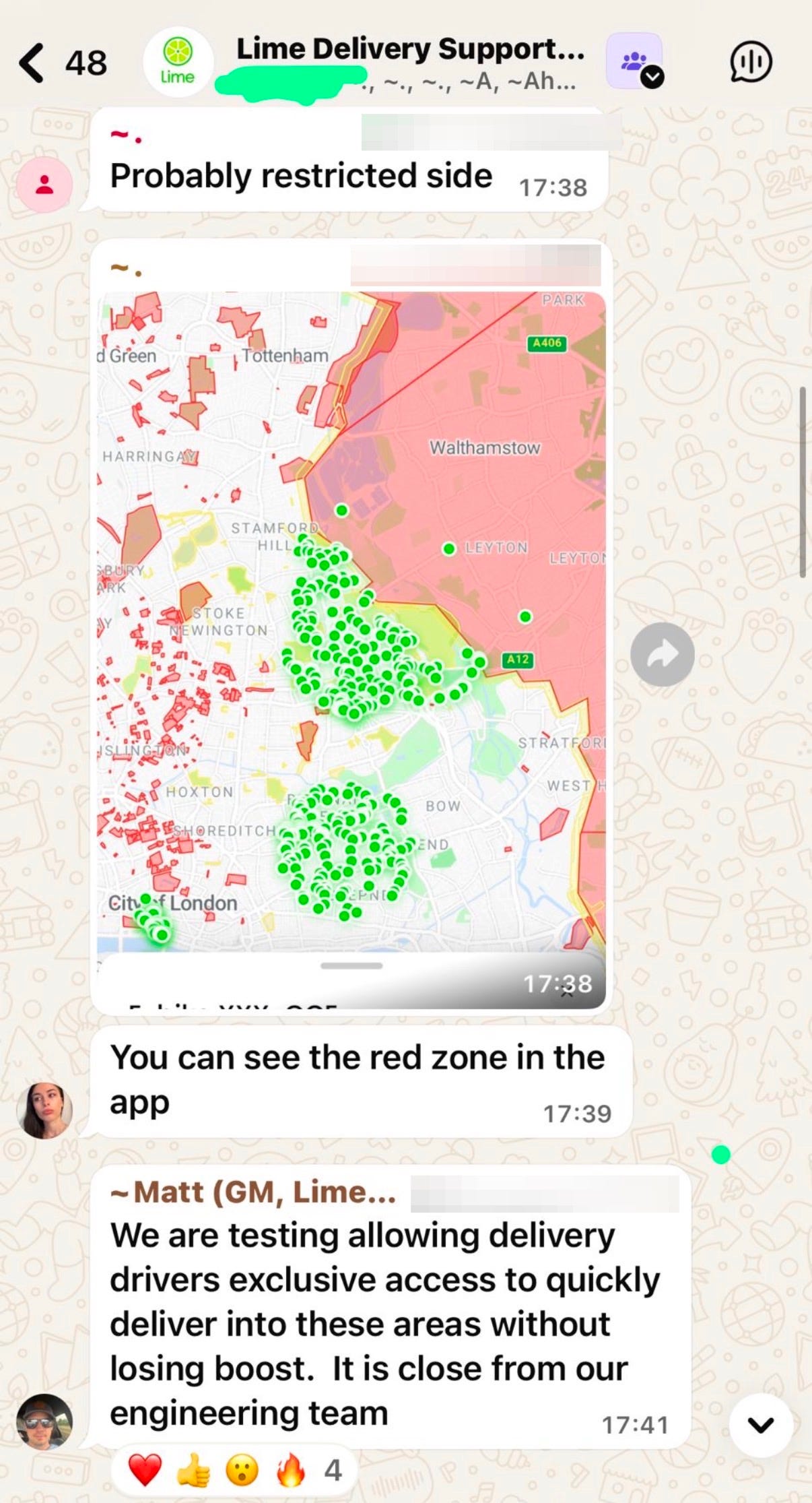
Matt Ward, Lime’s US-based “general manager for new verticals”, told a WhatsApp group for London delivery riders in April: “We are testing allowing delivery drivers exclusive access to quickly deliver into these areas without losing boost.”
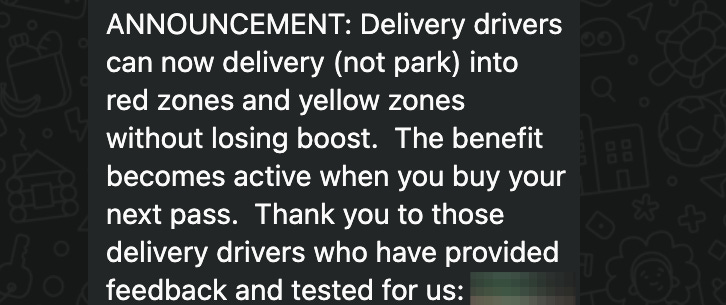
Riders were later told the change applies both to red zones where Lime does not have an agreement with the local council to operate at all, and also the yellow “go slow” zones.
Well-known “go slow” zones include major central London locations such as St James’ Park, Regent’s Park and Hyde Park, plus locations further out such as the newly pedestrianised Camden High Street, Greenwich Park, and Battersea Park. Paths along the Thames in south west London are also heavily restricted for ordinary users.
The speed limit avoidance feature was developed as part of the company’s new Delivery Pass service. It aims to convince food delivery drivers to use Lime’s vehicles to meet Londoners’ insatiable appetite for rapid door-to-door delivery.
At the moment many delivery riders rely on the illegal e-bikes that form the backbone of the capital’s Deliveroo and Uber Eats network. Illegal e-bikes with throttles can easily travel at up to 30mph, often powered by cheap conversion kits that are contributing to the enormous growth in deadly lithium battery fires when they are charged at home.
Lime is trying to take on this market by offering couriers unlimited use of its consumer e-bikes for £12 per 24 hours, or up to £49 for a week, arguing it is safer for riders and better for Londoners. Lime will even give drivers a free luggage rack to attach to the back of Lime bikes with some of the packages.
The challenge for Lime, it seems, is that delivery drivers who are used to getting around London on fast, illegal vehicles are not delighted by the speed restrictions on Lime’s legal e-bikes. Slower journeys mean fewer completed jobs for the delivery drivers and therefore less income in a food delivery system that incentivises drivers to take risks and break the law.
At some point the decision was taken by Lime to prioritise speed, even in public spaces. When we tested a Delivery Pass in Regent’s Park all the normal speed restrictions on Lime’s bikes immediately disappeared.
On Monday, London Centric asked Lime whether it had checked with the capital’s local councils before giving the go-ahead for food delivery drivers to go at full speed through the capital’s parks and busy pedestrian areas.
In response, the company told us it would now U-turn on the policy and will soon be removing it. A spokesperson said: “The Lime Delivery Pass is in its pilot phase, and we’re continuing to learn and test new features that help optimise the experience for delivery riders.”
The company, which is in the process of listing on the stock market at a $2bn (£1.5bn) valuation, continued: “Lime’s Delivery Pass is designed as a viable, and safer, alternative to the large number of illegal high-speed delivery e-bikes seen on London’s roads. Every Lime e-bike has a speed cap of 15.5mph, and passes regular safety and quality checks, including on battery safety. The pilot regularly tests new features and aims to develop a safer option for delivery riders in the city.
“We are currently in the process of reinstating ‘turtle mode’ and yellow ‘go-slow’ zones for delivery riders. This was tested in limited areas for a short period of time as we continue to learn and build our DeliveryPass. That trial is ending and will not be part of our offering to delivery riders going forward.”
…still, you could just stop the bikes in the traffic
One other detail in the leaked WhatsApp messages caught our eye. In a bid to deal with London’s bike theft epidemic Lime’s US-based technology team also tested a new ‘auto pause’ feature for delivery drivers. This automatically locked an e-bike if it was parked up for a few minutes while the driver popped into a restaurant or block of flats to collect or deliver food.
Unfortunately, the feature started misfiring, with delivery drivers reporting that Lime e-bikes would lock themselves while they were cycling along London roads.
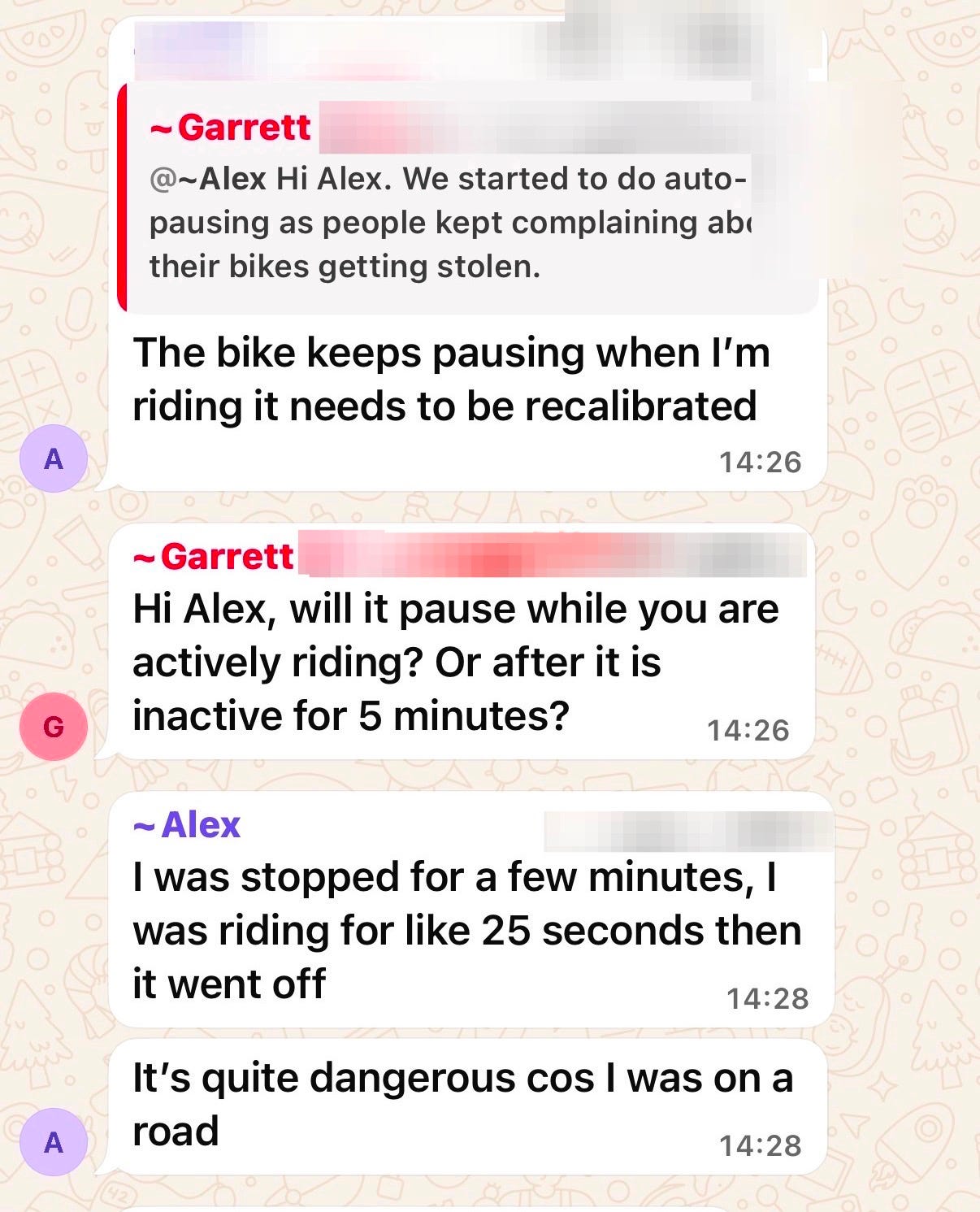
The tech team immediately turned off the feature.
How to end the tube strikes
Talks between the RMT trade union and Transport for London collapsed on Monday afternoon, with no resolution to the ongoing dispute over how many hours a tube driver should work in a four-day working week.
London Centric has reported extensively on the strike, digging deep into what’s actually at stake. We’ve also spelled out why half of the capital’s tube drivers, who belong to the rival Aslef union and support TfL’s definition of a four-day working week, will be turning up to work as normal.
Your experience of the tube will depend on which union your line’s drivers belong to. You might not notice it at all if you rely on the Elizabeth line or Overground, which aren’t affected by the strike.
It now seems to us that there are two routes out of the dispute, other than a complete capitulation, which would allow the RMT to claim some sort of victory.
The voluntary-means-voluntary route: TfL has said its proposal for a 35-hour four-day week will be introduced on a voluntary basis, with RMT members free to stay on the old five-day week rota. But the RMT says it fears that the new proposal will quickly become the default. One way out of the dispute would be for TfL to sufficiently persuade the RMT that the proposal will remain voluntary.
The terms and conditions route: The RMT has suggested instead that drivers work a 32-hour week, which would cut the total number of hours in the working week. Another off-ramp for the dispute would be for either side to compromise on some of the details of four-day working arrangements, such as drivers being required to spend slightly less time at depots.
As things stand, another RMT tube driver strike is planned for Thursday.
Would someone please collect their abandoned sex toy from Tottenham bus station?
A Freedom of Information request has found that a total of 26 sex toys were handed in to Transport for London’s lost property network last year, of which six were later reunited with their owners. The FOI request (h/t Diamond Geezer) found the majority of items were found inside another piece of lost property such as a bag, although a small number were found abandoned on their own.
The sex toys were generally recovered at the end of railway lines or at bus depots, with the Elizabeth line’s Shenfield station, Tottenham bus station, Embankment tube station, and Tolworth bus station among the locations to register multiple finds.
Did a London school really ban ham sandwiches?
Over the weekend Orla Minihane, a national spokesperson for Rupert Lowe’s Restore Britain party, claimed that Eastbury School in Barking, east London, had left a young girl in tears after confiscating her packed lunch.
Minihane claimed this was because the pupil “had a ham sandwich [and] pork is banned” at the school.

The post on X quickly amassed 33,000 likes, more than half a million views and vast numbers of anti-Muslim replies. In response to those who asked for the evidence of the ham sandwich ban, Minihane said she was “merely telling you what I was told”, and invited followers to “call the school” if they don’t believe her.
So London Centric did exactly that.
The school directed us to Barking and Dagenham Council, who told us: “Eastbury Community School is not a pork-free school and pork products are available within the school’s catering provision. The school is not aware of any incident in which a pupil has had food confiscated for bringing pork products into school.”
Minihane has quickly risen to prominence within Restore. The party is a splinter group from Nigel Farage’s Reform UK, backed by X owner Elon Musk. Restore has campaigned for mass deportations and a party spokesperson has stated “Britain is a people defined by indigenous British ancestry and Christian faith”.
We tracked down Vinycius Kaizer, the man in the picture. He slightly walked back the central claim and told London Centric: “There appears to have been some misunderstanding regarding information that has been shared online. I can confirm that I have made the decision to home school my children and I am currently in the process of organising everything required for that transition. As you can appreciate, this involves a number of practical and educational arrangements and is not something that can happen overnight.
“My understanding is that the school has policies regarding certain food items, including pork products, and this is one of several concerns I have raised as a parent. However, I do not wish to comment on any specific interactions involving my children or discuss school-related matters publicly. The decision to home-school is based on a range of factors and concerns that I have regarding my children’s education and school environment, rather than any single issue. For that reason, I would prefer not to provide any further comment at this time.”
When asked if he could confirm whether a ham sandwich had ever actually been confiscated from his child, Kaizer repeated his desire to refrain from “commenting on school-related matters.”
Minihane did not respond to a request for comment on whether she had any doubts about her original viral post and the reaction it had prompted.
A picture is worth a thousand Waymos
Ever since Waymo started to test its self-driving taxis in the capital we’ve been waiting for the moment when the cars caused chaos on London’s roads.
Last month, it seemed like that moment had come, when a Waymo drove straight towards a police cordon in Harlesden. But the company later insisted the car was being driven in manual mode by a human who has since been disciplined.
Then, last week, this image of a Waymo at the end of Waterloo Bridge went viral. It appeared the car had driven the wrong way through the one-way Strand underpass and was being intercepted by a police car.
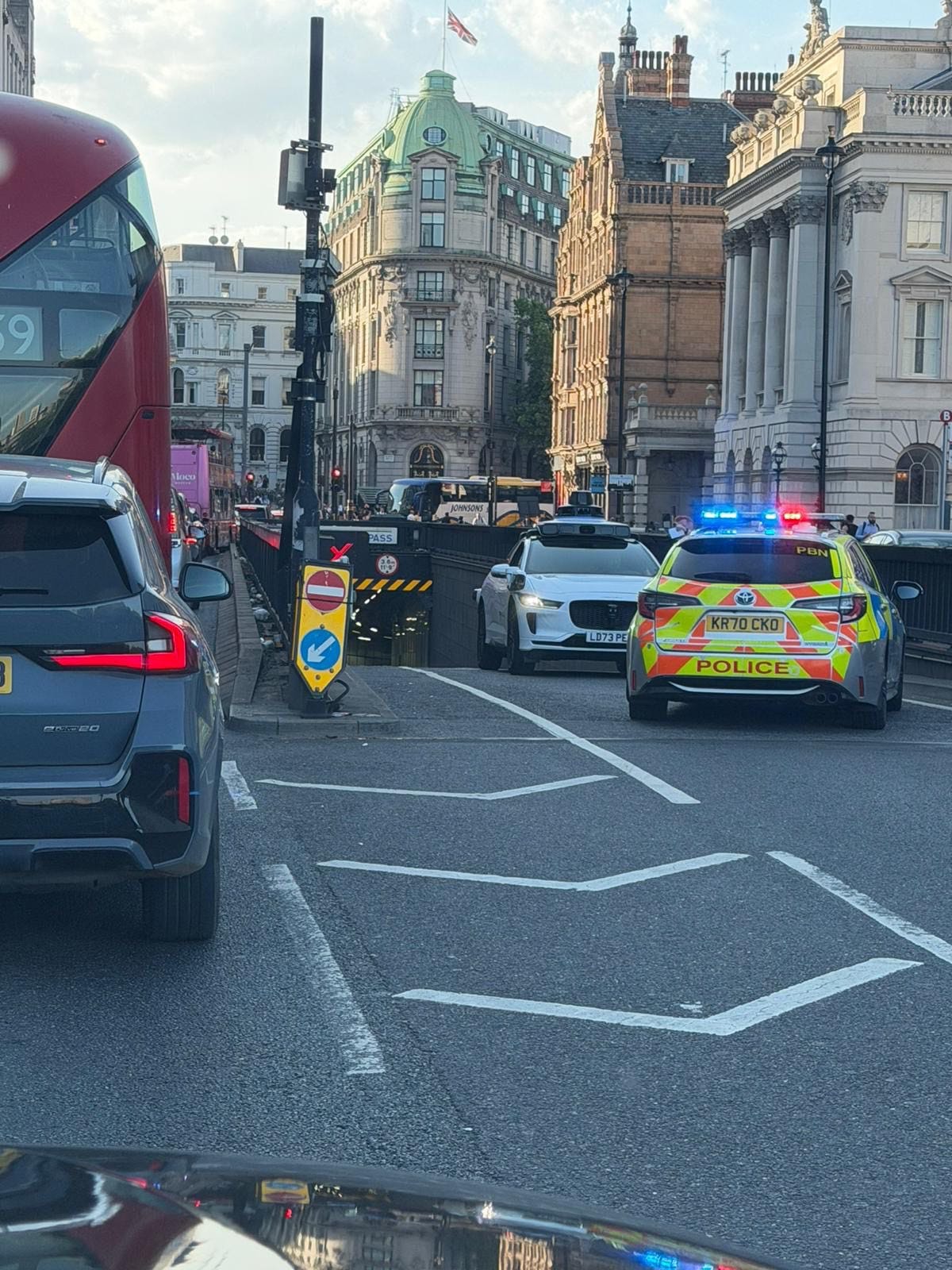
Another computer failure? Not quite. In an account of events that’s backed up by the Met police, Waymo said two of its vehicles had become stuck behind a broken-down traditional taxi in the narrow tunnel, which was originally built as a shortcut for trams and used to have its own underground station.
Unable to proceed, the police advised the onboard Waymo test drivers to reroute back through the tunnel and the picture shows them blocking the entrance on Waterloo Bridge to ease their progress. As a result, cynical Londoners are still waiting for the first true Waymo traffic chaos. At the moment Waymo still has test drivers in its cars to assist in these situations but it aims to remove them completely by the end of the year. This will leave the cars to make their way around the capital without a human on board.
Guess who is McBack
While the local elections took place three weeks ago, their impact is still being felt in Southwark, as part of a very public personal spat.
Last summer leftwing Labour councillor James McAsh was narrowly elected leader of the local Labour party and therefore the council. This was then overturned on a technicality following an internal party row that split along ideological lines, with opposition to McAsh led by local Labour MP Neil Coyle. In response, McAsh defected to the Greens, helped his new party to its best-ever local result, became leader of the local Greens, did a coalition deal with the local Liberal Democrats, ousted his former Labour colleagues, and last week was elected council leader for the second time in a year.
Coyle has not taken this well, using X to share a letter addressed to McAsh setting out his “severe concerns” about the coalition, in which he said he suspected it would “McCrash and burn.” The letter said McAsh had jumped ship with “other Marxists no longer welcome in Labour” and that the council leader’s impact would be “just as grim” in his new role.
McAsh responded that he would “not attempt to respond to the many factual inaccuracies” in the letter, in which “even my name is misspelled.”
I once drove quite a way down Holloway Road on a Saturday morning behind a 43 bus that had a sizeable bright green dildo stuck on the back of it bouncing jauntily as the driver navigated the many potholes.
The ham sandwich story is the classic “lie that travels halfway around the world before the truth can get its boots on”, isn’t it? Utterly shameless behaviour from Restore…