

Fox hunting in King's Cross
Plus: Finsbury Park music festival row, Lord Lebedev's goes for dinner with Cate Blanchett while his staff wait for redundancy payouts, and why the tube strike was called off.


There’s a lot of very heavy news around at the moment, so it felt like a good time to revisit one of the more daft stories that London Centric has ever broken – the fox invasion on the roof of Google’s Thomas Heatherwick-designed King’s Cross HQ.
Has one of the world’s most powerful companies managed to move on their unwanted vulpine houseguests before the £1bn building opens this summer?
Scroll down to read that. We’ll be back with more investigations later in the week.
Want to contact London Centric? Click here to get in touch.
What happened to the tube strike?
Anyone hoping to give the new Lime bike model a test drive during the forthcoming tube strike might be disappointed to hear that the first round of industrial action has been called off by the RMT union and trains will be running as normal.
That doesn’t mean that the dispute is resolved. instead that the RMT will now enter into negotiations with London Underground management.
The dispute rests on what kind of four-day working week is acceptable to London’s tube drivers. Members of the Aslef union are in favour of TfL’s proposal. But the RMT is adopting a more radical position and fighting the current TfL offer of a 35-hour four-day week. They are instead calling for a maximum of 32 hours’ work.
An RMT spokesperson told London Centric that London Underground management had committed to exploring “several new ideas presented by the union regarding how a four-day week could be delivered”. The union had also committed to responding to the new ideas ahead of further planned strike days in April.
There’s more here on the dispute between the two unions if you want the background.
Just a Standard night out
Lord Lebedev, the owner of the London Standard, made the headlines for two reasons over the weekend. First, he was named by the Guardian’s Peter Walker as the peer with the joint lowest attendance record in the House of Lords. Second, he pushed ahead with hosting the annual Standard Theatre Awards, even while staff at his news outlet desperately try to get answers from him about the future of their jobs.
In previous years the theatre awards have taken place at a central London venue. This time the awards were held at Lebedev’s personal residence of Stud House in Hampton Court Park. This resulted in the sight of actors Cate Blanchett and Rachel Zegler posing with the peer in front of one of Lebedev’s fireplaces, rather than on a red carpet outside a central London hotel.
The event has raised questions among exasperated Standard staff who are desperate for Lebedev to give his news business a bit of attention. Earlier this year he announced that most of the Standard would merge with the Independent, a decision that was accompanied by the departure of both the Standard’s acting editor and its chief executive. Since then the remaining journalists’ lives have been in limbo while waiting for voluntary redundancy payments to be signed off, as deadlines for the merger have come and gone.
Which is why it was a bit strange for Lebedev’s journalistic staff to read his praise for all the hard work that goes on behind the scenes to keep London’s theatres on the go – while they’re still left hanging.
Preposterous property of the week
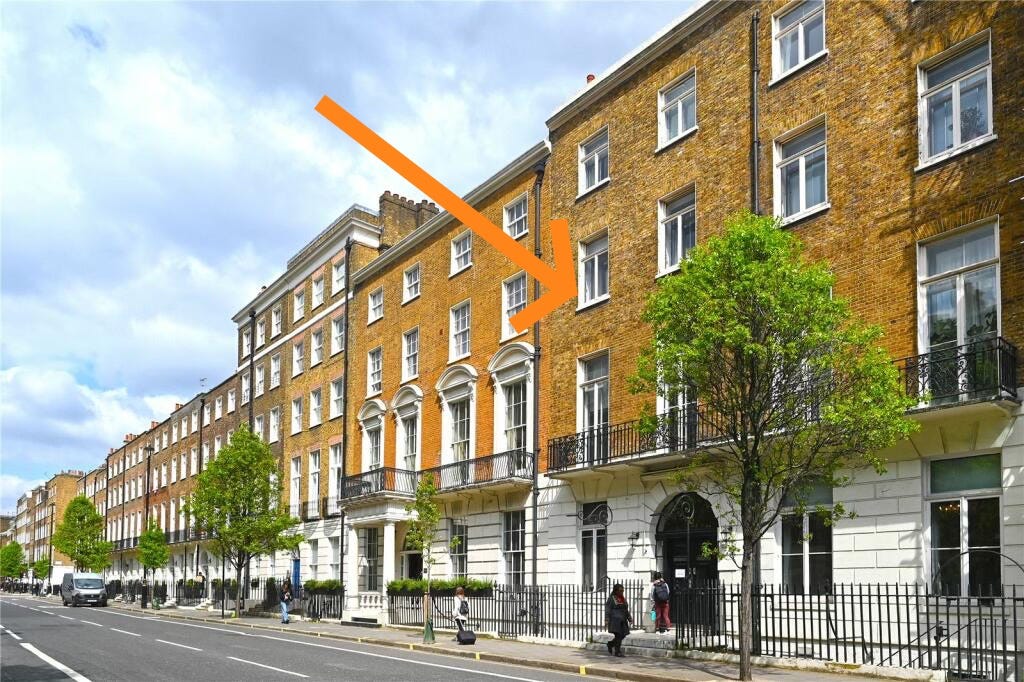
The Theosophical Society has operated out of this handsome townhouse in Marylebone, holding regular public lectures on the “unexplained laws of nature and the powers latent in man.” Derived from the Greek for “divine wisdom,” the philosophical movement began in 1875 as a way to bring Eastern spiritual practices to the West. Such was the movement’s popularity it was able to afford this enormous property during the 1930s.
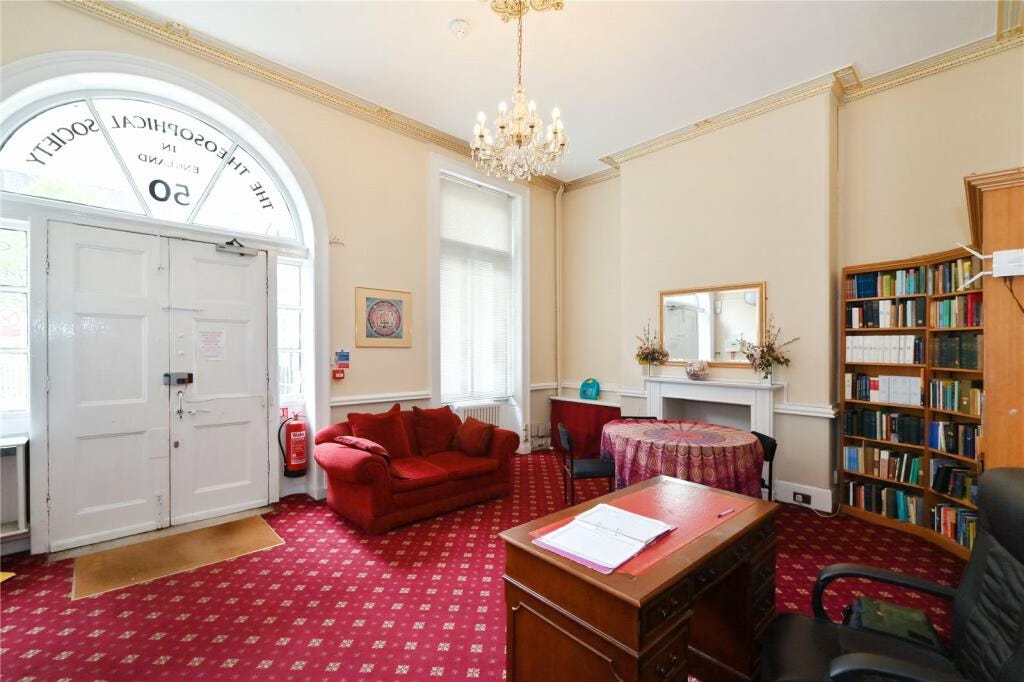
The Society is now looking to sell its London headquarters, with the five-storey building on the market for £7,000,000. While New Age in practice, the property is definitely old in decor. Given the need for modernisation, a touch of clairvoyance might come in handy when realising the property’s potential.
Summer festival legal season is upon us
Londoners feeling the sun on their faces can mean only one thing: festival discourse is nearly upon us. Last summer was dominated by a fierce debate about who the city’s public spaces are for, with the Battle for Brockwell Park setting a legal precedent that will force many festival organisers to apply for full planning permission.
The discussion rages on in north London, where 11 Green Party candidates have called on Haringey Council to postpone its decision to approve five more years of private events in Finsbury Park. The Greens argue that the council conducted a “fundamentally flawed” consultation by failing to notify all 38 stakeholder groups about its proposed deal with Live Nation, the company behind Wireless Festival and Krankbrother raves.
But the council maintains that a system error meant only two groups weren’t notified of the proposal in the usual way, and that it has now reached out to both of them to hear their views. Other battles are underway elsewhere in London, with Gunnersbury Park in west London another flashpoint over for-profit festivals in parks, while parts of Victoria Park in east London could be out of use for up to 75 days every summer.
Hunting Google’s foxes: Where did the animals end up?
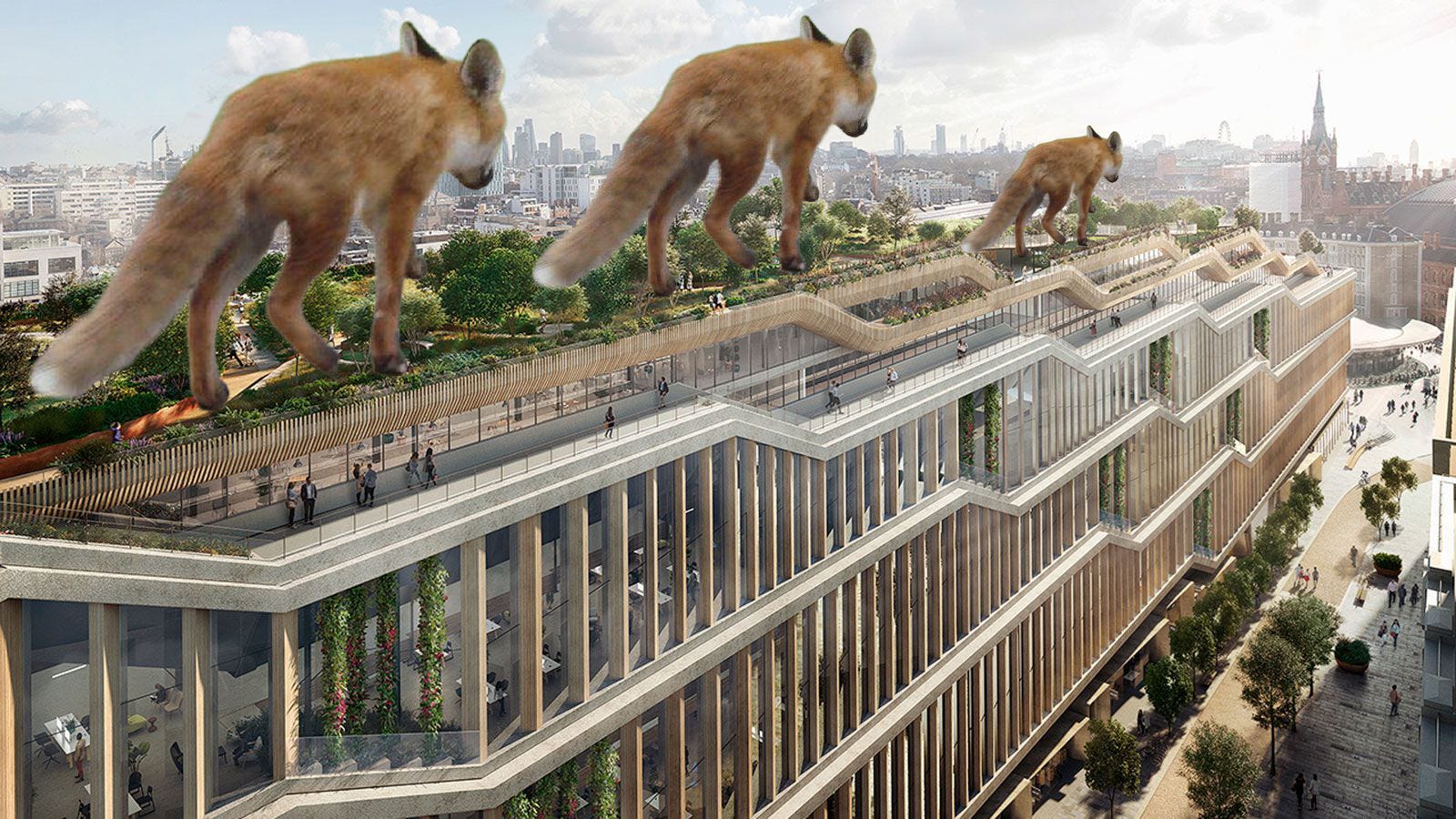
Last summer London Centric brought you the news that the roof garden on Google’s new £1bn London headquarters had been overrun with urban foxes.
Our story was covered around the world. American readers were particularly intrigued to discover the important cultural role of the urban fox in London life. The Guardian received substantial pushback from pro-fox activist readers who objected to the newspaper’s description of the animals as “pests” when they are legally classified as wild animals. (It’s the same reason that your local council’s pest control unit will not intervene if you find yourself kept awake by mating foxes. Vermin is not just in the eye of the beholder, it is a legal status.)
The company may be one of the most powerful businesses in the known world but even the pioneers of artificial intelligence are no match for London’s foxes which, as we’ve previously reported, are developing bigger brains than their rural cousins after feasting on the capital’s bins.
Since then we’ve received occasional vulpine updates from friendly London Centric readers who work at Google. There was, we were told last year, a disproportionate amount of senior staff time spent working out how to respond to the fox infestation story – and also, according to one source, on how to “humanely” remove the animals from the site.
“Nobody thinks about pests until they have them”
Google’s problem was that some of the companies that specialise in fox removal carry out their task with a gun. Yet no one at the company wanted headlines about a Google-induced fox bloodbath on an impromptu rooftop firing range in the middle of London.
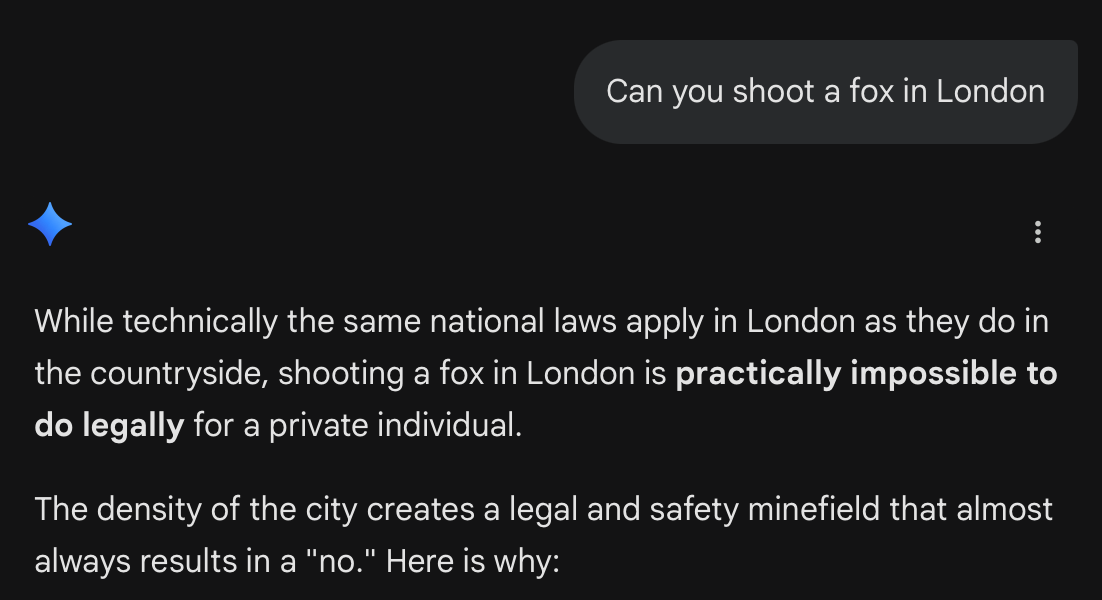
In any case, as Google’s Gemini AI would put it:
Mario Stanchev, a senior pest controller at environmental pest control company Archers, told London Centric that the problem of the Google foxes “should have been predicted before the building was even designed by an architect – but nobody thinks about pests until they have them, especially with foxes.”
For any building already filled with the creatures, one option is to attempt to dislodge them in between their breeding seasons, so as to prevent successive generations of foxes denning in the building. That normally entails locating exactly how the foxes are gaining entry into a building before blocking the entrance off, or working out what their food source is and restricting access to it.
“Foxes are the same as us,” he said. “They would rather create a den near a grocery store, or a Tesco. The longer distance they travel, the bigger risk to their survival.”
Stanchev said many people think of pest controllers as “murderers” but for the most part the profession was made up of “very soft people with a big heart for animals”. As such, pest controllers will do “as much as possible” to humanely deal with fox infestations. But, if all attempts are exhausted without any success, they will resort to culling.
“Foxes are not protected as a lot of people think they are,” he said, explaining that it’s legal to kill foxes using a particular set of methods, which include shooting. “If a fox has to be culled, we pick a way where it won’t suffer.”
While smaller animals such as pigeons can be dispatched with an air rifle, foxes need to be shot with a more substantial firearm due to their size.
“That can be a bit of an issue legally,” he said. “Anyone who’s dealt with firearms knows that getting a rifle to shoot something in London is a big problem. Shooting a shotgun is very loud.”
Heatherwick, it’s me, the foxy
In any case, there was precedent for bad publicity around fox death. The last time one of the animals was killed by a prominent public figure, it involved a top barrister and made several national newspaper front pages.
Google’s AI services also offered advice to the building’s designer, Thomas Heatherwick, who also designed the New Routemaster and the 2012 Olympic cauldron.
Gemini warned Heatherwick that prevention is the best approach in future:
Pro Tip: Foxes love the “wild” aesthetic of modern London roof gardens. Keeping your garden tidy and reducing dense cover makes it feel less like a safe sanctuary.
“Where is it going to sleep?”
The fox trail went dead for a while. Then, earlier this year we were again contacted by Google employees who claimed to have heard the animals were on the move. One staffer claimed the gossip within the company was that, like many tech workers who have made their money in London, the foxes had relocated to the Cotswolds.
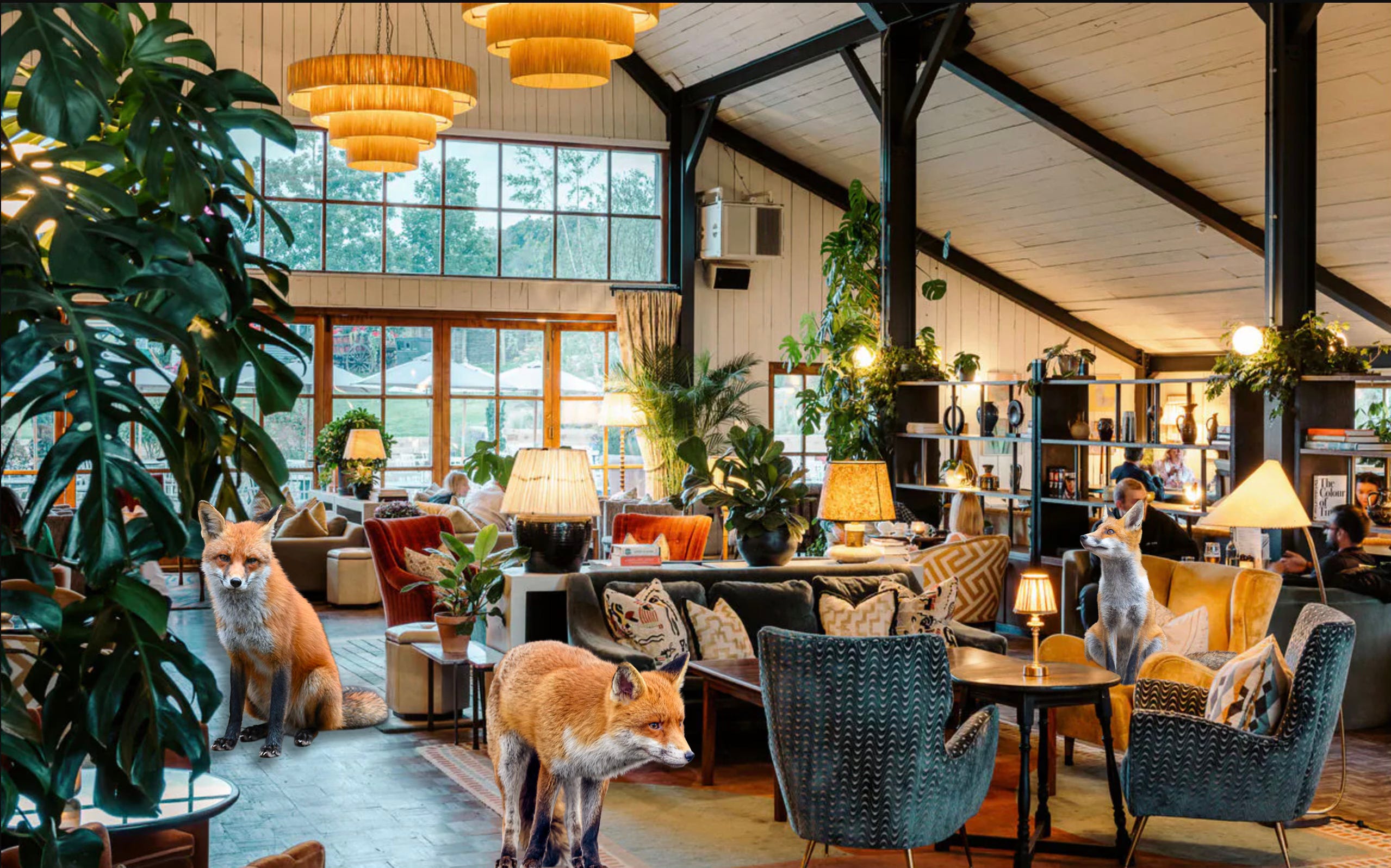
When we put the claim to Google, a spokesperson denied they had been relocated to rural Oxfordshire but offered no further details on their fate.
In any case, pest controller Stanchev warned that foxes might not survive a relocation: “The fox might arrive alive to the destination. But what about all the other issues? How will the fox provide itself with food or water, or where is it going to sleep? He wouldn’t know how to provide for himself, and would die in a much more horrible way, by starvation or dehydration.”
When we recently visited Google’s HQ, the people putting the finishing touches to the building were very aware of the foxes. Four of the workers we met by the site exit said they hadn’t seen the animals recently, suggesting a move may have already taken place – although one construction worker claimed he’d recently encountered some fox excrement on the roof.
Ultimately, it’s only a few weeks until thousands of staff start moving into the building, now rechristened Platform 37, which will initially be home to employees working on Google’s DeepMind AI project.
Right now it’s not clear where the foxes have ended up and whether they will be there to greet the Google employees. Sometimes you have to choose to believe in the legend. On this occasion, it would be nice to imagine the pampered foxes are hanging out in the Cotswolds at Soho Farmhouse with Jeremy Clarkson and the Brooklyn-less Beckhams. If any London Centric readers know otherwise, please do get in touch.
Not the first time the Theosophical Society has been obliged to downgrade from substantial premises. The superb BMA House in Tavistock Square is a Lutyen's designed building of considerable Edwardian grandeur, now occupied by the BMA and a few related medical businesses. But it was originally designed for the Theosophical Society in 1911. Enthusiasm for their brand of mysticism was already waning and the Great War didn't exactly help matters, with the half completed building requisitioned by the army for the duration. With the war over, the Theosophists were obliged to sell the still incomplete building to the BMA and move out. Perhaps they should consider the now fashionable remote working model?
You quote a source as saying that the foxes would like to be near "a grocery store, or (sic) a Tesco". I am sure the foxes in question have worked out that there is an excellent Waitrose just to the north of the Google building. As well as a superb foraging location, there's always lots of Central St Martins students around there shooting TikTok videos, which gives the opportunity for the foxes to work on their own social media profiles. Frankly, if I was going to infest anywhere, Platform 37 seems ideal.