

London's air con era is here
Plus: Kid's Meal Summer is coming to London • Petition to save a restaurant that doesn't want saving • A Wicked strike • The £5.5m London home for people who want to slide into their private cinema


We won an award! London Centric has the best local financial and business journalism in the country, according to The Wincott Foundation. The judges said this newsletter uncovers “the seamier side of London’s business scene” from dubious snail farm operators to the tax-evading gift shops hosted in billionaire landlord Asif Aziz’s Trocadero building.
And yet. There’s no point doing all that local journalism if everything stays the same. As things stand (more on that below) Sadiq Khan will pedestrianise half of Oxford Street in just a few months’ time. The mayor will then proudly walk down the middle of a street that’s… lined with dubious gift shops operated by front companies registered to penniless students.
In recent months I’ve been approached by a growing number of politicians who have read or watched London Centric’s reporting on tax-evading gift shops and want to do something about it. In the process I’ve become an accidental tour guide, taking MPs on tours of the shops, explaining their business practices, and offering suggestions on how to fix it. They seem to be listening. If you’re a politician or policymaker who wants to solve this problem, just drop me an email.
And with a bit of luck and a bit more journalism, London Centric readers can get the authorities to crush the capital’s tax-evading plague of tat.
As for today’s edition, it’s mainly about the heat…
Londoners are rushing to install air conditioning. And the government is quietly subsidising it.
Last summer, we asked why so few homes in the capital have air conditioning. The answer was a combination of planning guidance, environmental concerns about the ethics of using extra energy, the cost of electricity, anxiety over whether the power grid supply can cope with high demand, and a vague notion that it’s not a very British thing to do.
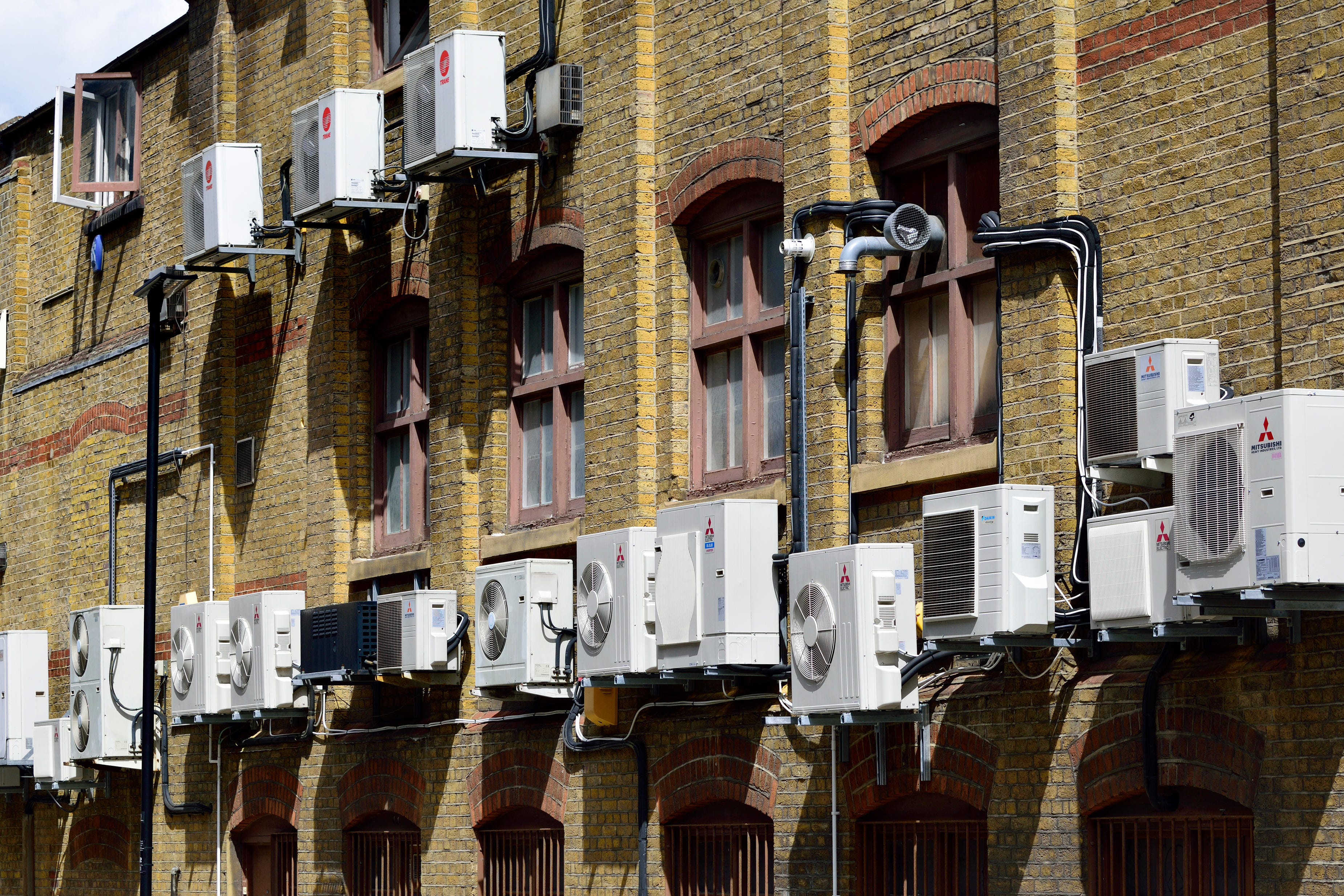
The problem is that in response to the heat, people are taking matters into their own hands and bodging it. City Hall guidance says that London property developers should try to avoid installing air conditioning in new-build flats and first try other “passive” methods such as window shutters. But anyone who passes a new-build block of flats will already see the distinctive pipes from mobile cooling units curling out of the windows onto the balconies.
When Anna Mavrogianni, Professor of Sustainable, Healthy and Equitable Built Environment at UCL, started out as an academic in the early 2000s, the dominant research in her field was all about how to make homes warm.
Now, she said, it’s about keeping them cool: “In the UK, heat has been seen as something to look forward to. You see media images of barbecues and people having a good time on the beach, and there’s less emphasis on the adverse health effects, particularly for the more vulnerable segments of the population.
“Across the UK, the housing stock is in no way prepared for heat. That’s because it has been optimised for a different climate, where these types of excess heat events were not that frequent. Most homes have been designed to retain heat, rather than getting rid of it.”
As our summers get progressively hotter, our relationship with heat is changing. She said: “The estimate in 2011 from housing surveys was that around 5% of homes in England had an air conditioning system or form of active cooling installed. Now, surveys estimate around 20% of homes have some form of active cooling.”
The risk is that Londoners will buy cheap mobile air con units that can be expensive to run, operate very inefficiently, and put substantial strain on the electricity grid.
“There will be many more sweaty nights ahead”
What’s more, the government is now quietly subsidising the costs of installing electric cooling for an entire residential property. In November, the energy department announced a £2,500 grant towards the cost of replacing a home’s existing heating system with an “air-to-air heat pump.”
The government hasn’t been making a song and dance about this. Most of the marketing is about this technology being a way to heat your home. But an “air-to-air heat pump” is essentially a term for a two-way air conditioning system that can both cool and warm a property. (One problem is that the £2,500 subsidy is for homeowners. Private and social renters will have to take up the fight with their landlords, creating a social divide over who is cool in summer.)

Sky News economics editor and author Ed Conway is an air-to-air heat pump truther. He told London Centric the UK has failed to take cooling into account when encouraging people to install eco-friendly heating systems in recent years: “So much government policy seems to be focused primarily on vague notions about what’s ‘right’ for the climate and far less on what people actually want, or what actually makes the most sense for long-term emissions.”
Renewable energy production is shooting up in the UK thanks to the rapid growth of solar farms, meaning the cost and climate contribution of using more electricity in summer is falling.
Conway argued all of this means it’s time to rip out the boiler-powered radiators that are currently used to heat many of the capital’s properties and replace them with air conditioning units: “Air-to-air heat pumps wouldn’t work for every home. But for many homes in London (possibly most) they would be a better, cheaper option in the long run than replacing our existing boilers with air-to-water pumps. They also consume less power and hence contribute less to our climate emissions.”
“And that’s before you get to the added bonus - the one we’re all particularly conscious of right now: they would also enable us to cool our homes in summer as well as heating them in the winter. That’s a shame because they are a genuinely more efficient way of heating our homes. Plus they would help millions of Londoners sleep through sweaty nights like these. And believe me, there will be many more sweaty nights ahead.”
The ghost of air con past
Any Londoner unlucky enough to be commuting in this weather knows full well that some of the sweatiest spots in the city are underground. Aware of the slick state travellers were finding themselves in, Transport for London installed experimental air cooling units back in 2012 at Oxford Circus and Green Park stations, which would circulate cool water through the platforms in a bid to reduce the temperature.
But according to a Freedom of Information request by a London Centric reader, the hulking units have had their “cooling functions” decommissioned for almost a decade.
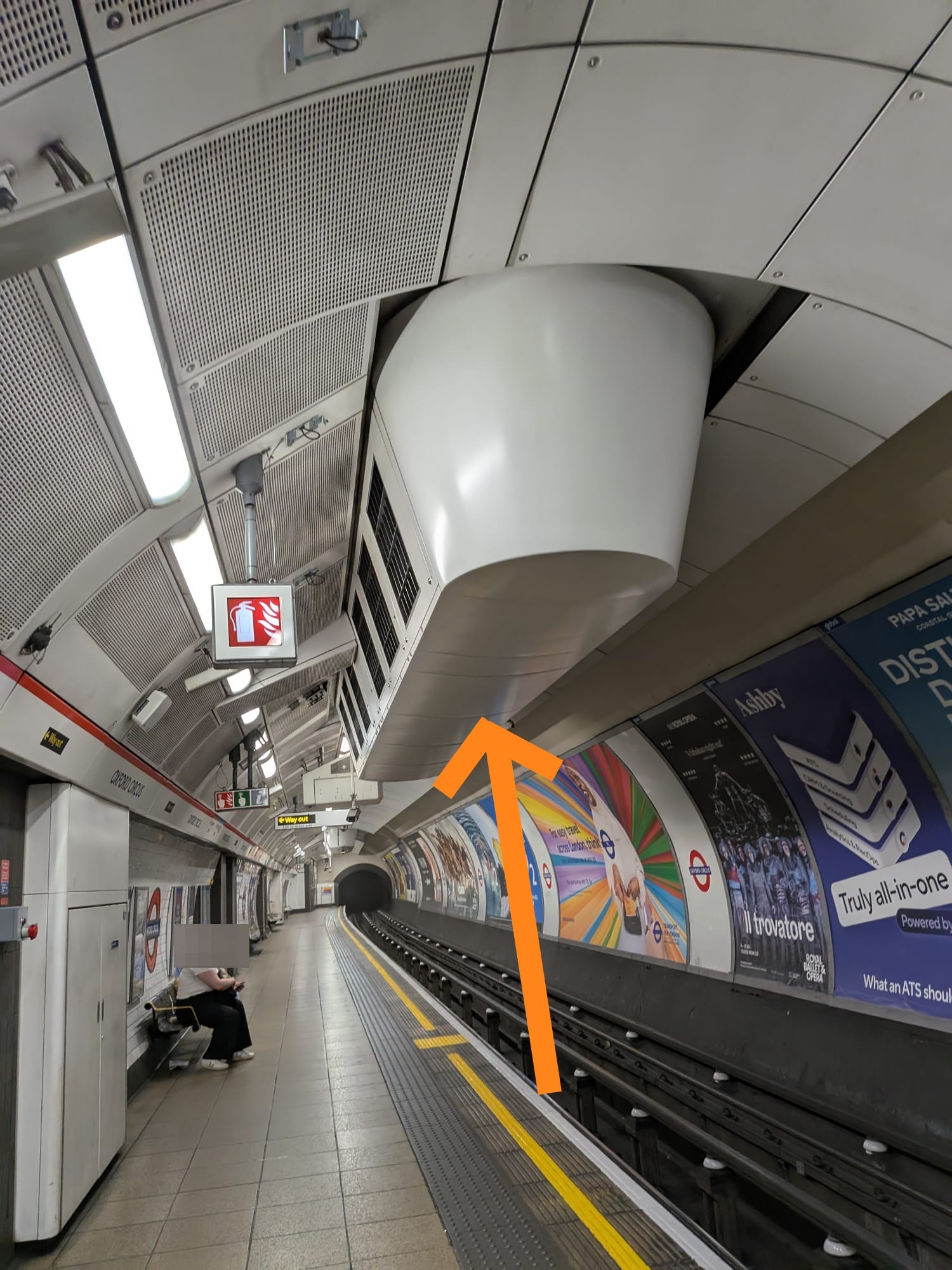
Nick Dent, TfL’s director of customer operations, said it is a challenge to ensure “our transport services remain resilient in the face of more extreme and frequent hot weather events”. He told London Centric: “The units at Oxford Circus circulate air and provide ventilation, however the cooling element failed in 2017.
“We are currently prioritising investment on cooling programmes that will see the biggest benefit for the largest numbers of passengers, such as the introduction of new Piccadilly line and DLR trains that include air-conditioning. Alongside tunnel ventilation systems, there is air conditioning on more than 190 Tube trains, covering 40 per cent of the Underground network, and on all of the London Overground and Elizabeth line trains.”
What happens in a world without air con
As summers in the capital get hotter, pressure on the small handful of spots available to Londoners to cool down intensifies, occasionally with dramatic consequences.
On Bank Holiday Monday, the police were called to Parliament Hill Fields Lido on Hampstead Heath following an altercation. A boy, aged 17, and a man, aged 25, were arrested on suspicion of affray, while the London Ambulance Service attended to a 15-year-old boy and a man in his 40s with minor injuries.
The City of London Corporation, which manages Hampstead Heath, said it shut the lido for the “safety of our staff and the public” after a fracas “involving a small number of individuals” broke out.
A spokesperson for the Corporation said: “We condemn the unacceptable behaviour that led to the temporary closure of the Lido,” and that the pool will “reopen as soon as it is safe to do so.”
London prepares for Kid’s Meal Summer
Rachel Reeves’ decision to slash VAT on “children’s meals” this summer is opening up all manner of exciting possibilities for the capital’s restaurants. The tax guidance makes it clear that the legal definition of a “children’s meal” is essentially a meal that’s smaller than normal, cheaper than normal, and marketed as a ‘children’s meal’ on the menu. There’s nothing in the rules about it having to be ordered or eaten by a child. (The FT’s ever-wonderful Alphaville blog explains this in a bit more depth.)
All of this opens up some exciting possibilities for discount small plates dining this summer. Restaurant Kitty Fisher’s announced: “We are thrilled to announce we are going to be offering A KIDS’ MENU this summer featuring lobster, steak au poivre, oysters, offal, snails and all the other good stuff KIDS love.”
Going one step further, the Blue Stoops in Kensington announced a ‘Chancellor’s Children’s Menu,’ offering up snail salad, oysters, anchovy butter toast, and a ‘tax break tart’ for dessert.

Jamie Allsopp, the pub’s founder and a former hedge fund manager, said he’d introduced the grown-up children’s menu so that “everybody can feel the benefit of this new policy, and enjoy some of the best seasonal ingredients prepared by London’s finest chefs at a price that is fair, reasonable, and equitable.”
Oxford Street pedestrianisation challenge walked back
The newly-elected Conservative leadership of Westminster council appears to be backing down on its election-winning pledge to challenge Sadiq Khan’s pedestrianisation of Oxford Street in court.
Leader Paul Swaddle told the Local Democracy Reporting Service that the current pedestrianisation plan is a “bit of a Temu plan” done on a budget. However, council officers have now advised him there is little realistic chance of stopping it in the courts, meaning the cost of bringing a legal challenge would be for nothing.
Westminster Labour had also tried to fight the plans when it was in power. But the local party fell in line when Sadiq Khan struck a power-grab with central government, which saw him take direct control over the area around Oxford Street through a Mayoral Development Corporation – a process usually used to regenerate areas such as docklands.
Update: shortly after we published, Westminster Conservatives put out a statement that King's Counsel had confirmed that the legal window to bring a challenge in the courts had closed.
The deadline to file a challenge expired on 26 May, the same day that the legal advice commissioned by Swaddle was received. The KC said there were “no credible grounds for a judicial review with any material prospect of success” and that the change of administration at the Council would not be accepted as justification for the delay.
New Dawn Fades?
Dawn Butler would like to be Labour’s next candidate for mayor of London. You can tell because the Brent East MP has been publicly saying exactly that for almost two years, while conducting the sort of public campaign activity that a mayor of London candidate would do.
The problem is there’s still not a vacancy, as her old friend and political ally Sadiq Khan maintains his stance of constructive ambiguity as to whether he will run again in 2028. (Whenever there’s a headline claiming he’s taken a definitive public position in either direction, just look at the actual wording.) This has created a strange shadow race behind closed doors, where Labour candidates such as Butler jostle for position without formally saying they are running for fear of disrespecting Khan and turning him into a lame duck mayor.
Last week, it looked like that was no longer the case, when PoliticsJoe reported Dawn Butler planned to formally announce she is running to become Labour’s mayoral candidate at a Labour Women’s fundraiser on Wednesday. Butler, one of Khan’s closest political allies, said the story was false. The journalist who wrote the story said they’d checked it with Butler before publishing. The event on Wednesday mysteriously passed by without any announcement. In a statement, Butler said that while she had “never hidden” her desire to run for mayor, “it is simply the case that there is no vacancy”. Yet.
London Centric in the news… our story on a curious neighbours’ dispute in Notting Hill was picked up by the Times and pretty much every other outlet… our story on leaked plans for the rebuild of Euston station was referenced in parliament at the transport select committee…
Will the West End see strikes this summer?
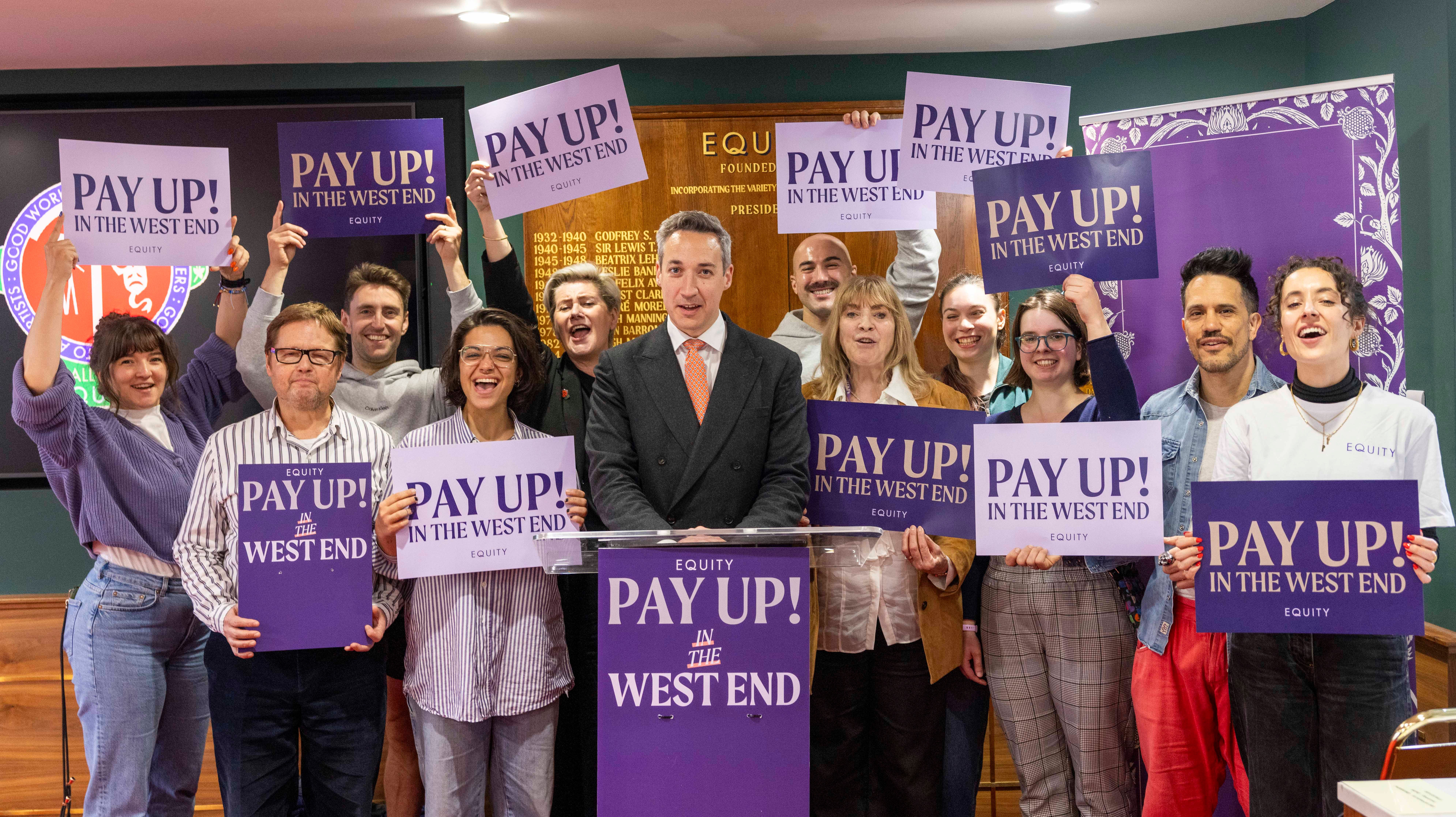
It’s not just gravity the cast of Wicked are defying, but their West End bosses too, as Equity members vote for possible strike action this summer.
Members of the performing arts union overwhelmingly backed an indicative ballot this week, with 98% voting yes to potential industrial action. The union can now ballot its membership on formal strike action, which would affect Saturday shows this summer.
Negotiations between Equity and the Society of London Theatre began in December 2025, but the two sides disagree on pay, holiday provision, and incapacity pay for anyone injured while performing. The union is pushing for a 7% pay increase for its members each year for the next three years.
The general secretary of Equity, Paul W Fleming, said: “The West End is internationally renowned, and these world class stages should pay world class wages, not leave workers needing second jobs to pay their bills or burnt out by six day weeks and insufficient holiday.”
Preposterous property of the week
What does £5.475m get you these days in London? This five-bed property in Barnes, south-west London has a staircase finished in soft green Argentine leather that took four seamstresses 120 hours to hand sew and stitch.
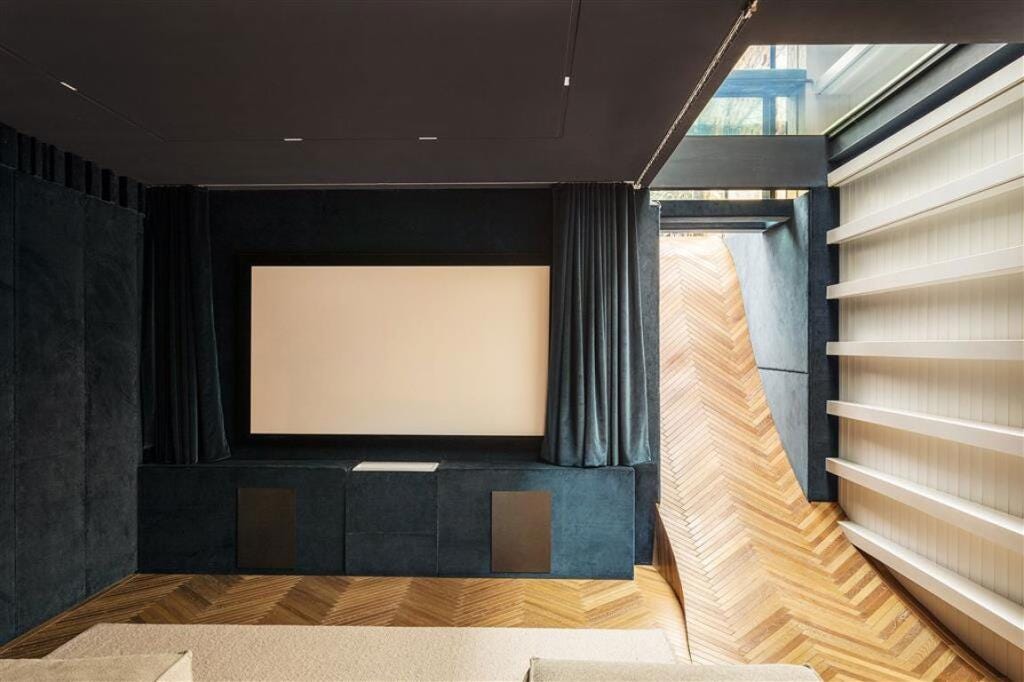
It also boasts a Gosney pizza oven and a mini forest of 30 silver birch trees. But the feature that really caught our eye was a wooden “bespoke indoor slide” linking the landscaped garden with a cinema room.
Saving a cafe… from itself?
We do a lot of reporting at London Centric on small businesses struggling to cope with the city’s rising rents, rapid transformation, or greedy landlords.
Whether the threat is posed by developers or gentrification, we’ve found that the stories about the closure of beloved institutions can be more complicated than they first appear. Case in point: Madeira Star in south London’s Kennington, a Portuguese cafe that’s been open for 30 years.
We were alerted to its closure by an online petition to save the cafe, which said the “much-loved establishment” was being “displaced” by the landlord’s decision not to renew the lease. The petition called on Lambeth Council to grant the cafe community asset status and demanded that “consideration for the people and the community’s needs supersede interests that solely focus on the financial gain of property development.”
But when London Centric called the restaurant to find out about this apparent injustice, co-founder Luis De Freitas told us that it was the owners who’d initiated the closure, rather than the landlord.
He cited the difficulties of trading during a cost of living crisis and said he didn’t want to keep running the cafe. He said he “didn’t know who started the petition” and that “customers have been complaining, but it’s our decision.”
What will he do next? “It’s been 30 years. I think I deserve a long holiday.”
What's always baffled me - as a Southern European in London - is the completely lack of investment in OUTDOOR shutters. Indoor shutters will do some work to keep a flat/house cool, but not nearly as much as an outdoor shutter or awning will, as those will block the sun's heat from even hitting the glass, hence preventing the flat from turning into a greenhouse. It genuinely drives me mad. Go to any small town in Italy or France or Spain or Portugal and you'll see outdoor shutters (or at least awnings) everywhere, because they're effective!
You showed exceptional restraint not offering us any editorial comment on
"But the feature that really caught our eye was a wooden “bespoke indoor slide” linking the landscaped garden with a cinema room."