

Should London shut down in August?
Paris does it. The Italians do it. London is already seeing "shutdown by proxy". Why not just formalise it?


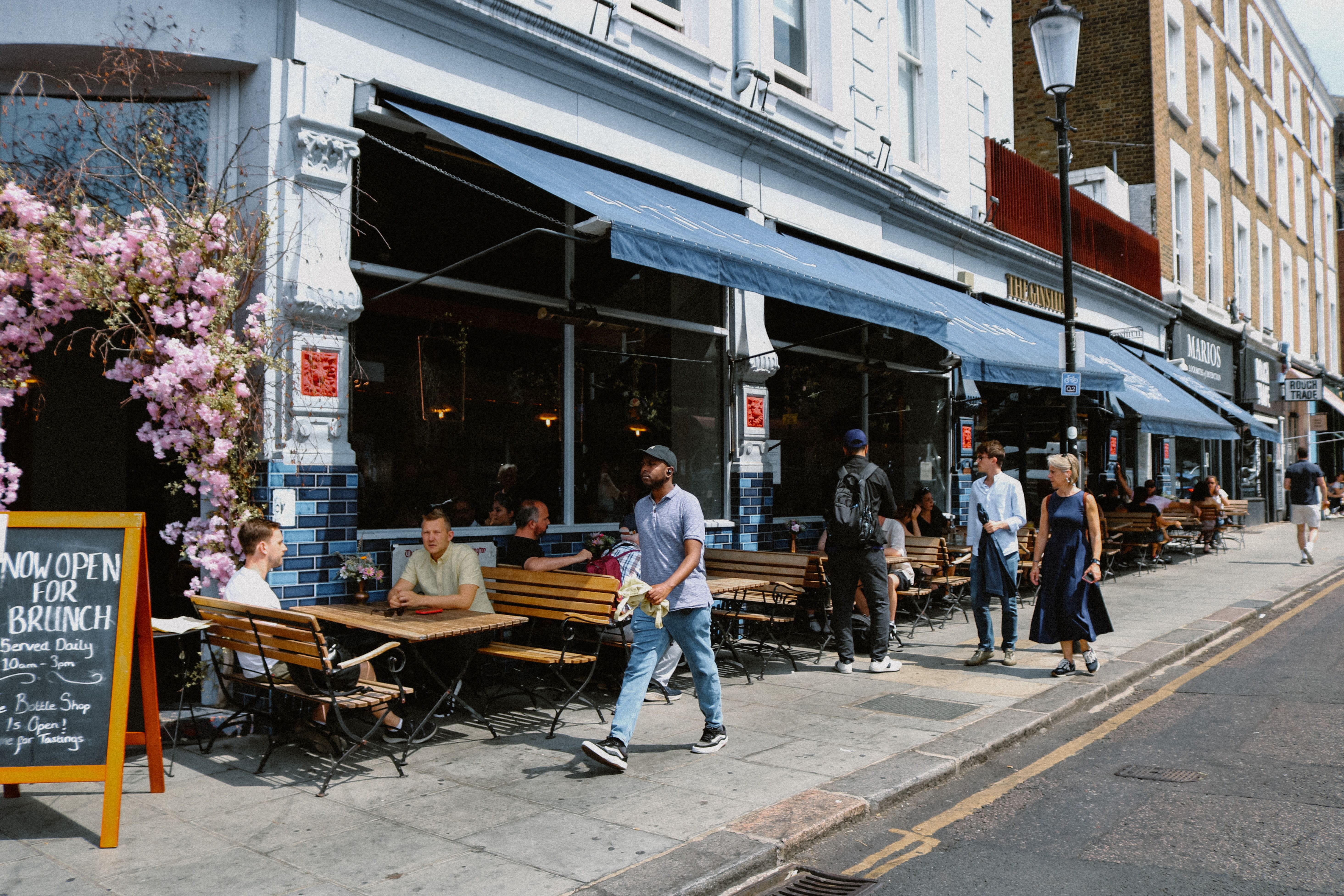
“It would be a culture shock if you lived in Paris and moved here,” said Jasmine Gray, a French PR worker now living in London. “All of my friends working in Paris would definitely be like ‘what do you mean you work in August?’”
Walk through parts of London this month and it can feel as though, tourists aside, the city is less crowded than usual. But even with a slowing of the city’s tempo due to the temperature, it’s a far cry from our European neighbours. Italians and Spaniards regularly down tools and head to the coast in July and August, while Danish workers are legally entitled to take three consecutive weeks' holiday over the summer.
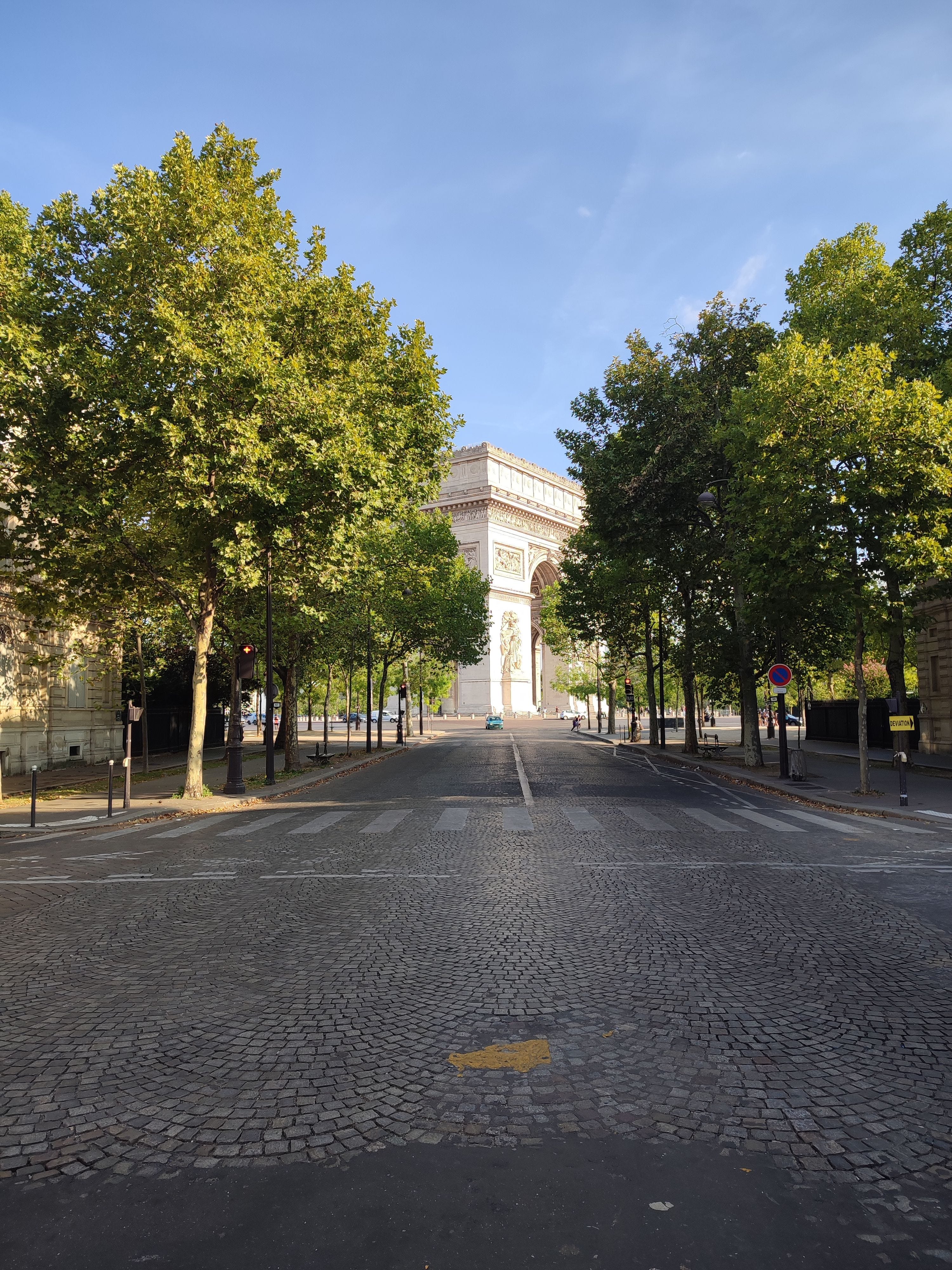
Anyone who has visited Paris in August will be familiar with closed shops and restaurants displaying handwritten signs explaining the owners are away until September. Jules, a French cultural worker, explained: “Everything shuts down and people just want to get out.” In contrast almost all of London’s bars and cafes continue to operate all year round.
But if you’ve been receiving endless Out of Office replies at work, or are reading this having already fled the city, you might be wondering about the benefits of this particular strand of British exceptionalism.
This year’s summer is currently on course to be consistently hot in a way London hasn’t previously experienced. It has caused serious disruption to city life, with everything from schools to restaurants having to spontaneously shut, construction projects pausing, and workers told to stay at home.
Time for Le Big Holiday?
When Sadiq Khan launched “Heat Ready London”, the city’s heat plan in the middle of June’s heatwave, it was about adapting the city rather than shutting it down. Its policies focus on finding ways to keep people working, such as “supporting businesses to adapt facilities, working practices and supply chains”.
As London’s climate starts to resemble that of France, Spain, and Italy, where deserting the city over the summer to return with a fresh sense of vigour in September has long been the norm, we’re asking: should London also shut down for August?
Before you dismiss the idea outright, with a dewy-eyed pride in the Anglo-Saxon work ethic, let’s unpack how we got here. The reason Parisians flee for “les grandes vacances” while Londoners stay chained to their desks in the summer isn’t simply because English bosses are less benevolent than their European counterparts.
It comes down to a mix of legal protections, cultural norms, and labour traditions. In some countries, especially in Scandinavia, workers are actually required to take a portion of their holiday over the summer holiday window.
The nearest equivalent in the UK were ‘wakes weeks’, where factories, mainly in the north west of England, would shut down en masse and machinery could be serviced while workers took a holiday. Victorian factory owners, who gave their workers very little rest outside of this time, often took entire communities to the seaside, with different industrial towns shutting down at staggered times through the summer.
“Even the European Union basically shuts down. All emails are out of office, they shut down for weeks,” said Antonello Guerrera, UK and Ireland correspondent at Italian newspaper La Repubblica.
Send a work email to someone in Rome during August and you might get a variant on the reply “ne parliamo a settembre”, meaning “we’ll talk about it in September”.
All of this is made easier by deeper differences in working culture, said Guerrera: “In Italy there is a very different approach. Lewis Hamilton was taken aback that every one of his mechanics at Ferrari had a proper lunch and left the factory at 1pm. Everyone. He came from a country that has a ‘sandwich culture’. He was astonished.”
The collective dimension, where leave is taken simultaneously across a city or country, creates the feeling of safety in numbers – and arguably it’s easier for businesses to focus when everyone is working to the same September reset.
Will Stronge, director of the Autonomy Institute think tank, said that part of the reason European workers have long simultaneous holidays is because bosses historically found it cheaper to shut a factory down for a set time period than to keep it running at reduced capacity while workers staggered their holidays.
The same phenomenon could become true in London due to the extreme heat, he argued, with unproductive workers fighting London’s unbearably hot public transport: “It becomes in the interest of employers to take the leap and say ‘In August or July, it’s going to be extremely hot and you’ll be extremely unproductive,’ and to try and find a way to gain from that.”
Who’s left behind in the city?
Not everybody is a fan of the mandatory shutdown. Jasmine Gray said her home country’s approach removes choice from French workers, especially those without children.
“It’s kind of put on you that you have to not go into the office. August is the most quiet month in terms of work load for everyone. So you would kind of prefer to be in the office and [then] take holidays when it’s super busy and you need a proper holiday.”
And it’s one thing for larger businesses to build their year around periods of higher and lower productivity, but could an August lull be financially realistic for smaller companies?
“I suspect if you said to most businesses in London, close for a month, they'd say we wouldn't be able to pay the rates,” said Tony Travers, a professor at the LSE and veteran London-watcher.
But a month off doesn’t have to mean a drop in overall productivity, it’s just a different approach to structuring the working year, said Guerrera: “It’s also a very different culture to divide the working months from the season where you try to switch off.”
One of the biggest shifts towards a strictly standardised summer break in the UK came in 2012, when then education secretary Michael Gove announced strengthened sanctions against parents of state school kids taking holidays in term time, introducing higher fines for anyone who broke the rules. Prior to that, there was a discretionary two weeks of leave that headteachers could grant parents to take kids away outside of the school holidays, when flights were significantly cheaper.
The policy remains controversial, and is the bugbear of many parents who see eyewatering holiday price rises within 24 hours of the end of the state school term, while their private school counterparts continue to benefit from cheaper flights and hotels.
What many people don’t remember is that the Gove reforms were brought in as part of a review of school attendance after the summer riots of 2011 – which shut down London in a different way during August. The then mayor of London, Boris Johnson, was famously heckled when he was slow to return from his far-from-London summer holiday to deal with the clean up from that event.
Email for you, serving drinks for me
There’s another big reason why London doesn’t really empty out. Unlike other European cities, where tourists tend to understand that a lot of the city isn’t open in August, London is swarming with visitors in the summer months, many of whom are Europeans escaping their own cities and spending money here.
A spokesperson for the Mayor of London cited the appeal of major music and sporting events, while pushing against the proposal of a partial shutdown: “London is a year-round global city, and summer in the capital offers an unrivalled experience for visitors and residents alike.”
Regardless of cultural norms, has London’s relatively new extreme heat already changed the reality on the ground? Rather than take annual leave, this summer’s heat left people operating at lower capacity, with many office workers told to stay away from buildings that couldn’t hack the temperatures, and left in overly hot homes trying to do Teams meetings in front of a fan.
Elizabeth Robinson, the director of the Grantham Research Institute on Climate Change and the Environment at LSE, found productivity collapsed during June’s heatwave, leading to 24 million lost hours of working and a nationwide £1.15bn hit to economic output. Still, she suggested British businesses would struggle to cope with pre-planned shutdowns: “Many companies would not be able to afford it; there would likely be supply chain consequences; and there would almost certainly be essential services that could not simply stop for a month.”
Instead, she suggested London needs to consider “heatwave furloughs” where everyone is sent home from work, along with greater flexibility on both location and hours for their staff, plus investment in protections for people who have to continue to work through the heat.
Because as with all shifts in working patterns, much like the pandemic, there’s a sharp divide between the haves and the have-nots. A de facto slowdown might mean office workers are able to benefit from a pause but that’s not an option for the city’s transport workers, gig economy staff, and NHS workers.
In recent days London bus drivers represented by the Unite union have gone on strike over the temperatures in their cabs topping 40C during the heatwave. Meanwhile, freelancers and those running their own businesses also suffer; this summer a survey by ATA, Spain's national self-employed federation, found a third of self-employed Spaniards don’t expect to take any time off in July or August.

Jules, 28, who works in the theatre industry in Brittany, explained that’s also the case in his home corner of France, where workers have to be on hand to entertain the tourists fleeing Paris: “The hospitality field won’t be on break. It’s only the offices and administration roles. Basically ‘email jobs’ are on break in August.”
And while most of the capital’s parents (and teachers) are stuck with the August holiday premium, Londoners who don’t have to abide by school terms may prefer to take holidays in cheaper periods.
There’s already something of a two-tier summer shutdown in the capital, with parliament closed for the summer recess, many courts taking a break, and remote working allowing many of the wealthier residents to either take the summer off or work from holiday homes.
Will the last French deli owner in London turn out the lights?
So are we facing a New York-style summer, where wealthy Londoners are able to head to the Devon coast and those left behind remain stuck sweating it out?
Robinson, the director of the Grantham Research Institute, said we are already seeing a summer “shutdown by proxy” for white collar workers. Lower paid workers or those in jobs that can’t be done remotely are working in conditions that could be harming their health over the short and longer term: “The planet will continue to warm for decades to come, even if we do manage to reach ‘net zero’ by 2050. Working conditions in London will continue to worsen during this time, unless we take both emissions reductions and adaptation much more seriously.”
Another key difference between London and some other European capitals is where people head to for the summer. In Italy, for example, it’s much more common for a family to have had a second home for generations, and people often head to the coast or the mountains when the city gets too hot rather than paying over the odds for high-season flights. These properties, sometimes fairly basic and shared between multiple family members, are not the status symbol they are in the UK. Only around 3% of Brits own a second property, and only half of that tiny minority say it’s a holiday home.
As Tony Travers said, “there's definitely a tradition in France, aided and abetted, I think, by a phenomenon which is present in Britain but less so — families in big cities, particularly Paris, having a second home somewhere in La France profonde, rural, or wherever they came from, somewhere they go to for a month at a stretch.”
And London arguably does close down once a year, albeit not in summer.
“Christmas in London is like Paris in August,” said Travers.
Still, some people are already embracing the future. While reporting this story, we were eager to ask a French business owner toiling in London’s August heat how they felt about being at work while their fellow countrymen were on the beach.
We popped into L’Eau à la Bouche, a French deli on Broadway Market in east London. However, we were told the owner wouldn't be able to comment. The reason? They were on holiday, and wouldn’t be returning until the end of August.
Bonnes vacances!
Rather than taking a break, the London Centric team is spending August beavering away on some of our biggest investigations yet. We can’t wait to share them with you.
Our best stories come from our readers. If you’ve got a story you’d like us to look into, send us a WhatsApp or an email.
PS… Andy Burnham spent last week talking about his plans to rid British high streets of dodgy shops. Long-term readers of London Centric know we’ve been fascinated by the mechanics of how these make money.
Thrillingly, we were able to write about what we’ve learned from our investigation for this weekend’s edition of the Financial Times.
If you’re reading this on Sunday you can still pick up a print edition of FT Weekend featuring the piece, or click here to read it online. It’s also part of Saturday’s FT Edit, a selection of the outlet’s best pieces, which can be accessed with a free trial.
This is a fun piece. But would it be too much to ask to refer to our neighbours as "continental Europeans" rather than "Europeans"? Last time I looked, Great Britain was still part of the geography of Europe, Brexit or no Brexit...
If your office has decent air conditioning then working this August has been a life saver.