

London's first month without rain
Plus: There's nowhere to bury the dead • London wants to keep its money • When will it stop being so damn hot • Who is to blame for turning off the air conditioning?


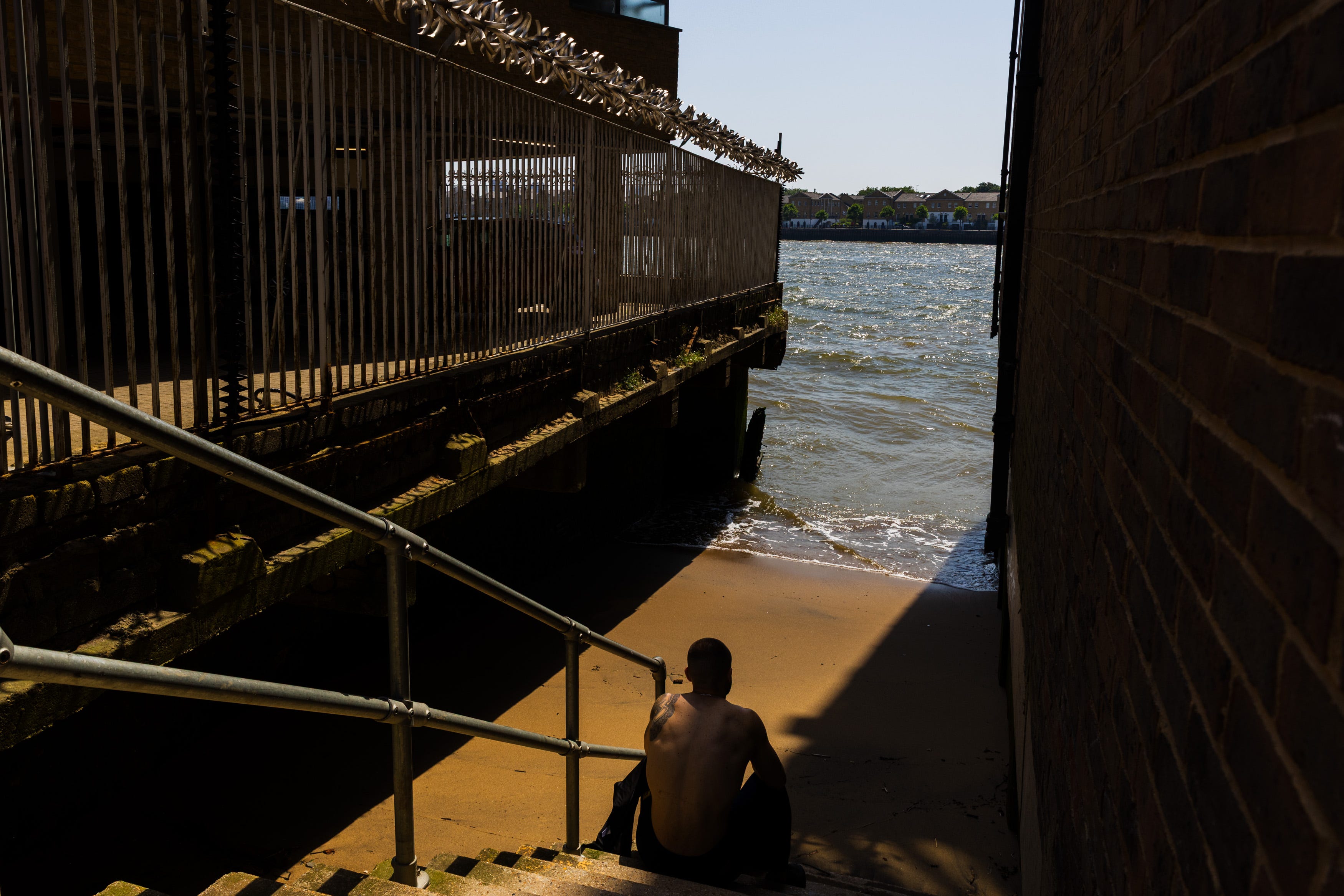
Kew Gardens has had a weather station since 1871. This July was, based on third party analysis of Met Office data collected at the site, the first calendar month on record where no rainfall was measured at Kew. That’s backed up by readings at the Environment Agency’s Hogsmill rain gauge in Surbiton, south west London.
Yes, there was the briefest of showers in some parts of the capital during July. But the big picture is clear. We’re approaching the point where the capital will have to face large chunks of the year without even a drop of rain, a situation that London was not designed to cope with.
Meanwhile, the London Centric team have been hiding from the sun and working on a bunch of forthcoming big investigations.
Until then, here’s a selection of stories we’ve been looking into. Scroll down to read them.
Get in touch if you’ve got a story you’d like us to look into. Send a WhatsApp or send an email. No tip is too small.
Welcome to Hot Devo Summer
When Labour won the 2024 general election, the expectation in London politics was that this would finally unblock a series of projects that had been put on hold amid political rows that left Transport for London operating on month-to-month funding deals.
Money would surely start flowing from central government into the capital!
Then London’s political leaders waited.
And waited.
And waited.
The clear message from the top of the Starmer government, led by a Camden MP who had just won a massive parliamentary majority on the back of buckets of votes from Londoners, was that London was not its priority. Big infrastructure projects that had been expected to be funded, such as the Bakerloo extension (a tube, in south east London, as a treat?) or even the ambitious Crossrail 2 from Wimbledon to Tottenham, were given no love.
By last autumn Sadiq Khan was left publicly complaining to the FT’s Peter Campbell about being sick of “anti-London chancellors” when it became clear that, once again, the capital had been overlooked for funding by Rachel Reeves.
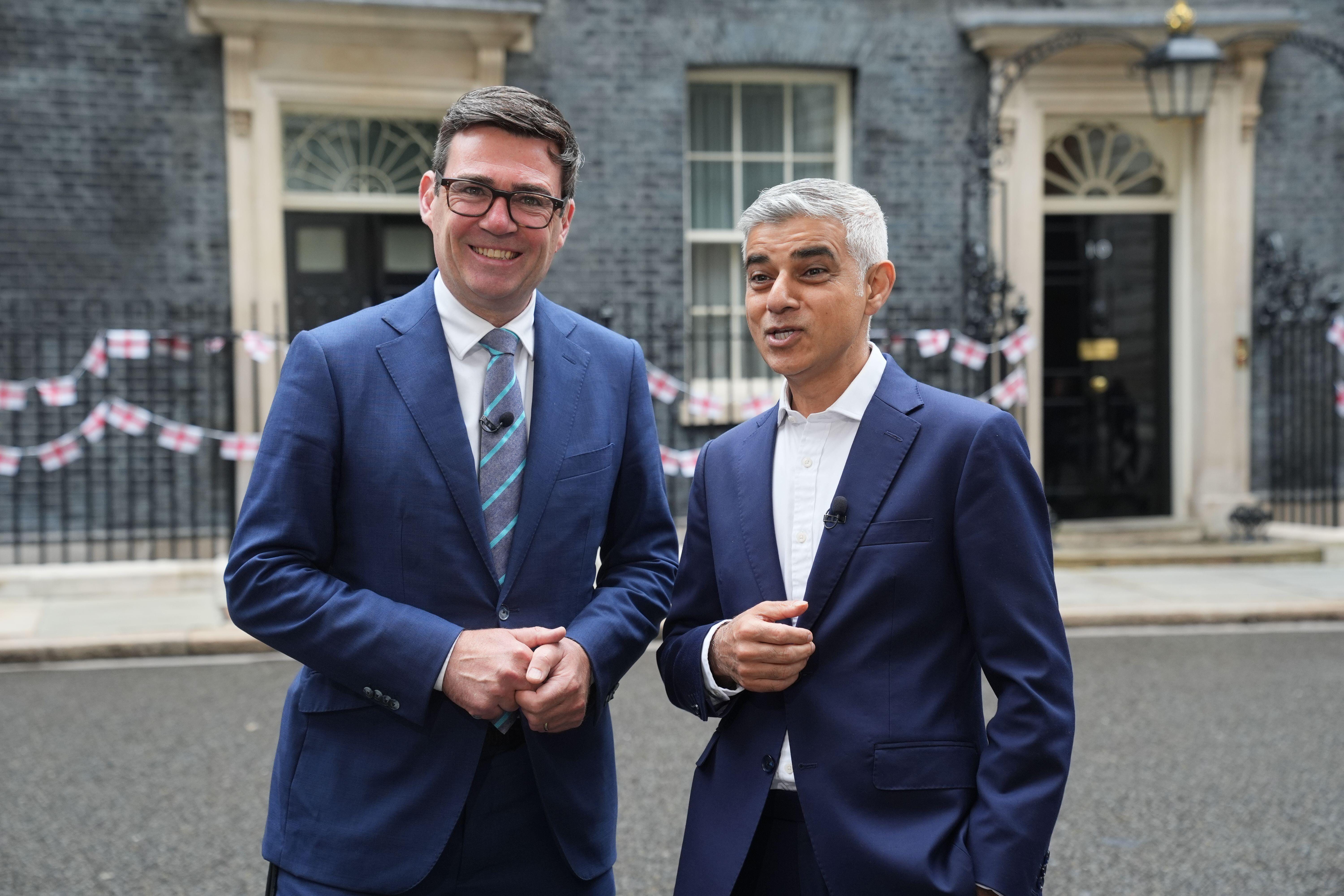
Which is why it’s strange to hear the much more positive noises from London’s leaders about the devolution plans of Andy Burnham, a man who has defined his recent political career by publicly attacking “London-centric” attitudes (and causing chaos with this outlet’s Google results in the process). Last year Burnham sat down with London Centric for an interview about how the central government’s focus on growing the capital’s economy has caused “overheating” in London and warned this approach “takes the soul” out of the capital.
Now he’s prime minister, Burnham has pledged to give mayors a share of both business rates (the equivalent of council tax charged on commercial properties) and income tax (paid by individuals) raised in their areas.
The exact details of how this would work and how much money London would get to keep remain to be seen. The capital’s relative wealth means it massively cross-subsidises the rest of the UK. Retaining even a small percentage of income tax could be a game changer. For instance, according to our analysis of HMRC figures, the 119,000 residents of Camden who pay income tax contribute more (£4.7bn) than all the residents of Birmingham and Glasgow combined (£4bn).
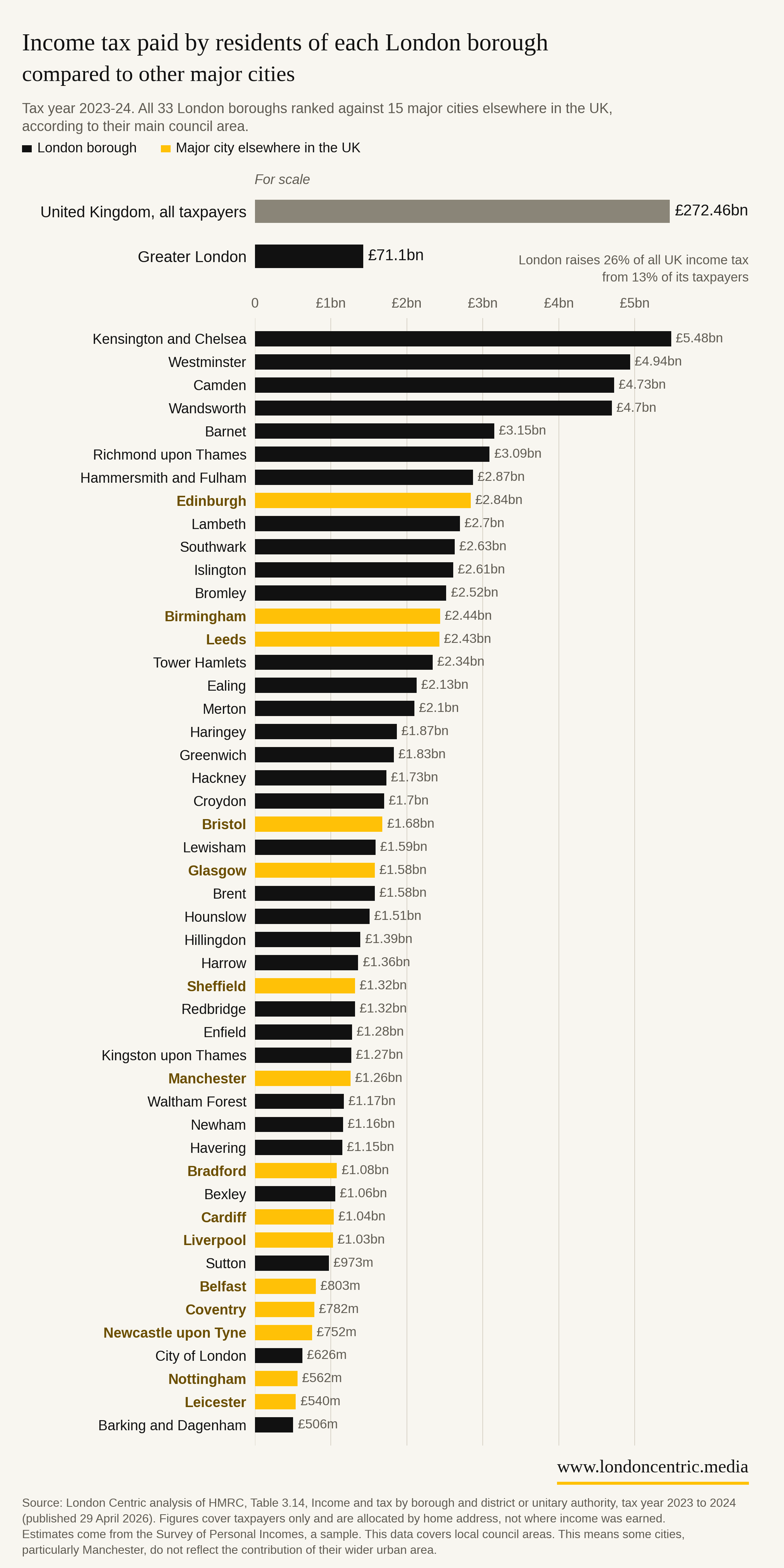
At the moment Sadiq Khan has fewer powers than most of the capital’s residents assume. Giving the mayor financial control could make the job substantially more interesting and influential. The mayor of London would then be able to unilaterally take out big loans to pay for projects, secured against this future income, rather than begging central government for money on a project-by-project basis.
The new powers will come in just ahead of the May 2028 mayoral election. In theory, if London’s economy grows, London will get more of the financial upside. In theory, this might also incentivise everything from housebuilding to, say, crackdowns on business-rate-evading dodgy shops.
That’s the theory.
The reality? We’ll be keeping a close eye on it.
Have you considered being buried in Bromley?
We’ve been reading this extensive and fascinating report on the lack of graves in the capital after it was flagged by Liberal Democrat London Assembly leader Hina Bokhari.
The boroughs in red have no place to bury your body, if that’s what you desire. Orange areas are running out of space. Green boroughs have plenty of cemetery space if you want your remains to be stored six feet under.
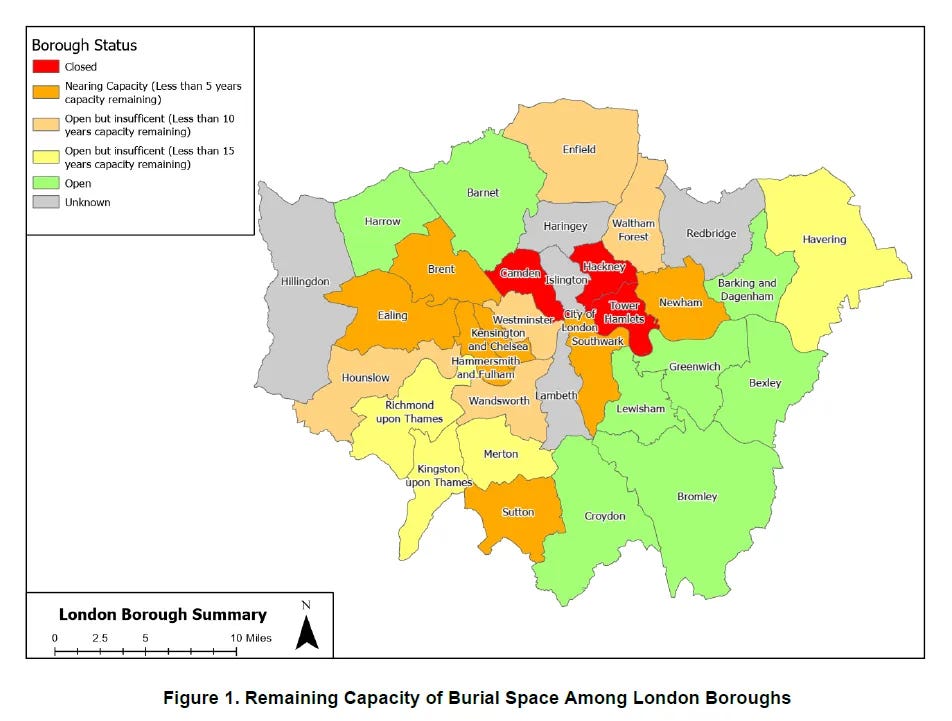
London is becoming an older city, with a lower birth rate and fewer people moving out of the capital to south east suburbia as they enter middle age. This is having implications for all sorts of aspects of London life and death, whether it’s transport demand, school closures, or where to put the deceased.
The report found that burial is a rich person’s option. Camden is the most expensive place to be buried, with the only available spots being in the ultra-luxe Highgate Cemetery, where prices start at £32,580 per plot. Reservations can only be made once you hit 80 or are terminally ill. Hammersmith and Fulham charges £8,033 for a burial versus £816 for a cremation.
Some faiths also face supply constraints, with Newham running out of Muslim-specific graves. Several boroughs are unable to provide graves that face Mecca.
When the report was being written earlier this year Sutton had just four vacant graves, which are probably already occupied by the time you read this.
Plans to reuse graves remain controversial. At the moment boroughs have to wait 75 years before reusing a grave; in the future this could be extended to 100 years, exacerbating the problem. Demand is increasingly being met by private cemetery operators and burial grounds outside London.
Given the competition for land use in the capital it’s hard to argue for a new cemetery over extra housing. Some councils are still trying.
Southwark is in a particularly bad state, even though it has a large potential cemetery site that was bought for burials way back in 1901. The problem is that while waiting for more deaths to happen, the land was allowed to become the Honor Oak Recreation Ground. Now, the nearby residents quite like their open playing fields and don’t want it turned into a field of graves. There’s a similar row in Richmond, where an allotment site is being closed to provide an extension to Teddington Cemetery. All of which raises the question of whether London should be a city for the living AND the dead.
The Victorians recognised the risk of running out of burial space and built the London Necropolis Railway, with special coaches from near Waterloo to an out-of-town cemetery at Brookwood in Surrey. The railway’s headquarters was recently sold for around £3m, with planning permission for conversion into flats. Perhaps it’s time to bring it back into use?
What’s going on with the great air conditioning switch-off?
Last week we looked into how air conditioning had been “switched off” for residents living in council-funded temporary accommodation in the Britannia Point tower block in south west London, sending overheating residents to hospital. It’s all part of our multi-award-winning investigation into the business empire of Asif Aziz’s Criterion Capital and its influence across London.
Criterion Capital, which acts as the freeholder of Britannia Point through its complex web of offshore Isle of Man companies, has understandably been keen to distance itself from the treatment of tenants in the building. Especially after it launched “mass evictions” of private tenants in the building earlier this year.
The company’s crisis communications representatives at DRD Partnership told media outlets that all questions about the air conditioning switch-off must be directed to the unrelated temporary accommodation providers that sublet the flats from Criterion.
It was these companies that hold the contracts with councils and these companies that made the decision to switch off the air conditioning, DRD Partnership insisted, saying Criterion Capital should not be wrongly named in the press as being responsible for the decision.
London Centric pointed out that one of these temporary accommodation providers that must take the blame, called People First Housing, is run by a 23-year-old named Numan Umar Farook. He listed his job on LinkedIn as an “asset manager at Criterion Capital”. He is also a director of a number of other Criterion-related businesses based at Criterion’s Trocadero headquarters at Piccadilly Circus, including a company related to Criterion’s windowless Zedwell hotel chain.
Within hours of our story being published, Farook had wiped his LinkedIn profile from the internet without replying to our emails about his company, which is in the process of being struck off at Companies House.
We asked Criterion Capital’s crisis communications representatives if Farook had gone rogue and was taking decisions as a temporary accommodation provider without permission from his main employer. They still haven’t responded.
Even some of the councils that have been paying to place homeless residents in overheating temporary accommodation within the block told us in on-the-record statements they were operating under the impression that they were renting directly from Criterion. No doubt they will also be receiving a request for a correction in due course.

The wet Wodge
London Centric recently wrote about the plight of those in the capital forced to go without showers because Thames Water decided to turn down their pressure. But at 22 Bishopsgate — a gargantuan skyscraper in the City of London nicknamed The Wodge for its girth – they’re having the opposite problem.
Last week, the 62-storey tower sprang a leak, resulting in the whole building having to be shut down. The flood meant that companies based at the City’s tallest office building, such as Apple, had to order employees to work from home. The building also hosts Horizon 22, London’s highest (and completely free) viewing platform, which remains closed at the time of writing.
A spokesperson for 22 Bishopsgate said that “having experienced significant water leakage in certain parts of the building, we have made the decision to close 22 Bishopsgate until we are able to fully operate all our life safety systems,” and that they are “working to rectify the issue and to reopen the building as soon as possible.”
Hopping mad
Last weekend saw the launch of Transport for London’s updated “hopper fare” which allows passengers to make unlimited bus and tram journeys for the price of a single fare at weekends. We’ve done a video explainer about it on our Instagram, as we edge reluctantly into a multimedia future.
TfL said that, on the first Saturday, almost half of all bus and tram users in London qualified for extra free travel, collectively saving customers £2m. That said, the aim of the capped fares is to attract Londoners back onto the city’s buses, which are suffering from declining passenger numbers.
TfL said that combined numbers for Saturday were “up 0.4 per cent compared to the same weekend last year” but this was largely because the tram was shut down on the same weekend last year. At the moment, it doesn’t seem people are flocking to take extra free bus rides for fun in a heatwave.
So when will Dry Summer end?
Back in February, London Centric wrote about the phenomenon of the city’s never-ending rainy spring and asked a meteorologist if London would ever be dry again. We didn’t realise how much we’d miss the rain.
While we await formal confirmation that July was technically a rain-free month (see the start of this newsletter) the Met Office told us that the previous driest months on record for Greater London are:
June 2018, when just 0.6mm of rainfall was recorded
February 1891, when just 0.9mm of rainfall was recorded
March 1929, when just 1mm of rainfall was recorded
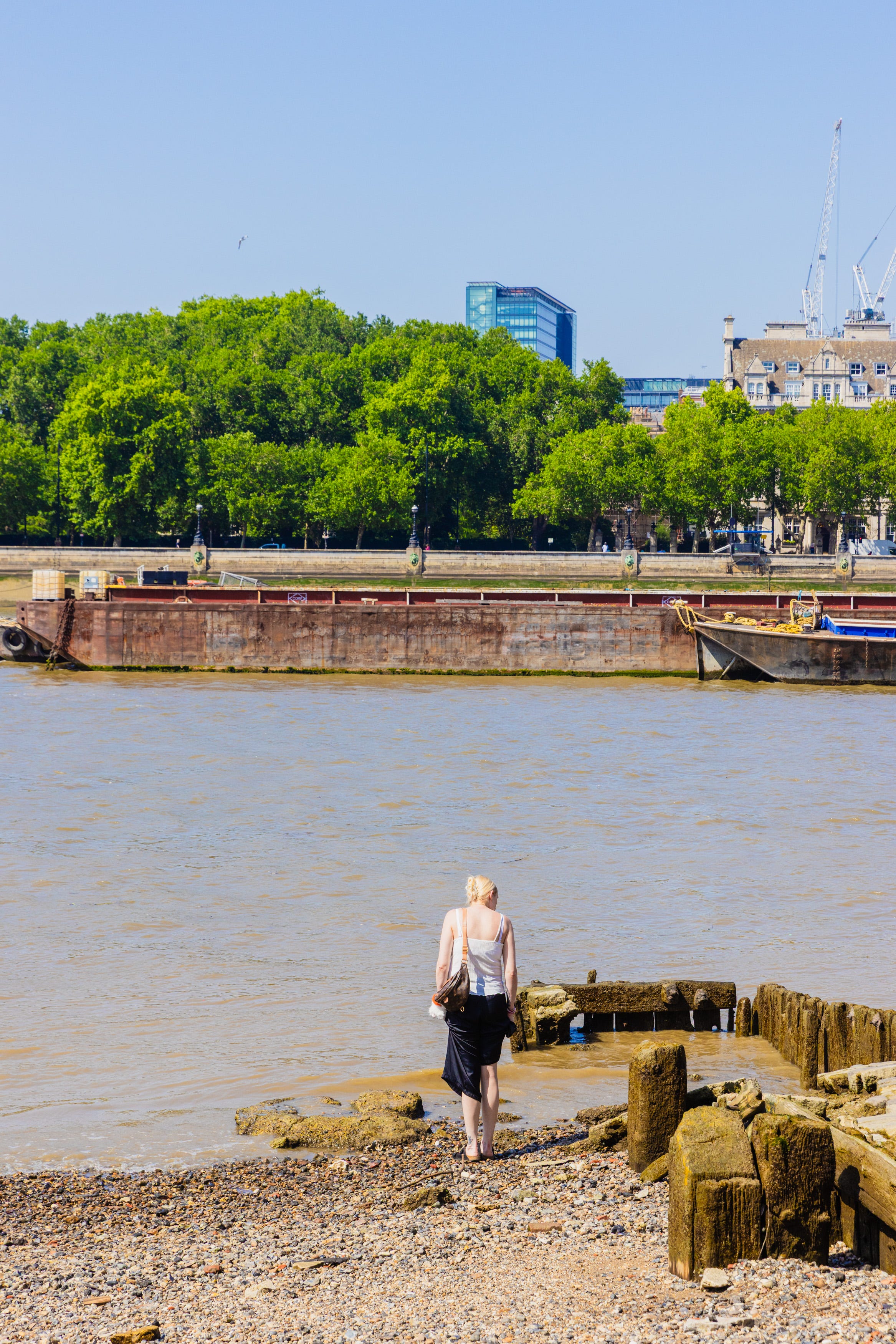
We asked the Met Office if London would ever be wet again. They said that, while there are “indications of a more changeable pattern” this week, which would bring “a greater chance of some rain or showers to areas that have seen prolonged dry weather”, the amount of rainfall was “likely to be fairly modest for many.”
They continued: “There is currently little sign of the widespread, sustained rainfall that would be needed to make a significant difference to areas most affected by the dry weather.”
PS… Coverage of our recent stories…
London Centric had a nice mention from Jennifer Williams, the country’s chief Andy Burnham watcher, in the Financial Times about the need to beef up local news coverage to cope with the devolution of power. We agree! We are trying to work out how to fund the required beefing-up!
Talking of which, our look at Andy Burnham’s strange copy-and-paste devolution pledges is mentioned in the current edition of Private Eye. We were also referenced by Piers North, the chief executive of local news giant Reach (drop us an email Piers!) in a perceptive interview with Ros Atkins on Radio 4’s The Media Show. Our long read from last year on London’s mudlarking scene was cited by Sam Knight in the New Yorker. But perhaps most exciting of all, our Euston station rebuild story was given a full-page follow-up in a recent edition of Rail magazine, the train enthusiast’s magazine of choice, where it sat alongside a big read on the state of the charter train hire industry.
All of which is due to original boots-on-the-ground reporting made entirely possible by our subscribers — thank you! We’re working on some really exciting stories at the moment that we can’t wait to bring you.
Just realised this really should have been headlined the “life, death, taxes” edition.
I’m not surprised people aren’t jumping on the buses, they’re saunas on wheels at the moment. If my choices are central line sauna for 15 minutes vs bus sauna for 30, I’ll take the quicker option even at the higher price.