

Sadiq Khan to the Lords
What's up with the mayor's peerage? • The Soho House founder and the women-only sculpture gallery facing eviction • In court for the sentencing of the TfL hackers


The heatwave is breaking, briefly, this weekend, meaning it’s possible to function again as temperatures dip towards what used to pass for a summer in London.
Today we’ve got a report from the courtroom where Thalha Jubair, the teenage Transport for London hacker who was the subject of last week’s long read, was jailed for five and a half years. Scroll down to read the incriminating messages he exchanged with his co-conspirator as they dived deeper into the capital’s transport network.
But first, what does Sadiq Khan’s peerage mean for London?
Got a story we should be looking into? Send a WhatsApp or send an email.
A beginner’s guide to Sadiq Khan, the Lord, who is mayor of London
Mayor of London Sir Sadiq Khan will soon become Lord Khan, mayor of London, with a seat in the House of Lords, after Sir Keir Starmer appointed him to parliament’s upper chamber on Thursday.
As he is the first Lord to also be a mayor of London, it’s very important not to confuse Lord Khan, mayor of London, with the Lord Mayor of London, a largely ceremonial position appointed by the entirely separate City of London. The City of London is, of course, a quasi-medieval institution that, when it’s not involved in battles over who gets to serve coffees on Hampstead Heath, runs the bit of the capital where gilet-wearing finance bros mix with wholesale butchers and people who live in brutalist tower blocks with unusual kitchen waste disposal mechanisms.
Lord Khan, as the mayor of London, which in this case actually means Greater London, does have some power over the City of London. But Lord Khan, despite being a lord who is mayor of London, will not get to ride in the ceremonial coach at the annual Lord Mayor’s Show. The seat in the carriage is reserved for the previously-mentioned Lord Mayor of the City of London, a job which, at the time of writing, does not exist. That’s because for the first time in 800 years the holder of the position of Lord Mayor of the City of London is Susan Langley who, while the third woman in history to hold the job, is the first to rebrand it as Lady Mayor of London during her year in office.
Hope that clears things up.
OK, but is Khan giving up on being mayor?
Khan’s elevation to the House of Lords is another point in favour of the theory that he won’t run for a fourth term as mayor in 2028, although there’s nothing in the rules to stop him double-jobbing in parliament’s upper chamber for as long as he wants. (That said, following a recent change in the law, the mayor of London can no longer do what Boris Johnson briefly did and be mayor while also sitting as an MP in the House of Commons.)
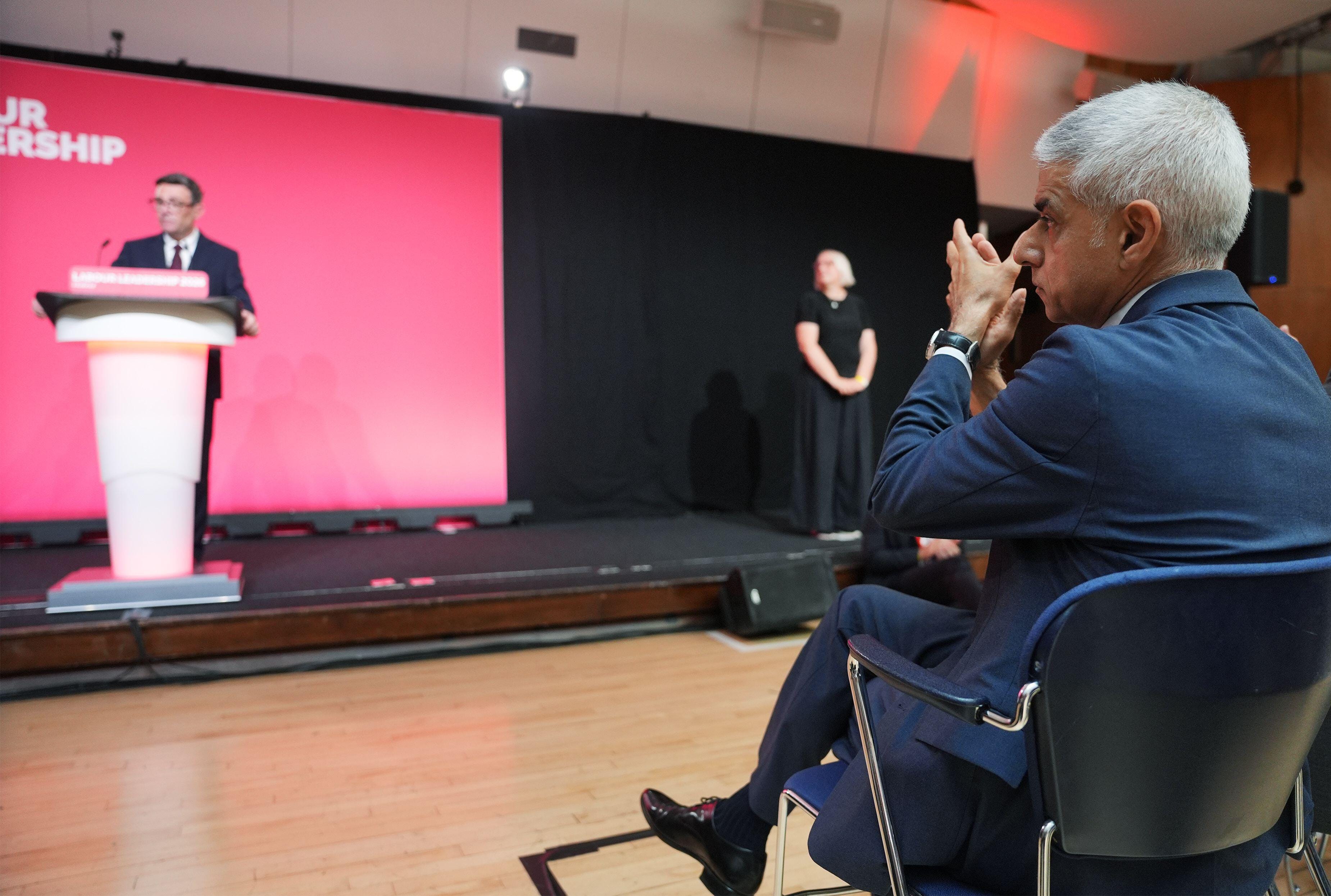
The official line from City Hall remains that Khan has no intention of becoming a government minister while he is mayor, will continue to attend all the same meetings as before, and will use his seat in the Lords to speak out on behalf of London. As a City Hall source put it: “Sadiq has not yet decided whether he is standing again for mayor, and will definitely serve out this term.”
Yet as we pointed out in a previous edition, Khan’s political ally Dawn Butler has recently started to fundraise for a mayoral campaign that can’t officially be announced yet but definitely looks a lot like a mayoral campaign that is ramping up. Others gearing up for a run at the Labour mayoral nomination include Tooting MP Rosena Allin-Khan. There’s also the possibility that big name Labour politicians, who might lose their government jobs when former Herne Hill resident Andy Burnham takes over as prime minister on Monday, could be tempted to dip into City Hall politics.
When could Khan make an announcement on his mayoral future? Well, he’s said he’ll make his decision public in “year three” of his term, which we’re currently in. His long-promised pedestrianisation of Oxford Street in September might be a good moment.
Talking of Andy Burnham, Bloomberg News is reporting that the future prime minister has “tasked the civil service with preparing an announcement on the public control of Thames Water” which is likely to see London’s water operator nationalised, at least on a temporary basis, as early as next week. Which is potentially bad news for Thames Water chief executive Chris Weston, who has just seen his pay rise from £869,000 to £995,000 a year.
For services unrendered
Our piece earlier this week on why London is suddenly embracing service charges went everywhere from the Financial Times to Czech-language Reddit. The debate raged in the internet’s best comments section below the line. We had a flurry of emails pointing out the spread of service charges, including some London hotels that now add an “optional” 20% on checkout to pay staff.
(If you missed the piece you can read it here – due to a fat-fingered editor working late it arrived in inboxes just before midnight on Tuesday night, further proof that London Centric is written by real people, not AI).
A lot of people appreciated understanding the tax advantages of shifting to a tipping system, even if it didn’t make them like it any more. And Andrew Marr had us on his LBC show to discuss it, adding: “It was a story that caught my eye, as so much on London Centric does... anyone listening please check it out.” Thanks Andrew!
“Fuck the railways n shit”: In court for the sentencing of the TfL hackers
In the middle of conducting one of the worst cyberattacks in British history, Tower Hamlets teenager Thalha Jubair sent a message to his co-hacker Owen Flowers: “Everyone in irl [in real life] is [p]robably mad as fck”.
On Thursday, Jubair was proved correct. At a two-day sentencing in Woolwich Crown Court, packed with press and the police officers who’d tracked the pair down, he and Flowers were both jailed for five and a half years for the 2024 attack on Transport for London that cost £39m and saw millions of Londoners’ data stolen.

The pair pleaded guilty to offences under the Computer Misuse Act last month, with Flowers, who had never been to London before hacking the capital’s transport network, also pleading guilty to hacking two US healthcare companies. Even though vast sums of cryptocurrency flowed through their online wallets, Mr Justice Turner said that the duo had been “primarily motivated by selfish bravado heedless of the severe consequences to others”.
The public gallery in Woolwich Crown Court was packed for the sentencing, with the families of both Flowers and Jubair smiling at the young men as they sat in the dock. Jubair’s father, who works as a care assistant, was there with his mother, who had given up her job to look after her only child. She was the last person to file out of the courtroom after sitting with her head bowed.
London Centric published a deep dive into Jubair’s story earlier this month but the sentencing further laid bare how two then-teenagers had been able to gain access to the “keys to the kingdom” of London’s transport system. TfL only realised the hack was underway 24 hours after it began, following an alert from the National Crime Agency. The court heard that the pair were “highly skilled with computers” and “capable of wreaking havoc.”
“Fuck the railways n shit”
Despite the sophistication of the attack, the sentencing hearing also revealed the immaturity of the two young men behind it. In addition to ordering takeaways to their home addresses using cryptocurrency linked to other crimes, they were incriminated by Flowers’ decision to record the process of conducting the hack.
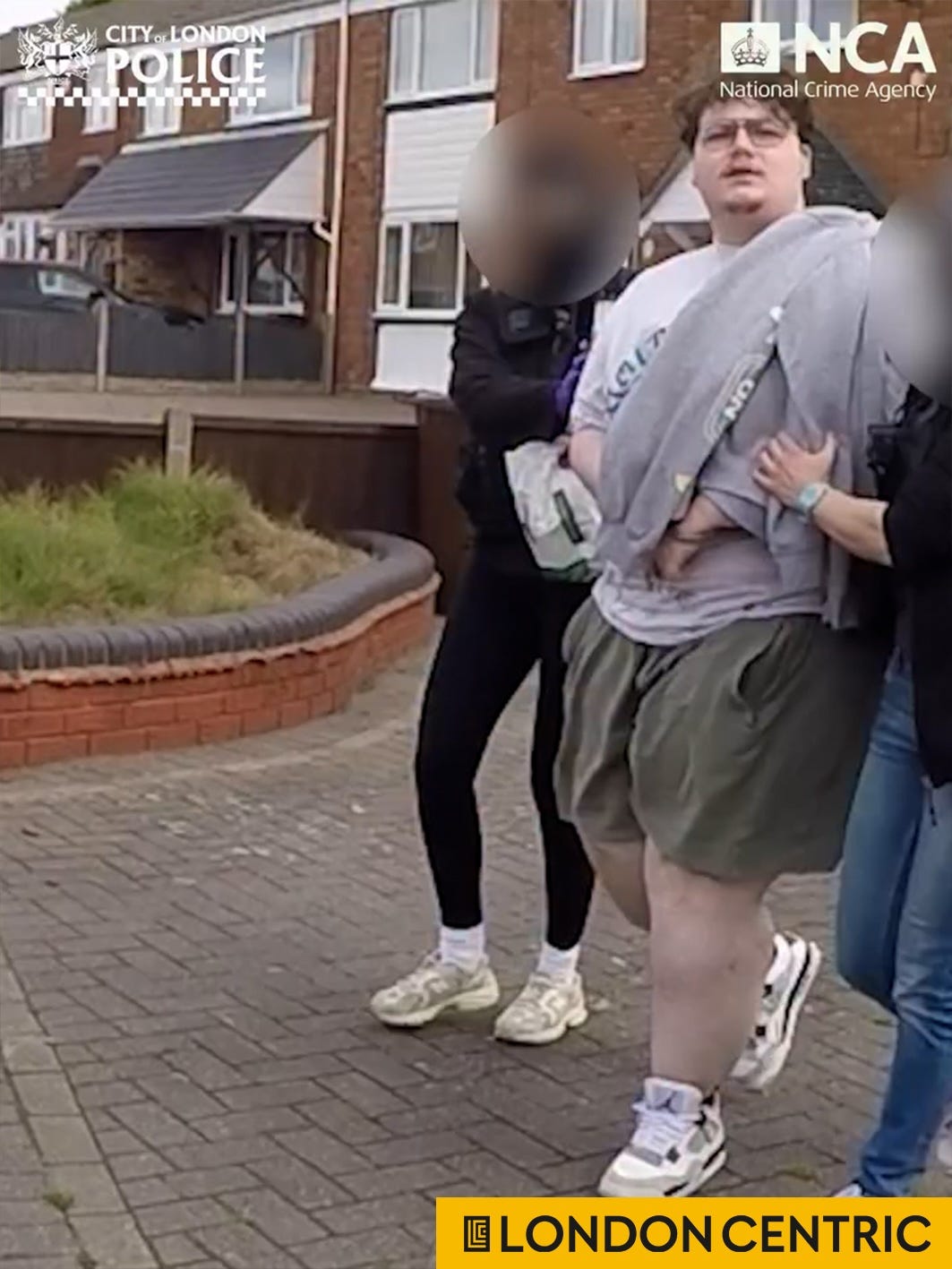
They also used their temporary access to TfL’s systems to search for the travel history of celebrities and exchanged messages that were reminiscent of the abusive language of a gaming chatroom.
Their chats contained incredibly offensive terms, with Jubair at one point calling Flowers an “autistic mong” after he typed the wrong command.
Later on, Flowers responded to Jubair and said “u won’t be laughing when ur sat in prison”.
When TfL eventually kicked the hackers out of the system, Jubair asked Flowers if “bro wanna [...] go hack tfl [...] again [...] and just lock it [...] fuck the railways n shit.”
An “online upbringing” in London
On behalf of Jubair, Paul Keleher KC told the court that the young Londoner had an “online upbringing,” learning how to use a smartphone when he was four, owning his own laptop at six, and writing computer scripts by the age of nine. At 13 he was then “groomed and exploited” by older hackers, who “obviously recognised his potential.”
The court heard he went to school near his family home in Tower Hamlets, has a number of GCSEs and had attempted to enrol at colleges. However, extreme bullying led to Jubair seeking isolation in his parents’ Tower Hamlets two-bed flat for long periods, which made him vulnerable to “seeking validation from online users who give him kudos for his online hacking.”
London Centric previously reported how neighbours had seen him being arrested while in his school uniform in relation to previous offences.
Keleher said “there is clearly an unequivocal link between [Jubair’s] development disorder of diagnosed autism spectrum disorder and these offences.” However, the prosecution noted that there are “thousands of young people with autism and ADHD who do not choose to undertake this kind of criminal activity.”
Details of a single unnamed TfL employee were used to gain the initial access. The hackers also relied on social engineering techniques, placing calls to support centres where staff were convinced to reset passwords and bypass two-factor authentication.
Jubair and Flowers were caught by a joint operation between the National Crime Agency, the City of London police, and US authorities.
The City of London police’s Olly Shaw said the case showed the need for a type of “digital prison” to protect society from hackers such as Jubair and Flowers. Under the system they would be monitored in a similar way to the registers used for sex offenders.
When London Centric asked about some of the young neighbours we had spoken to who found Jubair’s technical skills and sudden accumulation of cryptocurrency to be aspirational, Shaw responded by warning about the impact on the convicted duo: “The life chances of these two defendants are now heavily restricted.”
Jail might not be enough to stop the pair from delving into the darker corners of the internet. While in prison awaiting trial Jubair was found to have mobile phones in his cell featuring cryptocurrency wallets and encrypted messaging tools.
Read more:
The teenage millionaire hacker from Tower Hamlets who took down TfL

It was the takeaway order to his family’s Tower Hamlets flat that proved to be Thalha Jubair’s undoing.
The Soho House founder, Transport for London, and the eviction of the world’s only women-only sculpture garden
If you go to the roof of Temple tube station on the Embankment in central London, you’ll find The Artist’s Garden, the world’s only women-only sculpture park. It’s an outdoor art gallery that makes use of a Victorian public space that had been neglected for decades before an enterprising group seized on its potential in 2021. Yet after five years the art gallery has been given notice to quit by October.
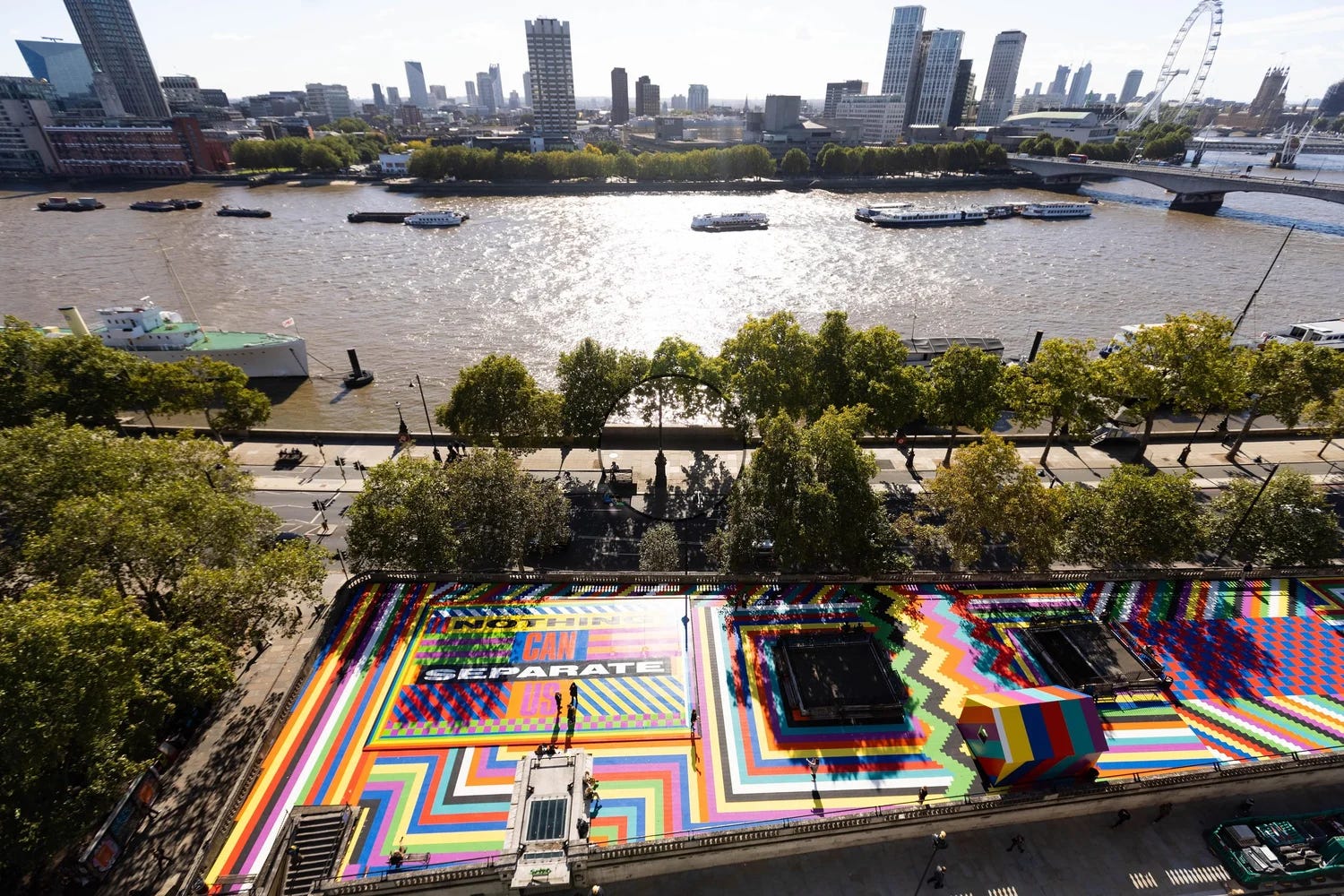
It’s all because Transport for London’s property arm Places for London, which owns the building, says it needs to conduct rooftop repairs for the benefit of the vacant unit underneath, which could attract a new tenant.
“We’re in the middle of a power play and we’re being steamrollered,” The Artist’s Garden founder Claire Mander told London Centric.
London Centric understands that Soho House founder Nick Jones has shown an interest in taking on the lease of the parts of Temple tube station that aren’t required by London Underground. The building, which is opposite Jones’ forthcoming St Clement hotel, was previously occupied by Australian theme bar Walkabout and the lease is currently held by an organisation called The Vinyl Factory.
But is Jones in any way responsible for the looming eviction of The Artist’s Garden? Or is Transport for London being overzealous in its approach to repairs when other solutions might be possible?
Mander, who runs a charity called theCOLAB, said her organisation fought for years to bring the rooftop back into use as a free art gallery after the area had struggled to find a purpose during its 150 years of existence.
“It is de facto public land,” she says. Westminster council eventually gave the go-ahead to open the gallery during the pandemic as part of an effort to get people back into London, with planning permission later secured and a series of “gentlemen’s agreements” covering the gallery’s ongoing use of the site.
Her organisation then began commissioning original works by women artists: “They are desperately underrepresented in the art world. Only 13% of public sculptures in London are by women. Women do not see themselves reflected in the sculpture of the city.”
It was going well until 4 October last year, she said: “I got a call from Westminster saying TfL had sold the roof terrace and you have to vacate. To which we said ‘no’.”
Since then she has been putting pressure on those involved and seeking public support to stay: “Westminster needs to step up and say ‘we control this space’. The Artist’s Garden needs to be part of the deal and part of the future of the roof terrace.”
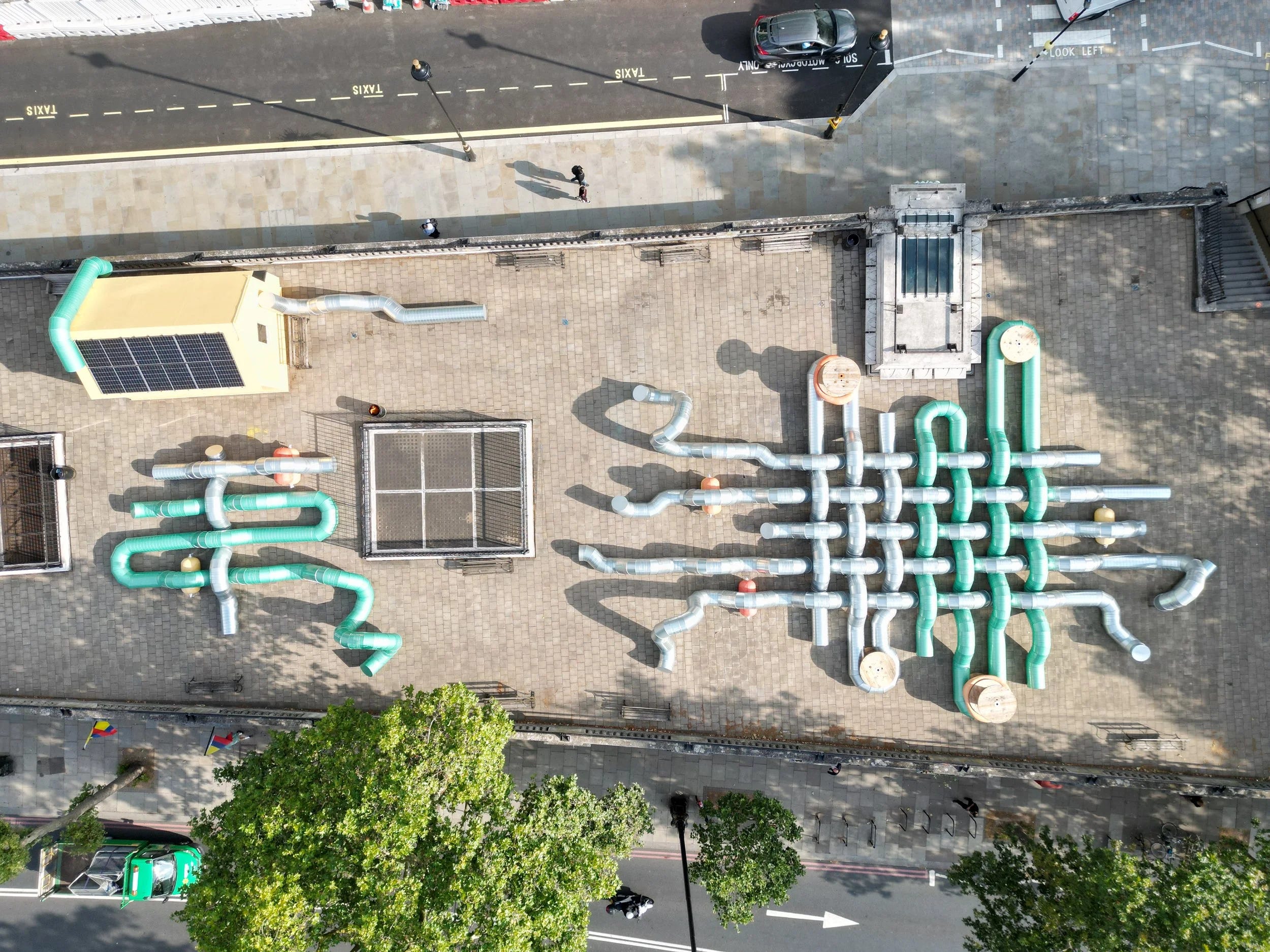
Jones, one of London’s leading hospitality figures, was recently spotted on the roof terrace alongside his friend, the London designer Thomas Heatherwick. He did not respond to a request for comment but is thought to be interested in the building underneath, rather than the area containing the sculpture garden. The question is whether it’s possible to fix up the former without removing the latter.
Mander said she felt as though, having brought the terrace back into use, her charity was being stitched up: “I think probably Places for London have just done something they can’t back out of, and everyone’s trying to cover each other’s back.”
A spokesperson for TfL’s Places for London said: “The Artist’s Garden has been a valued and much-loved use of the terrace at Temple, and we recognise the contribution it has made to artists, young people and the local community. However, the terrace and station roof may now require essential repair and safety works, and the space needs to be cleared for the assessment of the extent of the works required.
“The terrace is legally protected public open space and will always remain publicly accessible. We are working with Westminster City Council and local stakeholders to explore alternative locations nearby for The Artist’s Garden, while also developing future plans for the terrace at Temple.
“The leaseholder of the adjoining commercial space at the station is Vinyl Factory, a cultural operator already active locally. Any future proposals for the terrace will protect public access, support the area’s cultural character and be subject to approval, including from TfL and Places for London.”