

How to end rough sleeping in London
Plus: An outbreak of peace in Hampstead Heath's cafe wars • Knightsbridge Ferrari rental scam • Can you spot the notable London mum?


It’s a big week in British politics and London has provided the backdrop for Andy Burnham’s entry into the most famous address in Westminster.
But today we want to bring you something a little different. It’s a personal, fascinating reflection by a former Met police officer on the challenges Andy Burnham will face with his day one pledge to eliminate rough sleeping.
With thousands of rough sleepers in London who will need to be housed under the prime minister’s policy, it sets out one person’s frontline experience of why the pledge can be met but only with a lot of hard work
Scroll down to read that. But first, a few quick updates…
Hampstead Heath’s Parliament Hill Cafe finally reopens
The long-running saga of who should run four cafes on Hampstead Heath and in the surrounding area occupied a lot of London press coverage last year, including in this newsletter. There were claims of dodgy dealings by the City of London which controls the sites, a campaign endorsed by Benedict Cumberbatch to save the cafes, and promises to boycott the new operators. It’s all part of a plan, first revealed by London Centric, to run the City of London’s parks on a more commercial basis.
Three of the cafe sites are still subject to a legal dispute with the previous operators. The other is Parliament Hill Cafe on Hampstead Heath, which this week reopened as a branch of the Daisy Green chain.
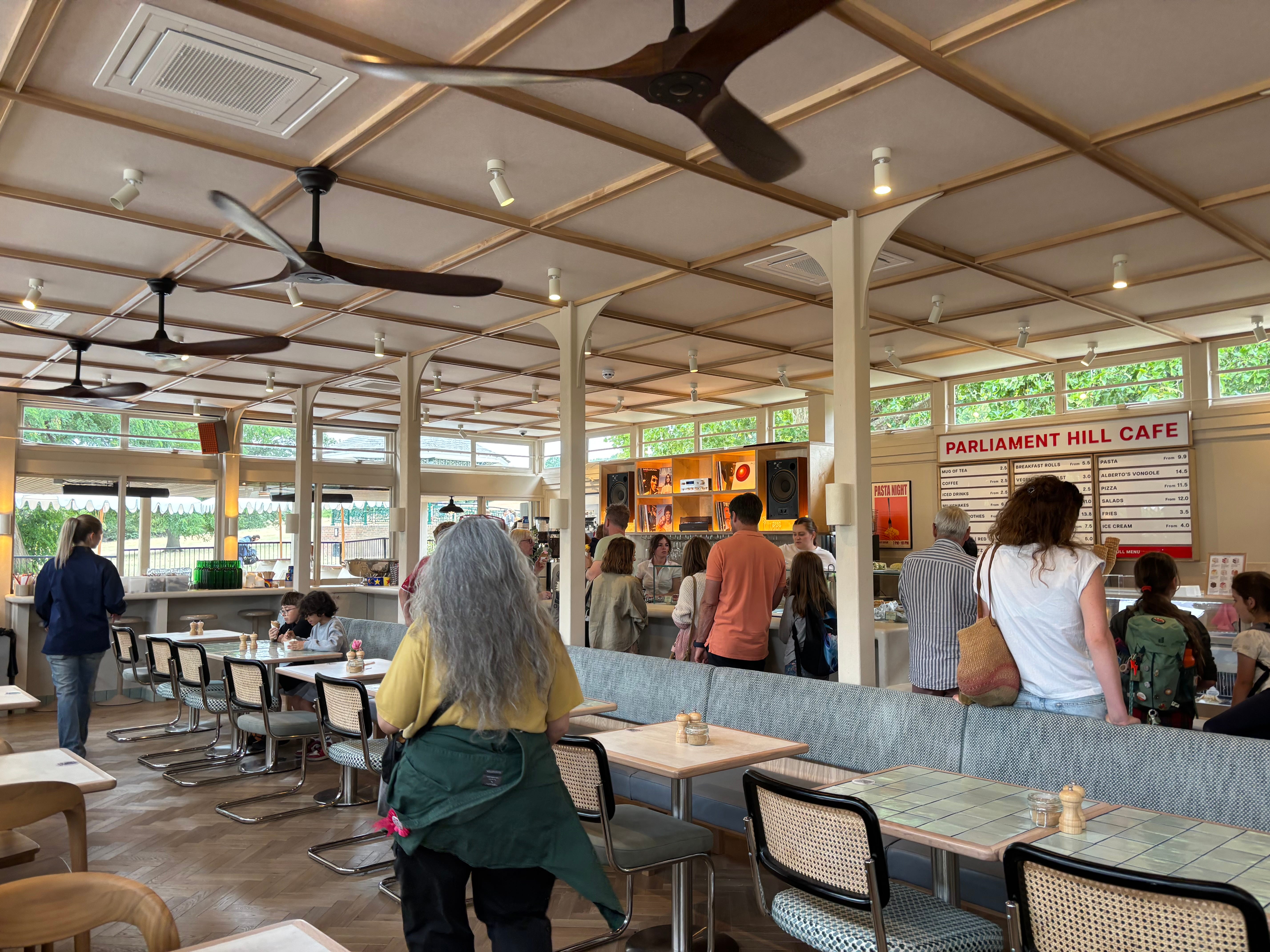
When London Centric visited it was relatively busy, with lengthy queues for takeaway coffee. Most people we spoke to were unaware of the controversy over who should run the cafe site but were keen to tell us how delicious the ice creams were.
A Hungarian couple, visiting their four-year-old granddaughter, said she preferred the new cakes. The girl gave London Centric a thumbs up as she devoured a Tim Tam.
Many of the old staff had been kept on in new roles, while the menu retained some Italian dishes in a nod to its former operators.
Derrick Aston, 75, fulfilling his yearly grandfatherly duty of taking his two granddaughters out for ice cream, said the refurbishment was a “vast improvement” on the old cafe: “It’s nice, light, and bright. It feels a lot fresher and better.”
Thames Water is imposing a hosepipe ban from Thursday, saying water consumption is 7% above normal in London. If you’re lucky enough to have a garden, you’ve got until the end of Wednesday to water it, fill up a paddling pool, clean your car using a hose, or have a sprinkler on your lawn.
The Knightsbridge car rental scammer
A pervasive theme in a vast number of London Centric stories is that it’s so easy to scam people and open dodgy shops in the capital because no one actually enforces existing laws. You can start a company in London from a PO Box address, steal money from the public, fail to file any accounts, unilaterally opt out of paying taxes, then immediately “phoenix” the business and start again. Your chances of getting punished are small and you can always find someone else to sign the legal paperwork.
So it’s worth highlighting what happens when the law is actually enforced. Classic Parade describes itself as the UK’s “number one chauffeuring and supercar hire service” but was really a scam operation registered to a serviced office in Knightsbridge by founder Andrew Brown.
Members of the public were charged thousands of pounds to rent Ferraris and Lamborghinis for fun, for weddings, or as bucket list experiences for people with terminal illnesses. Then, at the last minute, the booking would be cancelled for unspecified reasons. Refunds would be promised but never returned. If a customer left a negative review, they would be threatened or find their own business received a tit-for-tat negative review.
Classic Parade’s only substantive connection to west London was the director’s trips to luxury boutiques such as Harrods, Gucci, and Prada where almost £30,000 of company funds was spent on “apparent personal expenditure”.
The Insolvency Service did enforce the law in this case. After dozens of victims complained over many years, it prosecuted. Classic Parade Ltd was wound up in court last week. The issue is there, as yet, there are no consequences for the people involved. Brown, who also ran an online course called “University of Crime”, failed to turn up to an interview with the Insolvency Service or answer their questions. He has yet to face any personal charges, although he could be disqualified as a director at a later date. At the moment all that’s left is an abandoned office in Knightsbridge, an abandoned limited company, and a lot of people out of pocket.
Photographer Megan Taylor has been taking pictures of mothers at her child’s London primary school while fellow parent Leonora Haig interviews them about their lives. The chats are delightful snippets of life in the capital. And someone who you might not expect pops up.
One in the eye for journalism
Each week, London Centric strives to publish the best and most curious stories about the capital. What you don’t see as a reader are the stories we check out that never make it to print.
One of our favourite recent tips (send them in here, we read them all, nothing is too small!) was that the British Museum had hired a team of movers, all of whom were of exactly the same height, to ensure there was no damage to the Bayeux Tapestry as it was unboxed.
Eager to discover what the optimum height for an embroidery mover might be, we contacted the British Museum. Sadly, a spokesperson quickly put us back in our level place, insisting that “none of the activity at the British Museum has required the team to be at a set height or to all be the same height.”
Got a story we should be looking into? Send a WhatsApp or send an email.
I was a Met police officer: This is what I’d tell Andy Burnham about rough sleeping in the capital
By Ned Donovan, a writer and police officer, who served as a Met Police Special Constable in west London between 2020 and 2025.
“As long as you get someone’s name and address in your pocket book, everything else can be worked out later.”
Words of wisdom I remember from one of my first days at Hendon, the Metropolitan Police training school. The question can blunt the shock for a victim, make a suspect begin to understand the implications of what he has done, and give the courts some hope of finding a witness two years later.
It becomes such a matter of routine that it stops being a question and turns into a rhythm. People often answer in the same rhythm before you’ve finished asking, because some people have been giving their details to the police all their lives.
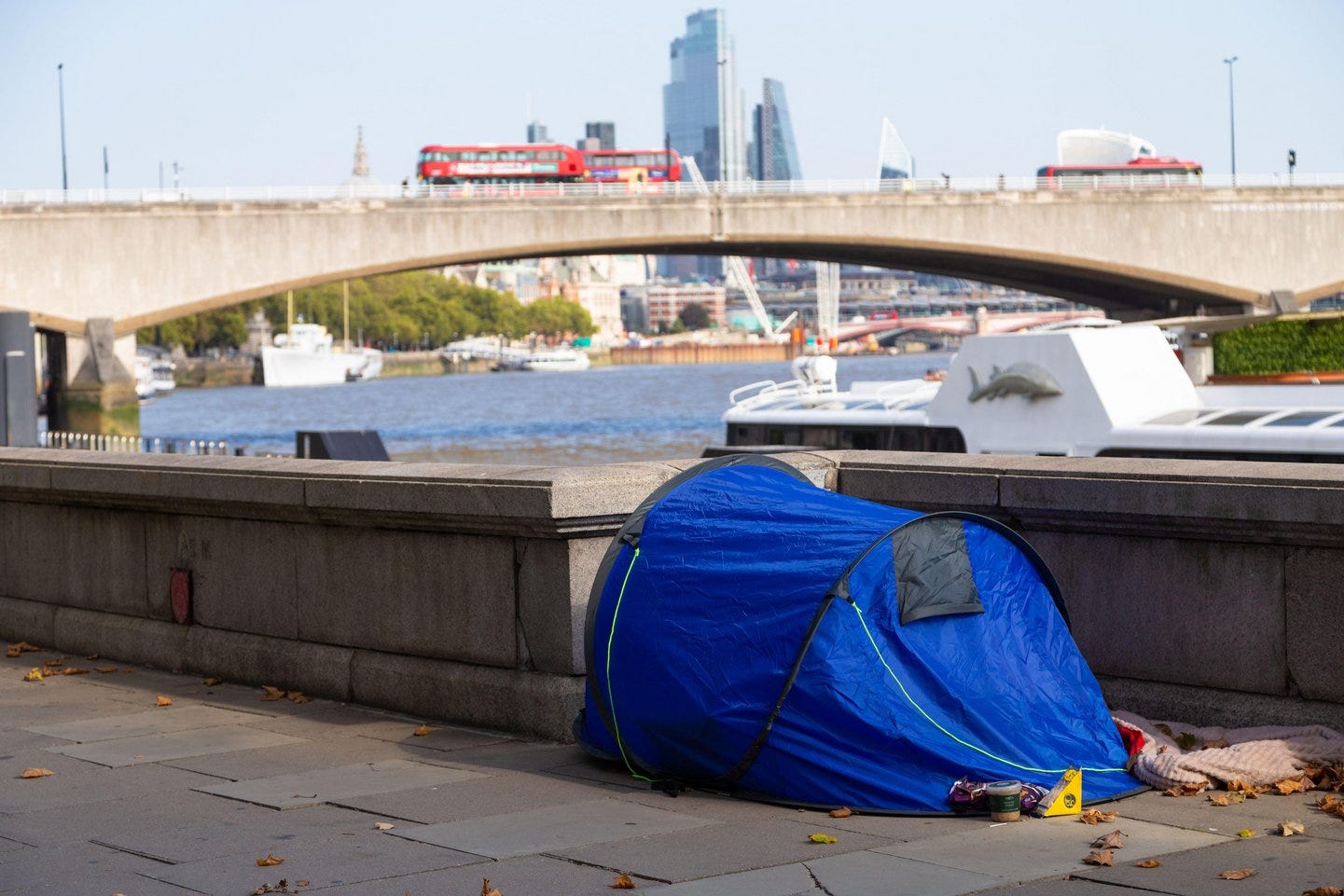
So I’m crouched next to Michael on the corner of a high street. Sleeping bag, back against the window of a closed bank, gone midnight. Name. Date of birth. Address, because it’s what I ask everyone.
And the homeless man tells me his address. Street, flat number, postcode. He isn’t lying. It’s his flat, the council gave it to him years ago, and I could have walked there from this corner in about ten minutes. So could he.
On Monday, Andy Burnham stood outside Number Ten on his first day as prime minister and announced that his government will end rough sleeping. I was a police officer in inner London when this was last tried, and the trouble is that ending rough sleeping and giving everyone somewhere to sleep are not quite the same thing.
I. The flats
On paper, Michael was housed. He had been housed by the local council for 18 years. His tenancy agreement said so, so did his housing officer and so did the forms we filled out every time we met him.
I even went into his flat once. It was on the second floor of a Victorian terraced house in Notting Hill, along a hallway that smelt of damp, behind a fire door. I went there when Michael failed to turn up to a doctor’s appointment and a welfare check was requested. His front door was wide open and I noted the following contents of his bedsit of 18 years: an unmade mattress on the floor with a hoodie as a pillow, a flat-screen TV teetering on a cardboard box, a pile of letters from the National Health Service, and 35 frying pans, all dirty. The TV was on, but no one was home.
Michael was by no means unusual. Over five years I dealt with plenty of people the government or newspapers would call homeless but who held longstanding tenancies. Some flats stood empty, and some were full of the wrong people.
The official term for when a group occupies another person’s flat is cuckooing. This is one of those words used by police, councils and safeguarding teams that sounds almost quaint until you have stood inside a cuckooed home. There was a house we were endlessly called to. In theory, its tenant was a middle-aged man with learning difficulties named Simon. Simon was lovely, but he was lovely to everyone. A gang in the borough had taken advantage of his kindness and set up shop in his home.
Simon would sit watching daytime television while drug addicts smoked crack on his sofa, sold to them minutes earlier by a 15-year-old. I asked Simon once if he wanted these people in his house, and he said he did: “They’re my friends.” After a dozen safeguarding referrals, the courts placed a closure order on the house, preventing anyone other than him from being there. The gang just moved on and found someone else, leaving Simon in a wrecked house that smelt of crack.
Both Michael and Simon were housed. It said so on every system I ever looked at.
II. The hotels
During Covid, London went Q - police refuse to say “quiet” as it summons grief. Volume crime vanished, leaving us with a carousel of mental health and domestic violence calls. Streets that had been filled with tourists and workers were empty, and with no tourists there was no one to beg from. With no emergency calls to respond to, we played hide-and-seek in marked cars, concealing ourselves down alleys and behind council estates while the rest of the team tried to find us. For a job you navigate through by incident, there were no incidents.
But one place the volume never went down was hotels. In the early weeks of the Covid pandemic the government launched a scheme called Everyone In, designed to remove rough sleepers from the streets. With tourism dead and thousands of rooms sitting empty, London councils block-booked hotels and moved thousands of rough sleepers indoors, more or less overnight.
I remember a disturbance at a three-star hotel off the Cromwell Road, the kind of place that used to take coach parties visiting London from regional England. The lobby still had a stack of West End show leaflets by the door, under the shadow of a rapidly installed hand sanitiser station. A support worker in a lanyard and hi-vis vest met us at the lifts and said two men were arguing on the fourth floor about a £10 Tesco voucher, issued to residents as part of the scheme, which had allegedly been stolen. The corridor smelt of microwaved food and every door handle had a bag hanging off it, meals delivered like room service and half of them from the day before, untouched.
The two men were screaming at each other, and while I knew both from previous incidents on the streets, I realised it was the first time I had seen either of them inside. Every few sentences, a door would open and a third character I recognised would poke out like a cuckoo clock and himself scream at the pair of them to shut up. If handled badly, this would end up with a report for burglary and a trip to the cells with a man who had once tried to bite me.
We had staff issue a second Tesco voucher, and both men retreated into their rooms.
Some of these hotel guests had been sleeping rough for years. Others were like Michael.
There was also a Scottish man who lived in a council flat in a nicer part of the borough. I remember him because he had no teeth and a thick Glaswegian accent that made him almost impossible to understand when he was sober. I had arrested him once for kicking his neighbour’s door in, mistaking it for his own. So I was confused to find him in a hotel off Portobello Road. I knew his address; I’d written it in my pocket book during a previous incident. But the volunteers doing homeless outreach had worked off what they could see. They had walked the borough late one night, found him in a sleeping bag, and informed him the council had booked him a hotel room. A volunteer doesn’t think to ask whether the man sleeping rough on the street has been a long-term council tenant. I asked him where his dog was, a Jack Russell he was rarely without. “At home,” he gummily replied. “They won’t let her in.”
III. The rooms
“Can we have a unit make their way to St Mungo’s.” Then nothing. The radio, which was usually a bunfight of officers cutting each other off whenever a suspects-on burglary came out, went silent. Everyone waited for someone else. Eventually a sergeant would assign the nearest car by callsign, and whoever it was would key up and say “All Received, Skip,” in the voice of a man accepting a sentence.
Homeless hostels like St Mungo’s were run by charities and were where the system sent people when it worked. We attended most weeks anyway.
A bedsit is quiet. For some of the people I dealt with, quiet was the enemy. Out on the streets there were people who knew their name, and a routine. These men who lived on the streets, because they were almost all men, would find a pitch they liked and somewhere to eat, a soup kitchen, a church hall. Usually a dog. Indoors there were four white walls under fluorescent light, and a desk manned by officious people in lanyards who stopped you bringing in whatever you used to keep the trauma at bay. It gets louder in the silence.
There was a man who had lived his whole life on the streets before the council decided that he would be placed into a room at St Mungo’s off King Street in Hammersmith. He was in a room he didn’t want, with a neighbour he didn’t want. The two fell out and assaulted each other, so the police were called. He pulled a syringe, and my colleague pulled a Taser. He tried to jump out of the second-floor window and we stopped him. He kicked, spat, scratched and assaulted everyone on the way to custody, and the courts decided that he would be returned to the community because of his mental health. I couldn’t tell you what prison would have done for him either.
I’m not going to pretend I fully understand it. I made tea in a lot of kitchens and stood in a lot of doorways and I can tell you what people did, not always why.
IV. It sometimes works
There was a man who used to have a pitch outside a bank on Earl’s Court Road. At some point I stopped seeing him. It took months to notice; absence isn’t a call the police answer. Usually, such a disappearance is bad news and so one slow night, I ran his name in the computer. Nothing for over a year, no arrests, no welfare checks or sudden death reports. For the average person, no contact with police is unremarkable, but for someone like him it was an anomaly.
Then one day we were called to an address in the borough that I hadn’t been to before. A clean, semi-detached Edwardian red-brick in a nice part of Fulham, where the council puts the better-behaved tenants. It was a report of anti-social behaviour, and we didn’t look at who our informant was before knocking on the door of the downstairs flat. The man I still thought of as the beggar from outside the bank answered, minus the matted hair, and behind him was a hallway of framed pictures.
He wanted to report a man who’d been shooting up by his bins.
Someone on another team said later this man had gone through detox and come out the other side of a charity’s transition programme. Nobody had given him just a flat with no support. The flat came last. In five years I never once saw it work the other way round.
Read more of Ned Donovan’s writing at Terra Nullius.
I read a while ago that they solved homelessness in Finland with flats first (rather than last), but the report also mentioned how much else was done in support, etc. Not that I think the last comment was wrong - just that you can have these two entirely different approaches that both work, when done with the person and their needs in mind.
Bizarre take on homelessness.
It sounds like what he’s talking about here are mainly people with substance abuse issues who spend time hanging out on the street. Yes absolutely these people need more than just a roof over their heads to recover, but it’s also been proven, through multiple implications of the housing-first model, that housing is an essential first step in that puzzle.
This picture is not the extent of homelessness though, and I’m certain that homelessness looks very different in the outer boroughs to how it does in City and Westminster. There are many people, including children, who will never spend any time on the street but will sleep on buses, on sofas, in overcrowded accommodation with inappropriate people, in increasing desperate circumstances and offering sex in exchange for a place to stay.
I know this article was just one person’s view but I find it incredibly offensive that the insinuation that appropriate housing is not the real problem and that most homeless people have somewhere to live they’re just not using it. Appropriate housing IS an issue and if Burnham wants to solve it he will have to work out how we make more housing available to the people who need it.
For what it’s worth I don’t believe in the first instance that this necessarily involves building more housing, but that councils should be given the cash to compulsory purchase flats (at below market rates) that are sitting empty (lots of that in these endless new builds) and properties that landlords fails to keep in good condition. This could make thousands of new dwellings available in much less time than it takes to plan and build more social housing (though I do think we should be doing that too!)
Also, ACAB. This article just proves it.